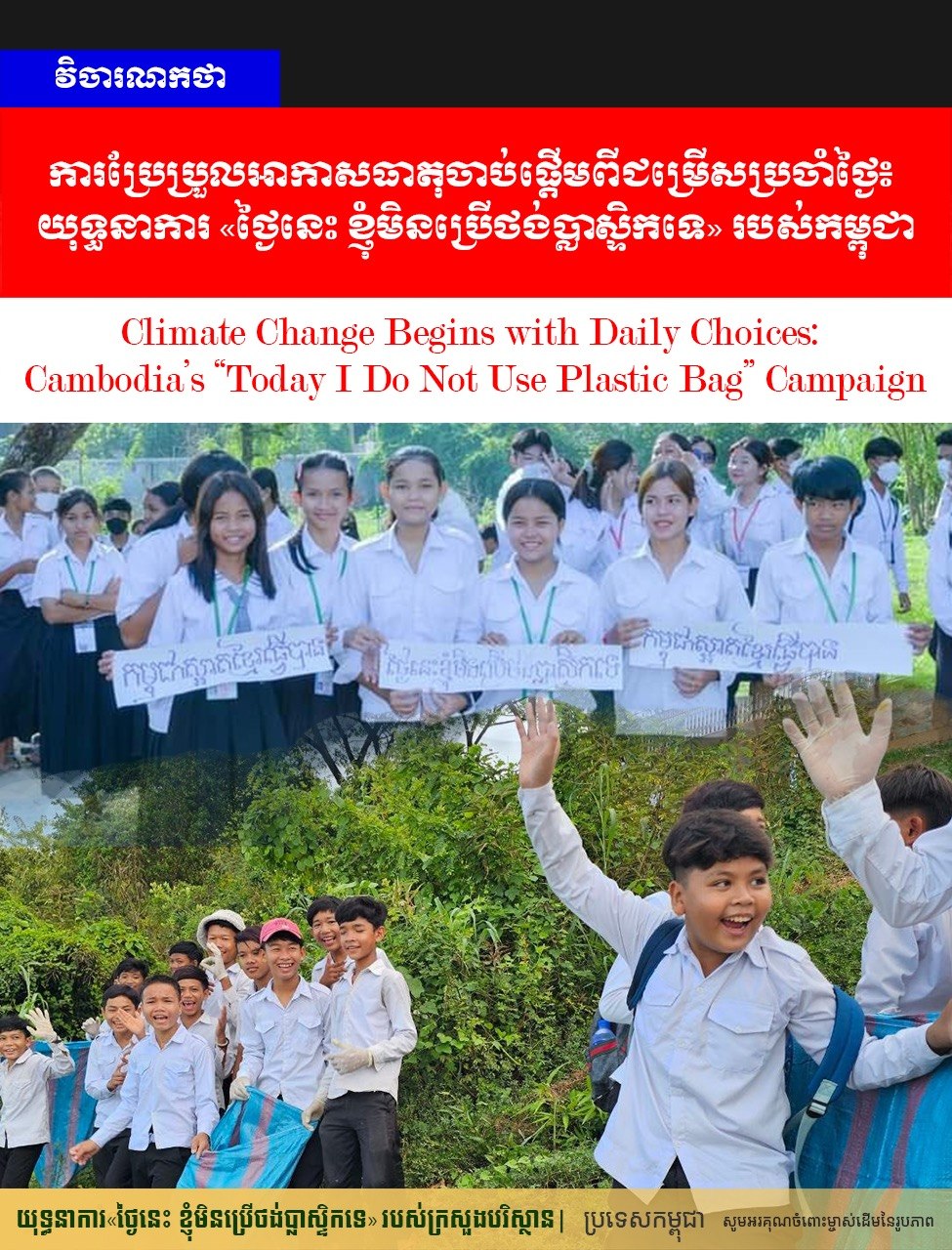

(Phnom Penh): Climate change is often described through images of melting glaciers, rising sea levels, severe droughts, and destructive floods.
These global challenges can sometimes feel distant from our daily lives, leading many people to wonder what they can do to make a difference.
The answer is simpler than many imagine: meaningful change often begins with small daily actions practiced by millions of people.
In Cambodia, the “Today I Do Not Use Plastic Bag” campaign demonstrates how individual behavior can contribute to a larger environmental solution.
What started as a simple message has grown into a national movement, encouraging Cambodians to rethink one of the most common items in everyday life, the single-use plastic bag.
At first glance, plastic bags may seem unrelated to climate change. However, the connection is significant.
Most plastic bags are produced from fossil fuels, including oil and natural gas. Their production consumes energy and generates greenhouse gas emissions.
After use, many plastic bags become waste. Some end up in landfills, waterways, and natural environments. Others are burned, releasing carbon dioxide and other pollutants into the atmosphere.
Every stage of the plastic bag lifecycle contributes to environmental degradation and climate change.
Reducing plastic bag consumption therefore helps reduce demand for plastic production, lowers waste generation, decreases pollution, and indirectly contributes to reducing greenhouse gas emissions.
But perhaps the greatest achievement of the campaign is not the reduction in plastic itself. It is the transformation of human behavior.
Climate change is ultimately a challenge of habits and choices.
Governments can enact policies, businesses can adopt greener practices, and scientists can develop innovative technologies.
Yet lasting progress depends on whether individuals are willing to change how they live, consume, and interact with the environment.
Cambodia’s campaign has shown that people are willing to act when given a clear and practical goal.
From students and teachers to market vendors, civil servants, and families, millions of Cambodians have participated by choosing reusable alternatives and reducing their reliance on single-use plastics.
The campaign’s success demonstrates an important lesson: environmental protection is not the responsibility of government alone. It is a shared responsibility that belongs to every citizen.
The participation of more than 14 million Cambodians is particularly significant because it represents more than a reduction in plastic use. It represents a shift in national awareness.
Children who grow up refusing unnecessary plastic bags are likely to carry those habits into adulthood. They will influence their families, communities, and future generations.
This is how environmental movements create lasting change, not through enforcement alone, but through education and collective action.
The fight against climate change requires global cooperation, but it also requires local commitment.
Every plastic bag refused, every reusable bag carried, and every responsible choice made by a citizen contributes to a cleaner environment and a more sustainable future.
Cambodia’s experience proves that even a simple action can become a powerful force when embraced by an entire nation.
Climate change may be one of the greatest challenges of our time, but solutions begin with everyday decisions.
The choice not to use a plastic bag today may seem small. Yet when millions make the same choice, it becomes a movement capable of transforming a country.
The lesson is clear: protecting the climate does not always begin in conference halls or international negotiations. Sometimes, it begins with a simple decision made at a market, a school, or a shop:
“Today, I do not use a plastic bag.”
=FRESH NEWS