
(Phnom Penh): When people think about climate change, they often think of factories, vehicles, power plants, and fossil fuels. Yet one of the most powerful solutions to climate change is found not in technology, but in nature itself.
Forests, wetlands, mangroves, grasslands, and healthy landscapes perform an extraordinary service for humanity every day. They absorb carbon dioxide from the atmosphere, store it in trees and soils, regulate water cycles, protect biodiversity, and help communities adapt to the impacts of climate change.
For this reason, climate action in the forestry and land use sector is among the most effective and affordable strategies available to combat global warming.
Climate scientists often refer to forests as “carbon sinks.” Through photosynthesis, trees absorb carbon dioxide and store carbon in their trunks, branches, leaves, roots, and surrounding soils. A healthy forest can store carbon for decades or even centuries.
When forests are cut down, burned, or degraded, this stored carbon is released back into the atmosphere, contributing to climate change.
Deforestation and land degradation account for a significant share of global greenhouse gas emissions each year.
Protecting forests, therefore, is not simply a conservation issue. It is a climate action.
The first and most important climate action in the forestry sector is preventing deforestation and forest degradation. Every forest protected is a natural climate solution preserved. Every illegal logging operation stopped and every forest fire prevented helps reduce greenhouse gas emissions and safeguard biodiversity.
But protection alone is not enough.
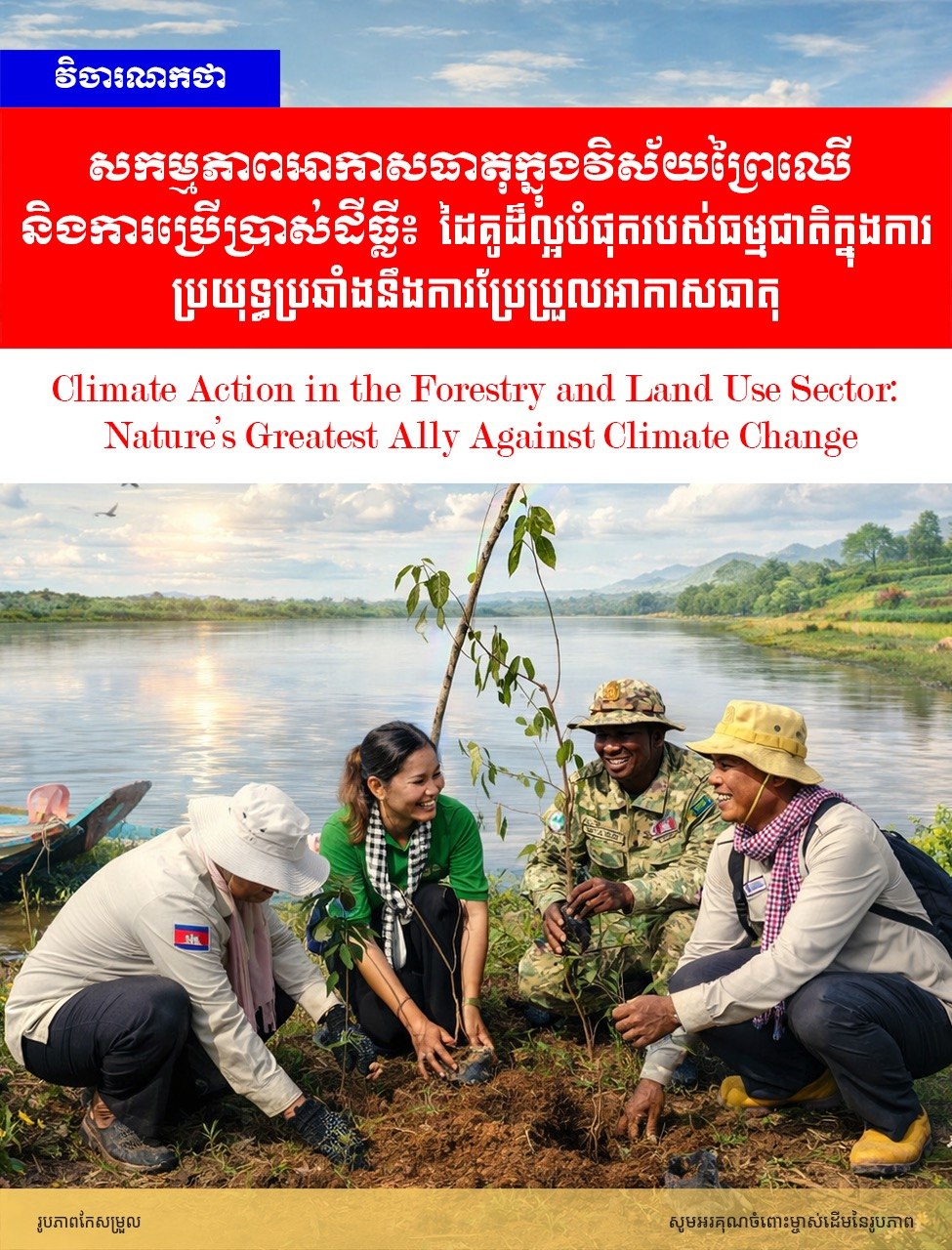
The world must also restore degraded landscapes and expand forest cover. Reforestation and afforestation, planting trees on degraded or previously non-forested land, help remove carbon dioxide from the atmosphere while improving soil quality, water resources, and ecosystem health.
Tree planting has become one of the most visible climate actions around the world because it offers multiple benefits at the same time. Trees absorb carbon, provide shade, reduce temperatures, prevent soil erosion, improve air quality, and create habitats for wildlife.
However, successful reforestation is not simply about planting trees. It is about ensuring that trees survive, grow, and become healthy forests. Long-term care, appropriate species selection, and community participation are essential for success.
Climate action in the land use sector extends beyond forests.
Healthy soils are among the planet’s largest carbon reservoirs. Sustainable land management practices help increase soil carbon storage while improving agricultural productivity.
Preventing land degradation, restoring wetlands, protecting watersheds, and promoting sustainable farming practices all contribute to climate mitigation and adaptation.
Mangrove forests deserve special attention.
Although they cover a relatively small area globally, mangroves are among the most efficient ecosystems for storing carbon.
They protect coastlines from storms, support fisheries, improve water quality, and serve as critical habitats for biodiversity. Conserving and restoring mangroves is therefore both a climate action and an investment in coastal resilience.
Climate action in forestry and land use also benefits people directly.
Millions of people depend on forests for food, water, medicine, fuel, and livelihoods. Healthy ecosystems support tourism, agriculture, fisheries, and local economies. Protecting nature is not a barrier to development; it is a foundation for sustainable development.
In Cambodia, forests and natural ecosystems play an especially important role in national climate action. With approximately 40 percent of the country’s land area covered by forests, Cambodia possesses one of its greatest natural assets in the fight against climate change.
These forests absorb carbon, conserve biodiversity, regulate water resources, and support the livelihoods of rural communities.
Efforts to protect natural forests, strengthen law enforcement, expand community participation, restore degraded landscapes, and plant at least one million trees annually represent important contributions to both national and global climate goals.
At the same time, climate action in forestry is not solely the responsibility of governments.
Communities can protect local forests.
Schools can participate in tree-planting activities.
Businesses can support reforestation and sustainable land management.
Citizens can reduce demand for illegally sourced timber and participate in conservation efforts.
Every tree protected matters. Every hectare restored matters. Every community that chooses conservation over destruction matters.
Climate change is often described as one of humanity’s greatest challenges. Fortunately, nature has already provided some of the most effective solutions.
Forests are not merely collections of trees. They are living climate infrastructure. They absorb carbon, produce oxygen, store water, support biodiversity, and sustain human life.
The future of climate action depends not only on reducing emissions from energy, industry, and transportation but also on protecting the ecosystems that naturally regulate our planet.
In the fight against climate change, forests stand quietly on the front lines every day. Our responsibility is to ensure that they continue to stand for our generation and for those yet to come.
=FRESH NEWS