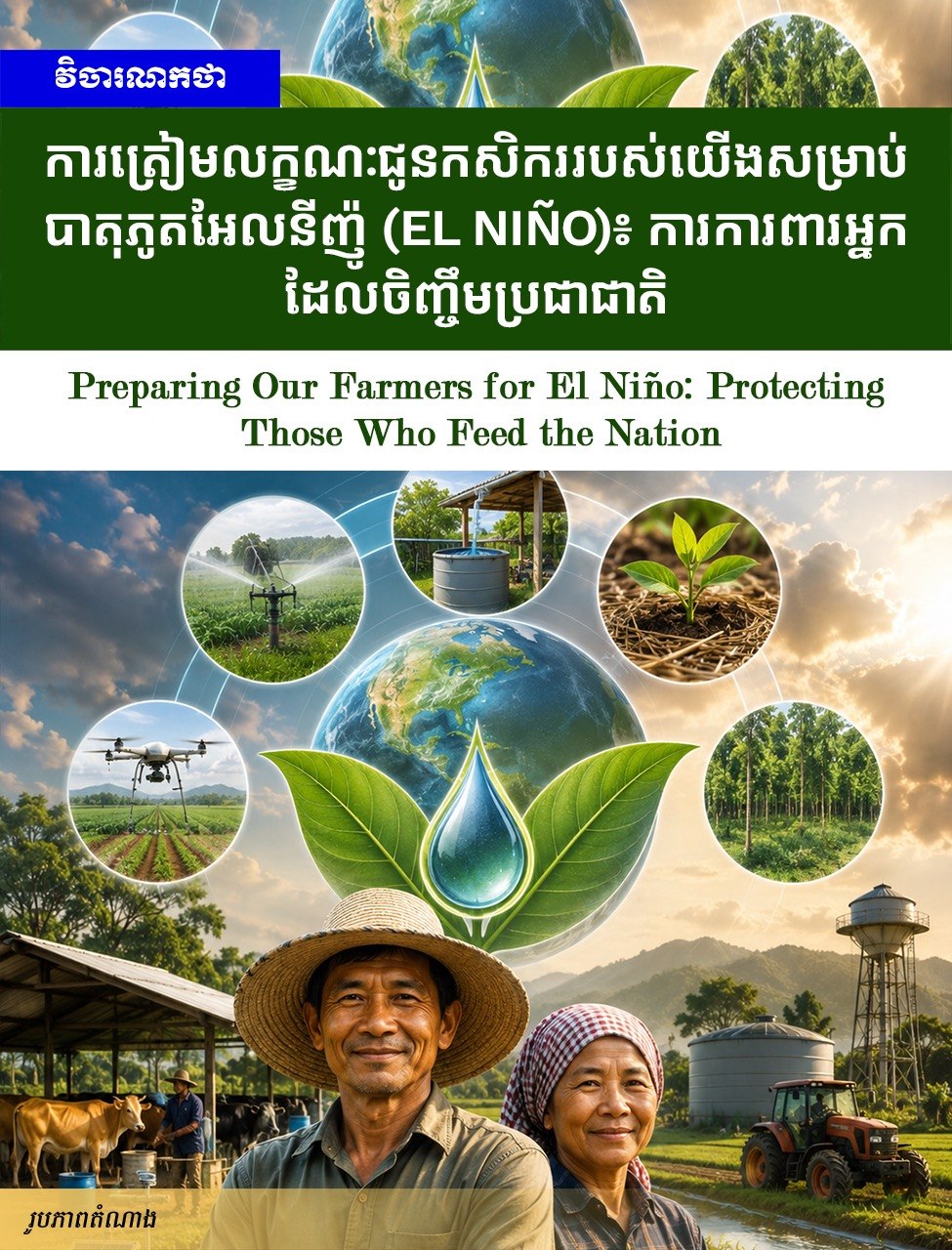

(Phnom Penh): Every meal we enjoy begins with the hard work of a farmer. From sunrise to sunset, farmers work tirelessly to produce the food that nourishes our families and supports our economy. Yet they are also among those most vulnerable to the changing climate.
With scientists forecasting the arrival of El Niño, many regions may experience prolonged heat, below-average rainfall, water shortages, and increased risks of drought and wildfires. These conditions can reduce crop yields, weaken livestock, dry up water sources, and threaten the livelihoods of farming families.
Preparing today is far less costly than recovering tomorrow.
The first priority is water management. Every drop of water should be used wisely. Farmers should repair leaking irrigation systems, store rainwater whenever possible, maintain ponds and reservoirs, and adopt water-efficient irrigation methods such as drip irrigation where practical. Communities should work together to protect canals, streams, and watersheds so that water remains available throughout the dry season.
The second priority is protecting soil moisture. Healthy soil acts like a natural reservoir. Farmers should keep crop residues or organic mulch on the ground to reduce evaporation, improve soil fertility, and protect crops from excessive heat. Conservation farming practices help the land retain moisture even during prolonged dry periods.
Choosing the right crops is equally important. Farmers should consider drought-tolerant crop varieties and adjust planting schedules according to seasonal weather forecasts. Diversifying crops also reduces the risk that a single weather event will destroy an entire harvest.
Livestock require special attention during periods of extreme heat. Animals need continuous access to clean drinking water, shaded areas, and adequate feed. Farmers should ensure shelters provide good ventilation and monitor animals closely for signs of heat stress or disease.
One of the greatest threats during El Niño is fire. Dry fields and forests can ignite easily, often from a single careless act. Farmers should avoid burning crop residues or clearing land with fire during the dry season. Firebreaks should be maintained around farms, equipment should be ready for emergencies, and communities should cooperate to detect and extinguish fires before they spread.
Protecting forests is also part of protecting agriculture. Forests regulate rainfall, protect watersheds, reduce soil erosion, and moderate local temperatures. Conserving forests today helps sustain farming tomorrow.
Technology and information can also strengthen resilience. Farmers should follow seasonal weather forecasts, seek technical advice from agricultural extension officers, and adopt climate-smart farming practices. Timely information enables better decisions about planting, irrigation, pest management, and harvesting.
Communities become stronger when they work together. Farmers can share water resources fairly, exchange knowledge, organize community fire patrols, and support neighbours facing difficulties. Climate challenges are easier to overcome through cooperation than through individual effort alone.
Governments, development partners, financial institutions, and the private sector also have important roles. Investments in irrigation infrastructure, water storage, climate-resilient seeds, agricultural training, early warning systems, rural roads, and access to agricultural finance will strengthen farmers’ ability to withstand future climate shocks.
Our farmers are more than food producers. They are guardians of our land, our water, and our rural communities. Protecting them means protecting our national food security, our economy, and the well-being of every family.
El Niño may bring difficult months ahead, but it also gives us an opportunity to prepare wisely.
Every reservoir we maintain, every tree we protect, every fire we prevent, every drop of water we conserve, and every farmer we support strengthens our nation’s resilience.
The harvest of tomorrow depends on the actions we take today. By standing beside our farmers, we are safeguarding not only this season’s crops but also the future of our country.
=FRESH NEWS