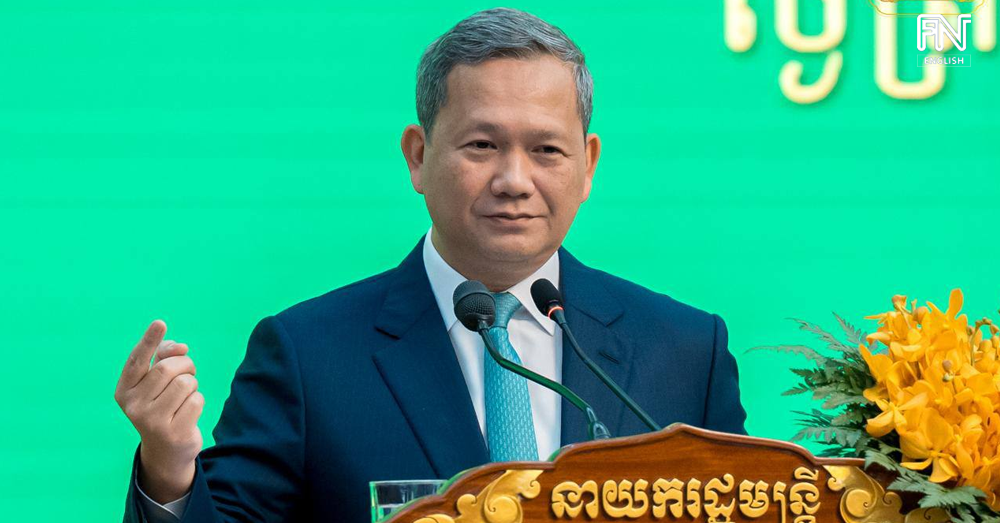

(Phnom Penh): Cambodian Prime Minister Hun Manet announced that Cambodia's population is projected to reach approximately 24 million by 2050, emphasising the critical need to invest in its youth to prepare for future demographic shifts.
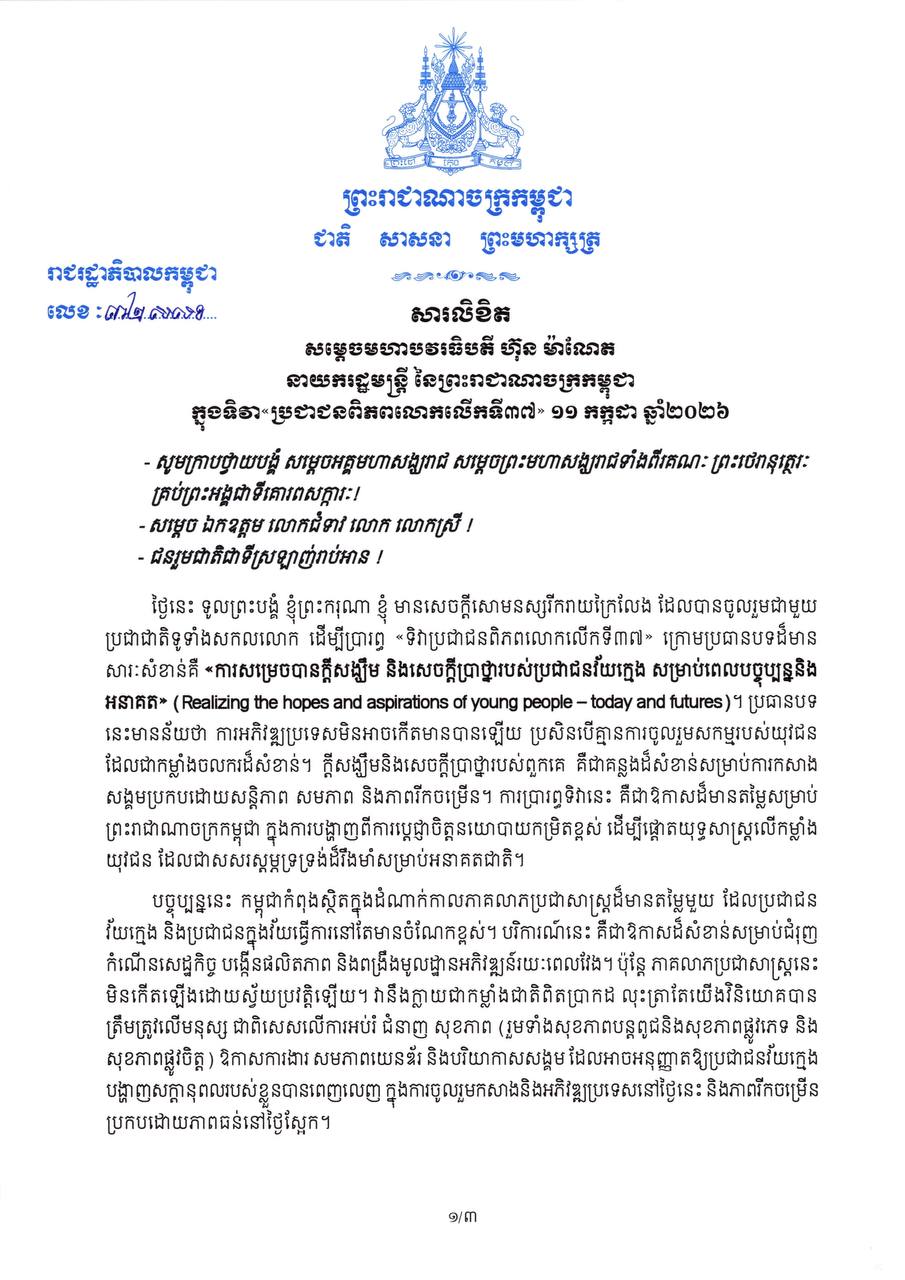
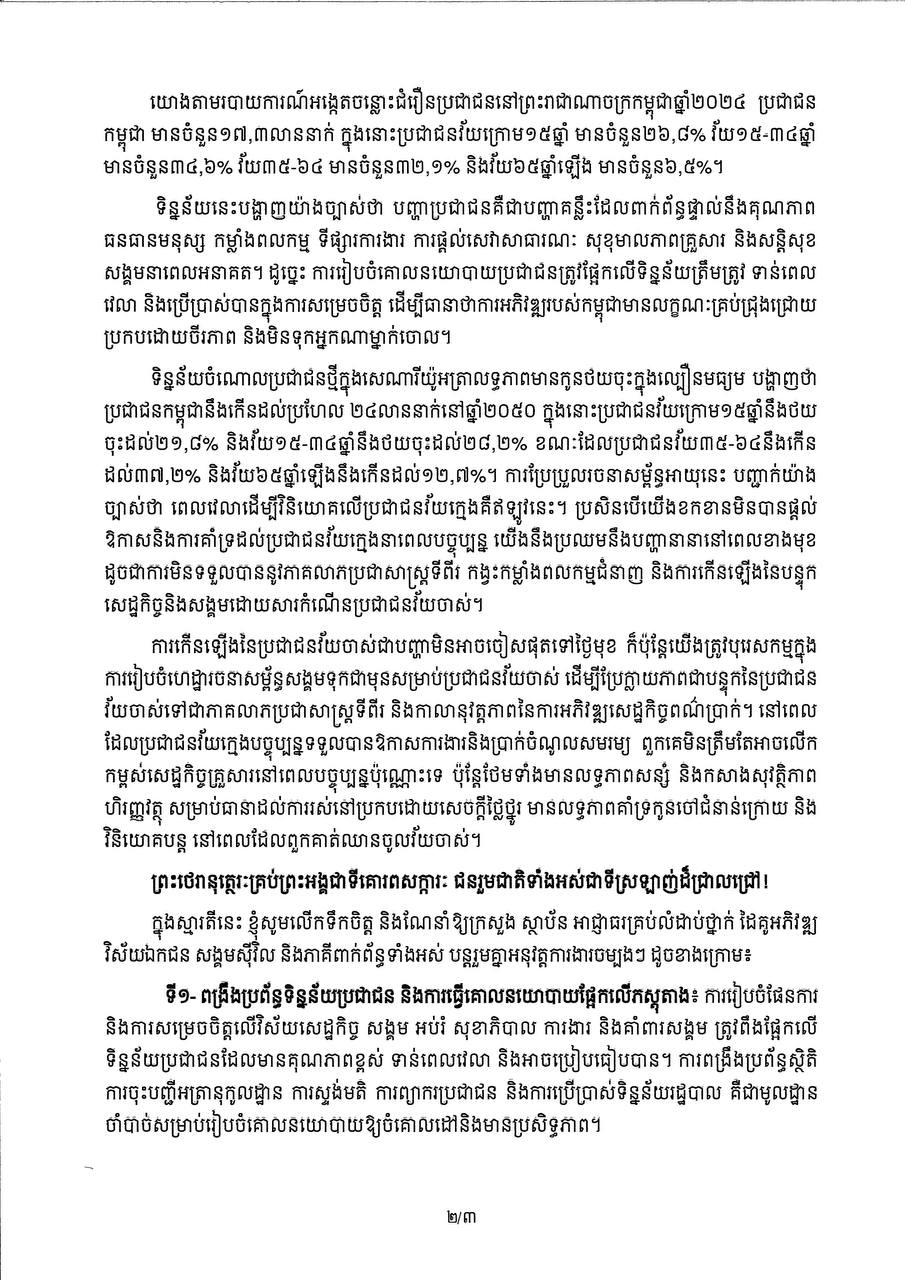
In his address commemorating the 37th World Population Day on 11 July 2026, themed "Empowering Young People to Realise Their Hopes and Aspirations for the Present and the Future," Prime Minister Hun Manet said the country's age profile will shift significantly by 2050. People under 15 are expected to account for 21.8 per cent of the population, those aged 15-34 for 28.2 per cent, those aged 35-64 for 37.2 per cent, and those aged 65 and above for 12.7 per cent.
"The changing age structure clearly shows that the time to invest in young people is now," the prime minister stated.
Citing the 2024 Inter-Censal Population Survey, Samdech Thipadei Hun Manet said Cambodia's current population at 17.3 million, with 26.8 per cent under 15, 34.6 per cent aged 15-34, 32.1 per cent aged 35-64, and 6.5 per cent aged 65 and over.
He underscored that population dynamics are intrinsically linked to human resource quality, the labour force, the job market, public service provision, family welfare, and future social security. Therefore, he asserted, population policies must be grounded in accurate and timely data to ensure inclusive, sustainable development that leaves no one behind.
Samdech Thipadei Hun Manet cautioned that a failure to provide opportunities and support for today's youth could impede Cambodia from realising its second demographic dividend, potentially leading to skilled worker shortages and increased economic and social burdens associated with an ageing populace.
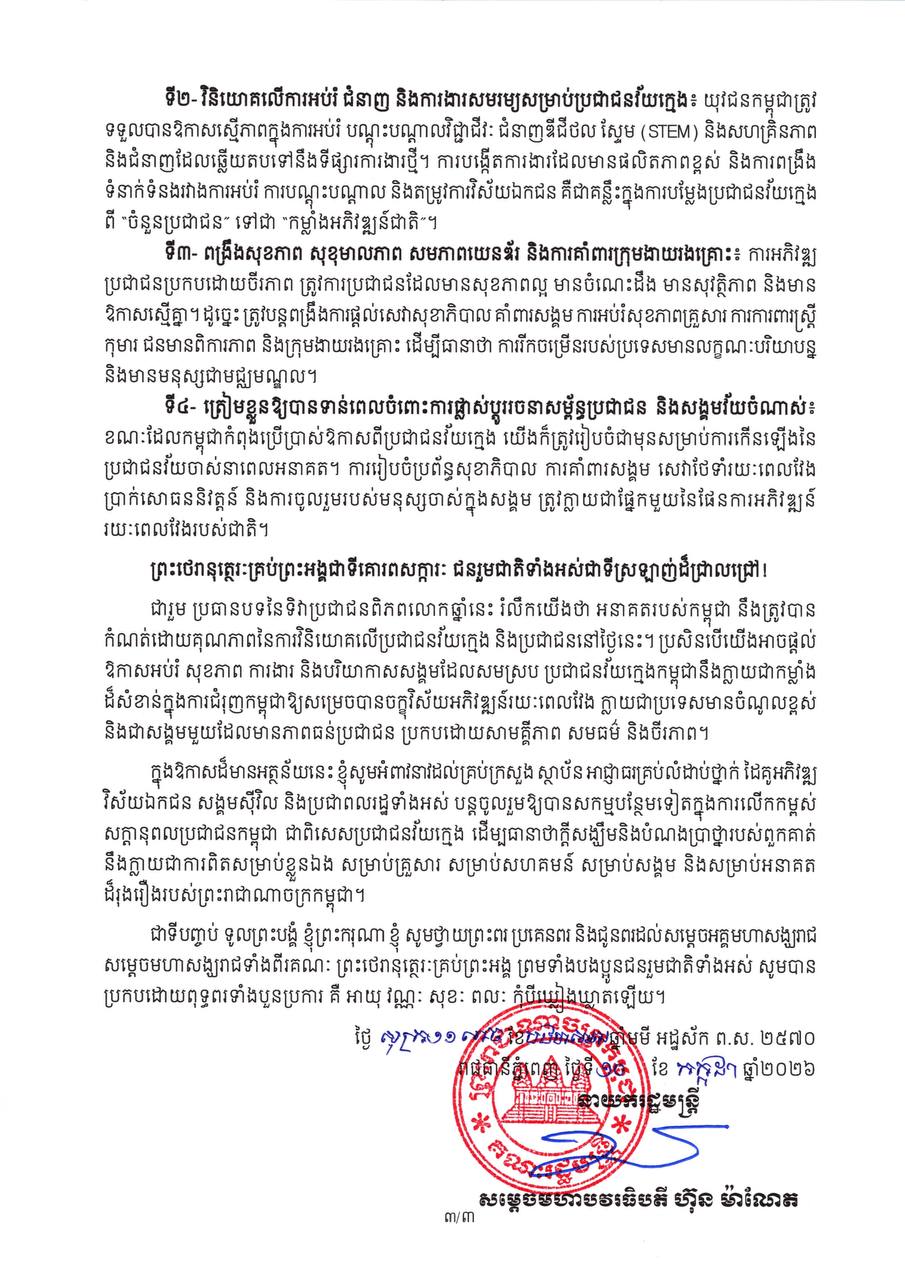
He further noted that while population ageing is inevitable, Cambodia must proactively develop the necessary social infrastructure to support its elderly citizens. This proactive approach, he explained, would transform the challenges of an ageing society into a second demographic dividend and foster opportunities for the growth of the silver economy.
The prime minister concluded by observing that when young people secure decent employment and adequate incomes, they can not only enhance their families' current living standards but also build savings and financial security for retirement, support future generations, and continue investing in their own future as they age.
=FRESH NEWS