

(Phnom Penh): Preah Vihear temple was built by the Khmer kings from the late 9th to the 12th centuries. It's a masterpiece of Khmer architecture and a place of profound spiritual significance.
The temple is one of Asia's great sacred monuments. In 2008, UNESCO recognized Preah Vihear as a World Heritage Site of exceptional cultural value, acknowledging its importance to both Cambodia and the world.
For Cambodian people, the Preah Vihear temple symbolizes national and spiritual continuity and is central to our cultural identity. For the world, it is a monument of exceptional cultural and spiritual value, representing a major surviving expression of the Khmer civilization.
The International Court of Justice confirmed Cambodian sovereignty over the temple in 1962 and reaffirmed this in 2013.
Now, the sacred site faces grave danger.
Preah Vihear temple is one of the sources of a long dispute, dating back to the early 20th century, between Thailand and Cambodia.
Cambodia views the temple, located near its northern border, as an inseparable part of its national heritage and history, and has inscribed the temple as a UNESCO World Heritage Site in order to promote its architectural and cultural significance and protect it from regional conflict.
However, the temple now bears serious marks of recent artillery and aerial attacks.
The consequences are clear, with damage visible across the entire temple environment: freshly scarred stone, destabilized structures, broken stairs, and damaged gateway pavilions. Carvings on many parts of the monument have been shattered.
Gopura, or gateway, structures have been badly damaged, some almost beyond recognition. Debris and unexploded ordnance remain scattered across the site.
The damage was caused by heavy Thai military action during the border conflict that escalated in late 2025, including artillery and aerial bombardment of the temple complex and surroundings. This is a profound loss for Cambodia and a warning to the international community.
Experts warn that weakened sections of the temple may collapse in the upcoming rainy season.
Thailand claims military necessity justified these attacks, but a World Heritage Site cannot be subjected to artillery and aerial assault that is attempted to be justified afterward.
Any state invoking military necessity must prove its actions were truly necessary and that all feasible precautions were taken to avoid damage.
Thailand has long sought to connect Preah Vihear to its own historical narrative. However, it is difficult to accept a state claiming attachment to a monument while at the same time contributing to its destruction.
If Preah Vihear mattered to Thailand, it should have been protected, not harmed.
Cambodia's duty is clear: protect what remains, document the damage, and preserve the monument for future generations. The challenge is immense. The temple remains closed while unexploded Thai ordnance is cleared and structural instability is assessed.
The full restoration may take decades and require significant resources. Some stones may be repaired, but no conservation effort can fully recreate what centuries of history and craftsmanship produced. Much of what has been lost may be irretrievable.
This is why the international community must not treat the destruction of Preah Vihear as a minor consequence of a distant border conflict. It is a test of whether the world truly means what it says about protecting cultural heritage. An independent international assessment of the damage and high risks to the site is essential.
UNESCO should play a central role in documenting the destruction and supporting emergency stabilization. It should also help coordinate the longer-term protection and restoration of the site.
Although the temple is located in Cambodia, its importance extends far beyond national borders. Military attacks on such monuments diminish humanity's shared heritage. All military activity that could endanger the temple and other historic sites must cease immediately.
Governments and international institutions should strongly condemn these attacks and commit to decisive action to protect world heritage before further loss occurs.
From the Taliban's destruction of the UNESCO-listed Buddhas of Bamiyan in Afghanistan in 2001 to Russia's bombing of a UNESCO World Heritage site in the western Ukrainian city of Lviv in 2026, the world has seen before how conflict can destroy irreplaceable monuments. Preah Vihear should also be understood alongside these tragedies.
Cultural heritage must be protected in armed conflict, as stipulated in the 1954 Hague Convention. If an ancient sanctuary of exceptional cultural value can be damaged by war while the world remains silent, the promise to protect such sites loses meaning.
Preah Vihear temple has endured time, weather and the rise and fall of kingdoms. It should not now be left at the mercy of modern firepower and political interests. The attack on Preah Vihear is an attack on the global cultural heritage of humanity. The world must respond accordingly.
Heng Sophady is a rector at the Royal University of Fine Arts in Phnom Penh and a former deputy director general for cultural heritage at Cambodia's Ministry of Culture and Fine Arts.
This article was originally published on Nikkei Asia.
=FRESH NEWS
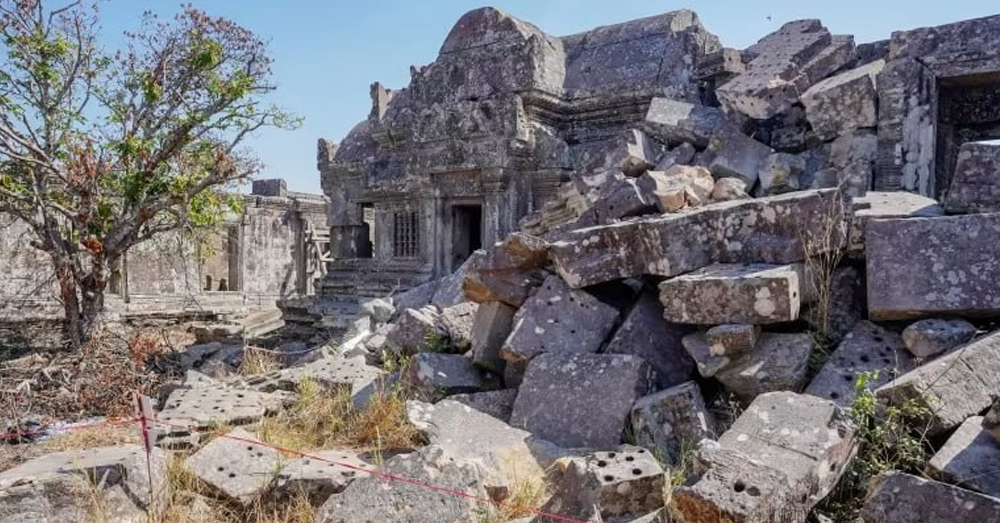
Photo from Reuters