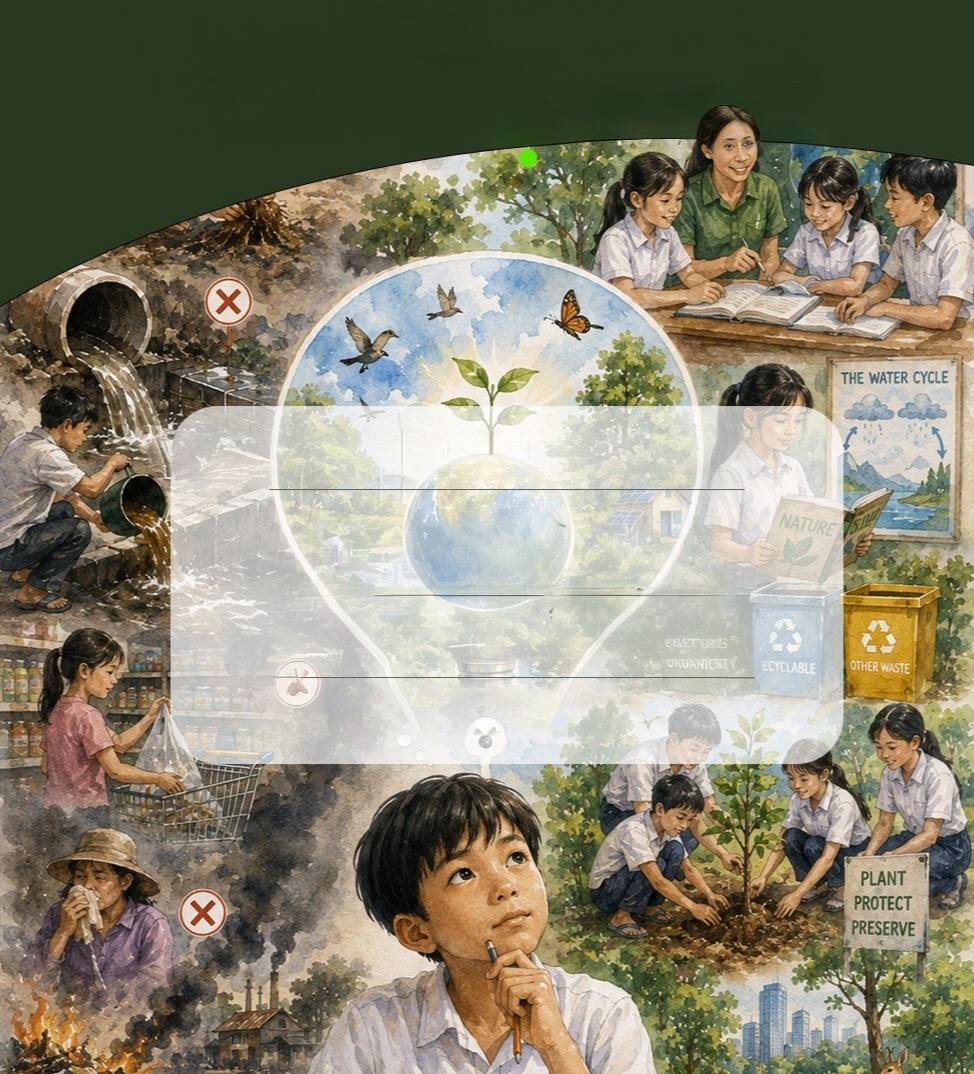

(Phnom Penh): A child may pull a young plant from the ground without knowing that it was planted to become a shade tree. A family may pour used liquid into a drain without knowing where the drain leads. A shopper may choose a product without knowing how much waste its packaging creates.
In each case, harm may occur without a wish to cause harm.
“What we learn to see, we become able to protect.”
Ignorance does not mean that a person lacks intelligence. It means that an important connection has not yet been understood. We may see only the action in front of us and not the long path of its consequences.
We may not know that a wetland helps hold water, that insects can support crops through pollination, or that burning rubbish can release unhealthy smoke.
The natural world is filled with relationships. Water moves. Air moves. Seeds move. Waste also moves. What disappears from our sight does not disappear from the Earth.
A bag carried away by the wind becomes someone else’s litter. Dirty water flowing beyond our home may enter a place where people, fish, or farm animals depend on it.
Because no one is born knowing these things, ignorance should invite education rather than ridicule. A student who learns can teach a friend. A parent can learn from a child. A community can discover a better method and change an old habit. The green heart is humble enough to say, “I did not know, but now I want to understand.”
Learning about nature is more than memorizing names. It is learning to ask where things come from and where they go. Where did this food begin? What happens to this wrapper after I discard it? Which living beings share this place with me? These questions awaken responsibility because they reveal connections that were previously hidden.
We must also be careful with information. Not every dramatic claim is true. Scientific understanding grows through observation, evidence, and honest correction. When we are unsure, we can ask a teacher, consult a reliable book, compare trustworthy sources, or observe patiently. Wisdom does not pretend to know everything.
Ignorance becomes dangerous when we refuse to learn. But the moment curiosity begins, a door opens. Knowledge can change a habit; a changed habit can protect a place; a protected place can support many lives.
Today, there is no need to be embarrassed by what we do not know. Let us become curious. Every sincere question is a small lamp. As those lamps multiply, the path toward a cleaner and kinder world becomes easier for everyone to see.
Buddhist Reflection
In Buddhist teaching, wisdom begins by seeing causes and conditions clearly. Confusion can lead to harmful action, even without harmful intent. Mindful learning helps us recognize connections and consequences. When understanding replaces ignorance, compassion gains a practical direction.
Today’s Reflection
What environmental habit do I follow without knowing where it came from or what effect it has?
Today’s Action
Ask one trustworthy person or source a simple question about nature or waste, then share the answer with a friend or family member.
Today’s Pledge
Today I will remain curious, learn with humility, and use knowledge to care wisely.
When we protect nature, we protect all beings, including ourselves.
=FRESH NEWS