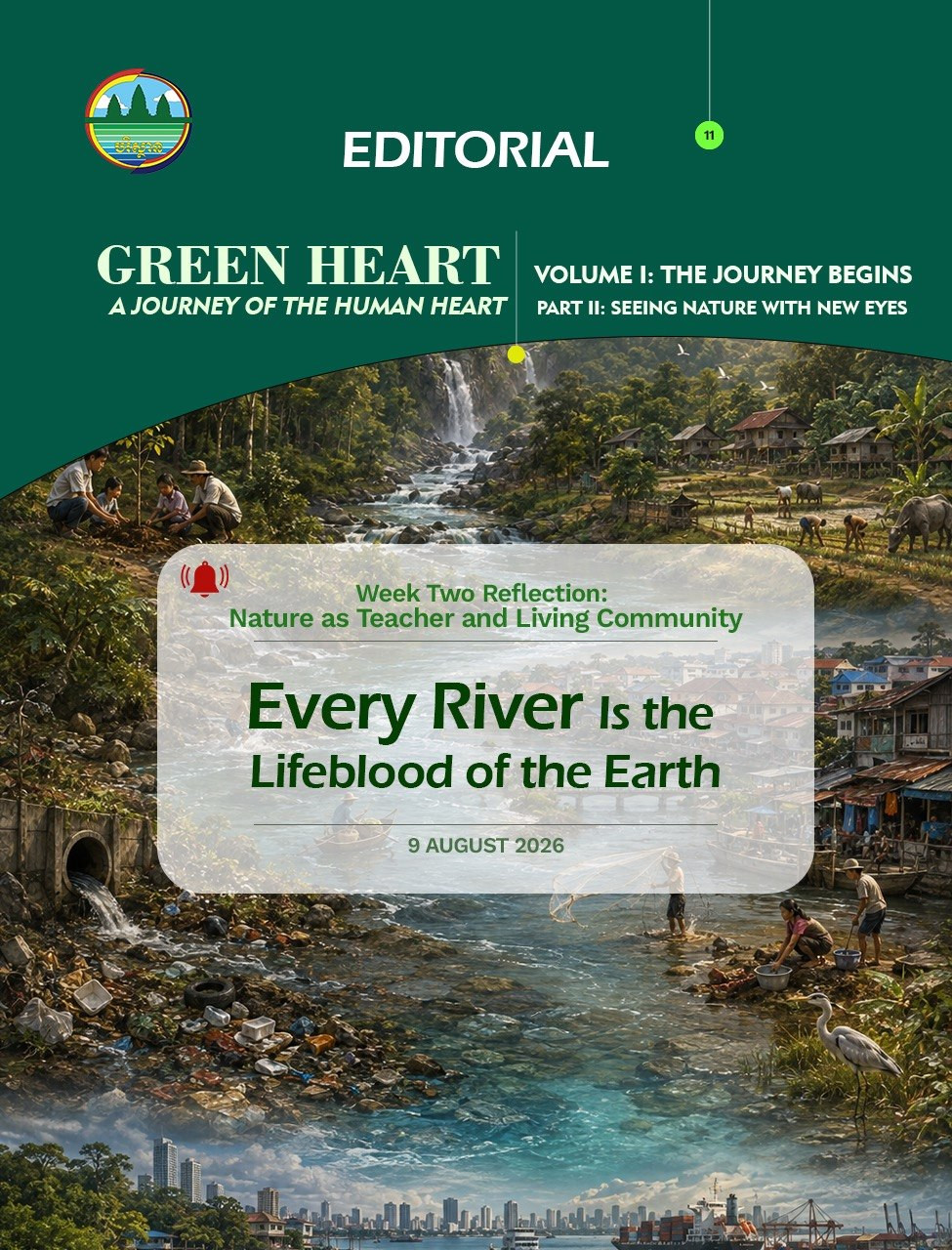

(Phnom Penh): A river is never only the water before our eyes. It is part of a journey. Rain falls on roofs, fields, forests, and hills.
Water gathers in small channels and streams, moves through soil and wetlands, and joins larger flows. Along the way, it carries nutrients, sediment, life, and sometimes pollution.
“A river carries the story of every place it touches.”
People build communities near rivers because water supports drinking supplies, farming, fishing, transport, culture, and daily life.
Plants and animals depend on river habitats and the changing rhythms of wet and dry seasons. The river connects upstream choices with downstream consequences.
If waste enters a small stream, it may travel beyond the person who discarded it. If soil washes from bare ground, the water may become clouded farther away.
If a wetland beside a river is healthy, it can slow and hold water, provide habitat, and help trap some sediments and pollutants.
The condition of a river reflects the condition of its wider watershed, the entire area draining into it.
Calling a river “lifeblood” is a metaphor, but it points to a real connection. Water moves through landscapes as blood moves through a body, carrying what life needs and revealing signs of health or stress.
When the flow is respected and the surrounding land is cared for, many lives benefit.
Respecting rivers begins even when no river is visible.
A drain beside a road may lead to a canal or stream. Water used at home must go somewhere. Litter left on the ground can be carried by rain. The river begins, in a sense, wherever water begins to move.
We should use water for human needs, but use must be joined with care. Communities need safe supplies, farmers need water for crops, and societies need responsible development.
The goal is not to keep people away from rivers. It is to maintain a relationship in which people can thrive without destroying the systems that support them.
Stand beside moving water and you may feel that it is carrying time itself. The water in front of you will soon be elsewhere. Our actions travel with it.
A harmful choice can move downstream, but so can protection, knowledge, and cooperation.
We may live far from the riverbank, yet we are still part of its story. Every time we prevent waste, use water thoughtfully, or care for land, we help write a cleaner chapter.
Buddhist Reflection
Cause and effect flow beyond the moment of action. A river makes this easy to understand: what enters upstream may affect life downstream. Mindfulness asks us to consider where our actions travel, while compassion asks us to care about those we may never meet.
Today’s Reflection
Where does rainwater go after it falls near my home or school?
Today’s Action
Trace the visible path of water in a safe area without entering drains or waterways. Remove one piece of nearby litter that rain could carry away.
Today’s Pledge
Today I will treat every path of water with care and remember the lives waiting downstream.
When we protect nature, we protect all beings, including ourselves.
=FRESH NEWS