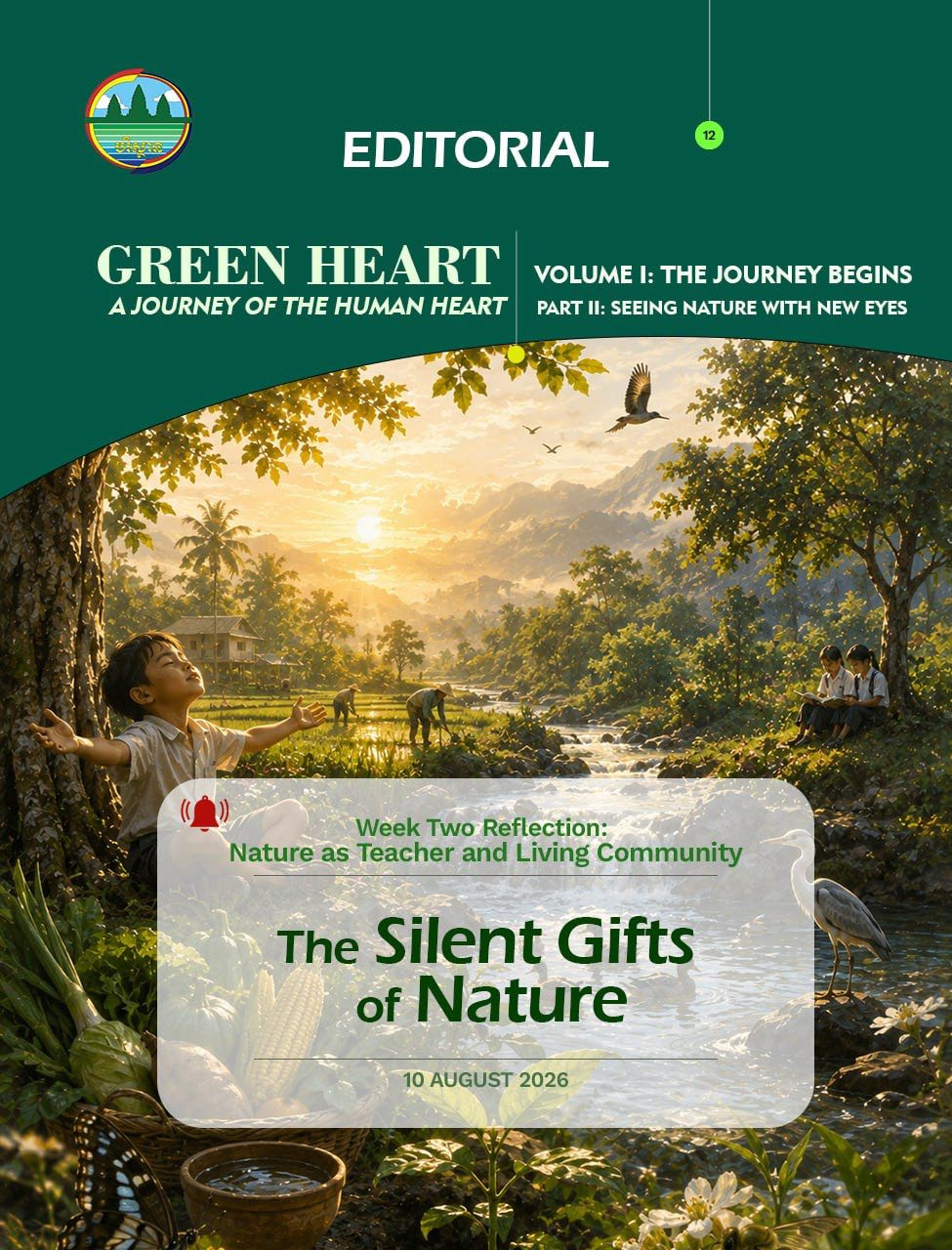

(Phnom Penh): We notice a gift when someone wraps it and places it in our hands. Nature’s gifts usually arrive differently. Morning light enters a window. Air fills our lungs. Soil supports a crop. A tree cools the ground. Insects visit flowers. These gifts are quiet, continuous, and easy to overlook.
Some benefits from nature are direct: food, water, fibers, medicines, and useful materials. Others come through natural processes. Vegetation can reduce heat and help hold soil. Wetlands can store water and support many species. Pollinators help numerous flowering plants reproduce. Healthy ecosystems contribute to cleaner water, productive soils, climate regulation, and human well-being.
Scientists sometimes call these benefits ecosystem services. The term helps governments and communities include nature’s contributions in decisions. Yet the gifts of nature also have meaning beyond what money can measure. A sunrise may restore courage. Birdsong may bring calm. A familiar landscape can hold memory, identity, and belonging.
When something is free, we may mistakenly think it has no value. Air does not send us a bill, but no wealth can replace our need to breathe. A mature shade tree may stand without demanding attention, yet its absence is strongly felt on a hot day.
Gratitude changes the way we receive these gifts. It does not mean that we take without limit and simply say thank you. Genuine gratitude leads to care. If we are grateful for water, we avoid wasting and polluting it. If we value shade, we protect and plant suitable trees. If we appreciate wildlife, we respect its habitat.
Nature’s generosity is not endless under every condition. A river can become polluted faster than natural processes can restore it. Soil can be lost faster than it forms. Species can disappear when pressures become too great. Receiving wisely means understanding limits.
Today, count gifts that cannot fit in a box: breath, rain, color, coolness, food, beauty, and the life surrounding you. You may discover that you are richer than you thought.
The green heart begins in gratitude. When we recognize how much we receive, responsibility no longer feels like a burden. It becomes our way of saying thank you.
Gratitude also protects joy. It trains us to notice abundance without demanding excess. A person who appreciates a cool breeze or a handful of fruit learns that a meaningful life can grow from careful attention, not endless consumption.
Buddhist Reflection
Gratitude recognizes that our lives are supported by countless causes, people, and living systems. This recognition softens pride and encourages generosity in return. Caring for nature becomes an act of reciprocity: we protect what continually supports us.
Today’s Reflection
Which gift from nature do I depend on every day but rarely appreciate?
Today’s Action
Write a five-sentence thank-you note to one part of nature. Then express your gratitude through one protective action.
Today’s Pledge
Today I will receive nature’s gifts with gratitude and return that gratitude through care.
When we protect nature, we protect all beings—including ourselves.
=FRESH NEWS