
(Phnom Penh): Major military alliances are generally not formed simply because countries want more friends. They emerge when states begin to believe that standing alone has become more dangerous than binding themselves together.
On August 7, 2026, Saudi Arabia, Pakistan and Türkiye established a new collective defense framework built around a central principle: an attack on one country would be regarded as an attack on all.
It is not a new NATO in the full institutional sense. But its core principle bears a striking resemblance to the concept at the heart of NATO’s collective defense system.
The development comes as the Middle East remains engulfed in conflict, maritime security faces growing threats, and countries across the region are increasingly looking for ways to strengthen their own security rather than relying entirely on outside powers.
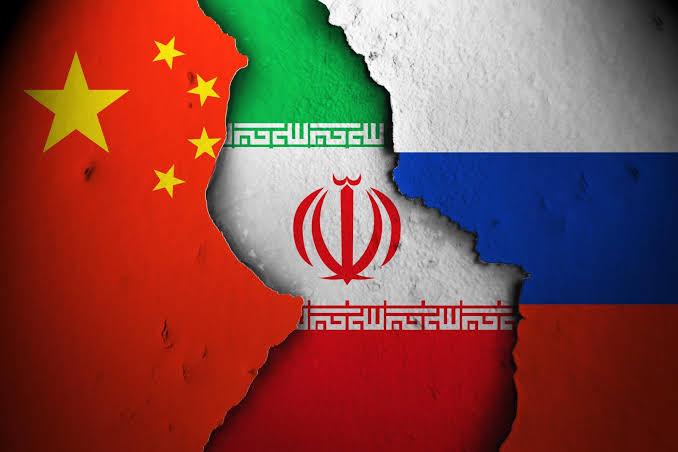
But the emergence of this new arrangement raises a much larger question: If growing security pressures can push Saudi Arabia, Pakistan and Türkiye toward a NATO-like collective defense arrangement, could the US-Iran war and the emergence of new security blocs eventually push Iran to seek a similar structure with China and Russia?
For now, the short answer is: It is theoretically possible, but a NATO-style alliance among the three is not the most likely outcome in the near term.
China, Russia and Iran already share a range of overlapping strategic interests. They conduct military exercises, maintain security, economic, energy and diplomatic ties, and broadly share an interest in limiting Washington’s ability to exercise unilateral power in the international system.
But having a common strategic rival is not the same as having a collective defense alliance.
China may be the biggest obstacle. Beijing and Moscow have reaffirmed in 2026 that their relationship is based on the principles of non-alliance, non-confrontation and not targeting any third party.
The key question, therefore, is not whether China, Russia and Iran have the capability to create a military bloc. They clearly do.
The more important question is: How much would the global security environment have to deteriorate before these countries conclude that remaining outside a formal collective defense alliance has become riskier than maintaining the looser strategic partnerships they have today?
The Mecca Pact Signals a Shift in the Regional Security Architecture
The mutual defense agreement among Saudi Arabia, Pakistan and Türkiye is significant not simply because three countries signed a pact, but because of the principle underpinning it:
An attack on one is an attack on all.
That principle represents a shift from military cooperation toward collective defense. The distinction matters.
Under military cooperation, two or more countries may conduct joint exercises, purchase weapons from one another, exchange intelligence or coordinate security policies without being obligated to enter a war on each other’s behalf.
Collective defense goes further.
It sends a message to a potential adversary that if you are considering attacking Saudi Arabia, you must also calculate the possibility of confronting Türkiye and Pakistan.
That is the basic logic of collective defense: deterrence is strengthened by making the potential cost of attacking any individual member larger and less predictable.
China, Russia and Iran Are Already Strategically Aligned — But They Do Not Have a Collective Defense Alliance
It would be premature to describe China, Russia and Iran today as another NATO.
Although the three countries have developed increasingly close strategic ties, they do not have a trilateral treaty stipulating that an attack on Iran would automatically require China and Russia to enter the war, or vice versa.
Their relationship has therefore not reached the level of collective defense.
China and Russia already maintain one of the closest relationships in their modern history. They have expanded joint military exercises, air and maritime patrols, and diplomatic coordination on major international issues.
Russia and Iran have likewise deepened their strategic partnership.
China and Iran, meanwhile, share major interests involving energy, trade and stability in the Persian Gulf.
The foundations for deeper cooperation, therefore, already exist. What is missing is a formal mutual defense obligation.
Which Country Would Be Both the Key and the Biggest Obstacle?
If China, Russia and Iran were ever to establish a genuine collective defense alliance, China would likely be the country most capable of changing the strategic equation.
Russia possesses nuclear weapons and substantial military power. Iran occupies a strategically important position in the Persian Gulf and exercises significant influence across the Middle East.
China, however, brings together economic, industrial, technological, military and nuclear power on a scale that would give any such bloc considerably greater global weight.
Yet China is also likely to be the biggest obstacle to creating it.
Beijing currently has insufficient incentive to accept a NATO Article 5-style commitment under which an attack against one member could be treated as an attack against all.
For China, remaining outside a rigid military alliance provides a major strategic advantage: the ability to maintain relationships with countries whose interests may conflict, without being forced to choose sides in every crisis.
China can maintain a strategic relationship with Iran while preserving important ties with Saudi Arabia and other Gulf states.
It can cooperate closely with Russia while maintaining enormous trade relations with Europe.
And Beijing can oppose US pressure on certain international issues without automatically binding itself to military conflicts initiated by its partners.
But if China were to sign a treaty establishing that “an attack on Iran is equivalent to an attack on China,” Beijing would inevitably lose some of its freedom to manage crises and decide when, where and to what extent it becomes involved.
That is the central obstacle. For Beijing, therefore, the real question is not: “Does China have the capability to defend Iran?”
The more important question is: “Would automatically committing itself to Iran’s defense provide China with greater strategic benefits than preserving its freedom to decide independently how to respond to each crisis?”
If China, Russia and Iran Formed a Collective Defense Bloc, Would It Change the Global Strategic Equation?
Now consider a hypothetical scenario.
If China, Russia and Iran were one day to sign a treaty declaring that “an attack on one is an attack on all,” the consequences could extend far beyond the Middle East and potentially alter the global balance of power and the security calculations of major states.
Two of the three countries — China and Russia — are nuclear powers and permanent members of the United Nations Security Council.
China possesses enormous economic and industrial capacity, in addition to its expanding technological and military power.
Russia maintains one of the world’s largest nuclear arsenals and possesses extensive military capabilities and combat experience.
Iran, while operating on a very different scale, occupies a strategically critical position in the Persian Gulf and near the Strait of Hormuz, one of the world’s most important energy transit routes.
Combining those capabilities under a treaty based on the principle that an attack on one constitutes an attack on all would amount to far more than simply creating “another NATO.”
It could create a powerful cross-regional strategic deterrence bloc, forcing the United States and its Western allies to recalculate the risks associated with any military confrontation involving one of its members.
A military confrontation with Iran, for example, could no longer be assessed solely in terms of Tehran’s capabilities.
Washington would also have to ask: How would Russia respond? What would China do? And could a crisis in the Persian Gulf escalate into a confrontation involving nuclear-armed major powers?
This highlights a fundamental paradox of military alliances.
Alliances are created to deter war. But if deterrence fails, mutual defense commitments can also cause a relatively limited conflict to expand much more rapidly.
That is one of the enduring lessons of military alliances throughout history.
The critical issue is not simply how powerful an alliance becomes, but whether sufficient mechanisms exist to prevent mutual defense obligations from transforming a manageable crisis into a conflict that no party can control.
Conclusion: When Does Remaining Non-Aligned Become Riskier Than Forming an Alliance?
Could the Iran war ultimately push China, Russia and Iran toward a collective defense bloc similar to the arrangement created by Saudi Arabia, Pakistan and Türkiye?
The answer is yes, it is possible — but it is not the most likely outcome under current conditions.
For now, all three countries continue to gain substantial benefits from expanding military, security, economic and diplomatic cooperation without binding themselves to an automatic mutual defense obligation.
For China in particular, retaining the freedom to decide how deeply it becomes involved in a partner’s crisis continues to carry considerable strategic value.
But military alignments are not immutable.
If the Iran war becomes prolonged, confrontation among major powers intensifies, and additional collective defense blocs begin to emerge, the strategic calculations in Beijing, Moscow and Tehran could also change.
At that point, the central question may no longer be: “Do they want to create a collective defense alliance?”
Instead, it could become: “Is remaining outside such an alliance still safer than creating one?”
If the answer to that question ever changes, the consequences would extend far beyond China, Russia and Iran.
It could signal a broader transformation in the architecture of global security itself.