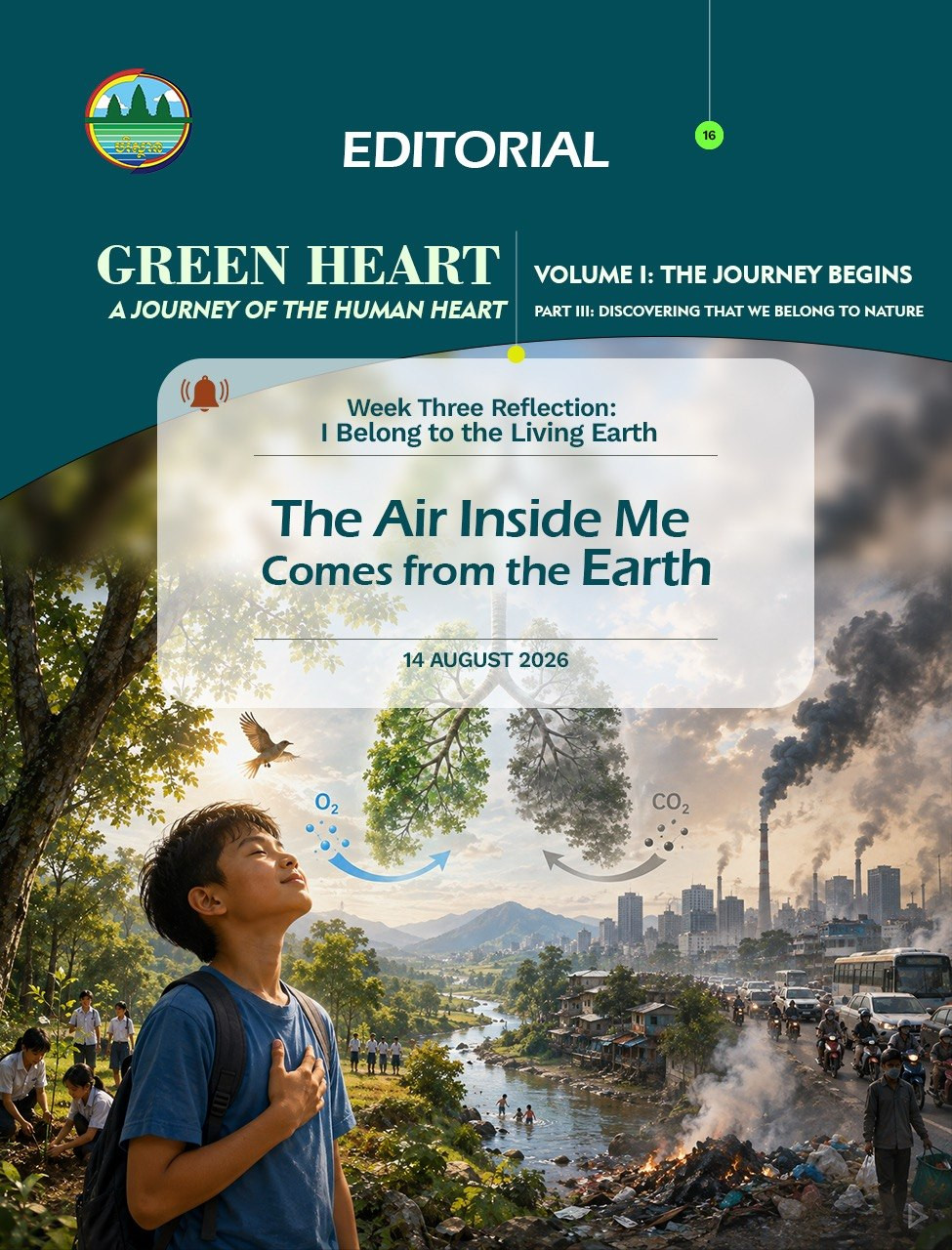

(Phnom Penh): You can go weeks without buying a new possession and days without eating, but only minutes without air. Breathing is so constant that we rarely notice it. The invisible becomes easy to forget.
“Every breath is a meeting between my life and the living world.”
The air around us is a mixture of gases. Our bodies take in oxygen and release carbon dioxide. Plants, algae, and certain microorganisms use carbon dioxide during photosynthesis and release oxygen, although plants also respire.
The atmosphere is maintained through complex interactions among living organisms, land, oceans, and physical processes.
No single tree creates “our” breath, yet the living Earth helps sustain the conditions that make breathing possible.
Air also carries the results of human activity. Smoke, dust, vehicle exhaust, and other pollutants can affect health, especially for children, older people, and those with certain illnesses. Because air moves, pollution does not remain neatly inside one property.
Protecting air begins with both personal care and shared solutions. We can avoid burning waste, reduce unnecessary energy use, maintain vehicles and equipment responsibly, support safe ventilation, and follow guidance during unhealthy air conditions.
Larger improvements require cooperation among communities, businesses, experts, and institutions.
The purpose of learning about air is not to become afraid of every breath. It is to appreciate what clean air makes possible. A student running across a field, a baby sleeping, a bird flying, and a tree growing all participate in exchanges with the atmosphere.
Breathing can also bring us back to the present. When we become angry or hurried, one mindful breath creates a pause. The same air that supports the body can help steady the mind.
We cannot hold a breath forever. We receive and release. This simple rhythm teaches that life is exchange, not possession. Air passes through us, joins the world, and continues.
Today, notice three breaths. Let them be a quiet thank-you to the Earth and a reminder that clean air is a shared treasure. What cannot be seen can still be precious beyond measure.
We can also speak appreciatively about clean air. When people value something together, they become more willing to protect it. A mindful breath can therefore begin as a private moment and grow into a shared ethic of care.
Buddhist Reflection
Mindfulness of breathing is a simple practice of returning attention to the present. The breath also reveals impermanence and interdependence: it arises, passes, and depends on countless conditions. Gratitude for breathing can naturally become care for shared air.
Today’s Reflection
What is one choice I can make that shows respect for the air others breathe?
Today’s Action
Take five slow, comfortable breaths in a safe place. Then identify one way to avoid creating unnecessary smoke or wasted energy today.
Today’s Pledge
Today I will be grateful for every breath and help keep our shared air clean.
When we protect nature, we protect all beings, including ourselves.
=FRESH NEWS