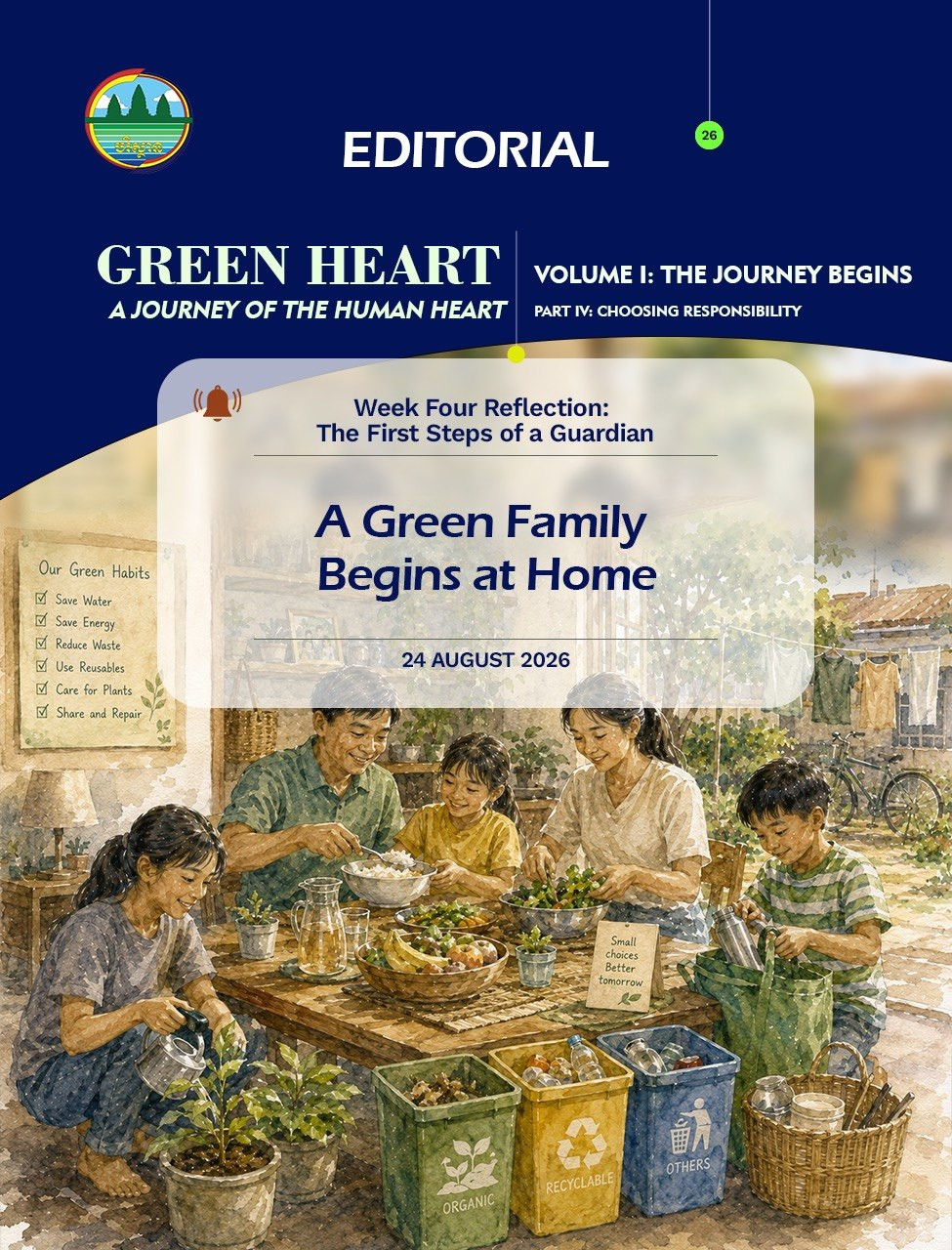

(Phnom Penh): Home is where many environmental habits become ordinary: how much food we serve, how long water runs, what we buy, what we repair, and where waste goes.
Because these choices happen every day, a family can become a powerful school of green living.
"The habits of a household quietly shape the future outside its door."
Change works best through conversation, not commands. A young person may know a new idea, while an older relative may remember traditions of repairing, sharing, preserving food, or using durable objects.
Wisdom can travel in both directions.
Begin with one achievable practice. Plan portions to reduce food waste. Turn off unused lights where appropriate. Keep reusable bags or containers in a convenient place.
Sort materials only when a reliable collection or reuse path exists. Care for plants suited to the home and local conditions.
Families have different needs and resources. A green practice should not create shame or unsafe hardship. The most expensive product is not automatically the best environmental choice.
Often, using what we already have for longer is both affordable and responsible.
Measure success through improvement, not perfection. If a plan is inconvenient, adjust it. If family members forget, offer a gentle reminder. Celebrate saved food, a repaired item, or a week of better habits.
A home also sends values into the world. Children carry habits to school. Adults carry them to work. Guests notice what feels normal.
One household's example can travel without a speech.
The green family is not the family with the most plants or special products. It is the family that makes decisions with gratitude, care, and cooperation. Its members remember that comfort today should not create unnecessary harm tomorrow.
Tonight, look around your home without criticism. Notice what already works. Thank the person who does it. Then choose one next step together. A green Earth is built in public decisions, but also in thousands of loving homes.
A family can set a short weekly moment to review its choice. What was easy? What was wasted? What needs a different plan? Keep the conversation gentle so that honesty feels safe.
Children can contribute ideas and reminders; adults can provide experience, resources, and permission. When every voice is valued, the habit belongs to the family instead of feeling imposed by one member.
Shared ownership helps change endure.
Buddhist Reflection
Right livelihood and mindful consumption begin in ordinary life. Family practice gives generosity, contentment, and responsibility a daily form. Harmony grows when change is invited with patience and respect.
Today's Reflection
Which green habit does my family already practice well?
Today's Action
Thank your family for one good habit and invite them to choose one small improvement together.
Today's Pledge
Today I will help my home grow greener through gratitude, cooperation, and steady practice.
When we protect nature, we protect all beings-including ourselves.
=FRESH NEWS