
(Phnom Penh): The war in Ukraine is being fought thousands of kilometers from the Korean Peninsula. Yet as North Korean troops support Russia and Pyongyang’s missiles and artillery ammunition are used in the conflict, Ukraine is not the only country watching closely. South Korea has compelling reasons to pay attention.
For Seoul, the key question is not simply: “What is North Korea giving Russia?”
A potentially more consequential question is: “What is North Korea learning from the war, and what might Russia be giving North Korea in return?”
If the Ukraine war allows North Korea to test weapons under real combat conditions, gain experience in drone warfare and improve its military capabilities, the consequences of a war being fought in Europe could eventually affect the military balance on the Korean Peninsula.
Battlefield Experience North Korea Could Gain From the Russia-Ukraine War
This is perhaps one of the most important concerns for South Korea.
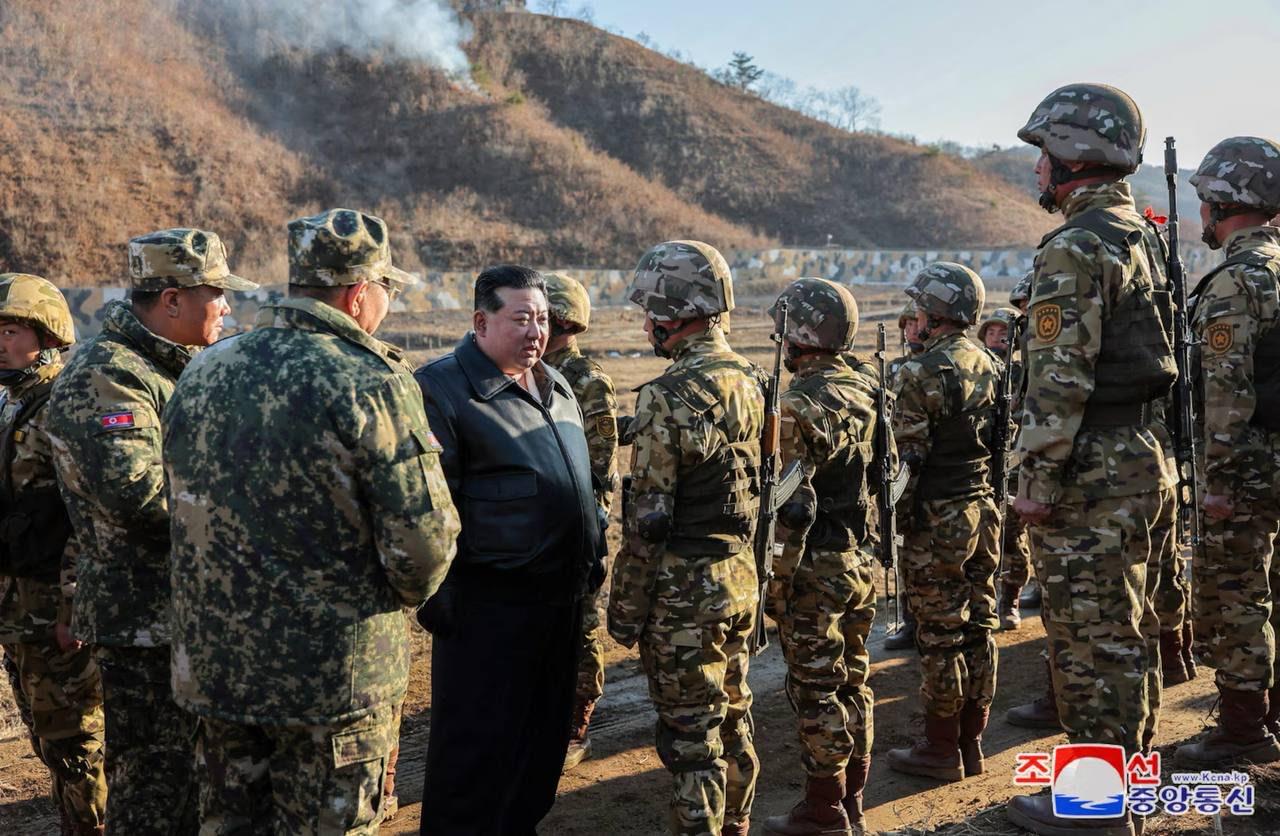
On August 24, 2026, South Korea’s Defense Ministry said North Korea remained prepared for the possibility of sending additional troops to Russia, although there were no immediate signs of another deployment. North Korea has acknowledged sending about 14,000 troops to Russia in 2024.
What matters, however, is not simply the number of troops deployed. It is the battlefield experience they could gain from a real war.
Combat is fundamentally different from military training at home. On a training ground, soldiers operate under planned scenarios. On an actual battlefield, they confront unpredictable threats involving drones, artillery, electronic warfare, GPS disruption, intelligence operations and Ukrainian forces using a wide range of Western-supplied weapons and technologies.
An April 2026 analysis by 38 North noted that the Ukraine war offers North Korean forces a rare opportunity to observe Russian tactics while also gaining exposure to Ukrainian tactics and Western military technology. One particularly important area is the integration of drones with artillery in modern warfare.
For South Korea, therefore, the concern is not that North Korean troops are currently fighting far from the Korean Peninsula. The concern is that those troops could eventually return home with real combat experience, greater knowledge of drone warfare, and lessons on how to operate against Western weapons and technology—experience that would be difficult to replicate through conventional training at home.
Ukraine as a Real-World Testing Ground for North Korean Weapons
The potential risk is not limited to soldiers. It also extends to weapons.
South Korean authorities have estimated that North Korea has supplied Russia with more than 15 million artillery rounds since 2023, along with short-range ballistic missiles. The U.S.-based Center for Strategic and International Studies, or CSIS, has reported a broadly similar scale of ammunition transfers.
For Seoul, however, the greater concern may not simply be the volume of weapons supplied. It is the battlefield data North Korea could obtain from using those weapons under actual combat conditions.
North Korea’s KN-23 ballistic missiles have been used in the Ukraine war since 2023. According to 38 North, early reports pointed to problems with accuracy and reliability, while subsequent information suggested that some shortcomings may have been improved.
However, publicly available evidence remains insufficient to conclude that such improvements resulted entirely from Russian technical assistance.
The more important point is that actual combat can reveal how accurately a missile performs, where its weaknesses lie and how effectively it can operate against enemy defenses.
Ukraine, therefore, is not merely a battlefield where North Korean missiles are being used. It could also provide Pyongyang with valuable information about the weaknesses of its own weapons and how those weapons might be improved.
For South Korea, that has direct security implications because lessons learned from weapons used in Ukraine could eventually influence how those systems are developed or deployed on the Korean Peninsula.
North Korean Forces Are Learning From a Western-Equipped Adversary
There is another striking dimension to North Korea’s involvement.
For decades, North Korea has remained one of the world’s most isolated states. Yet the Ukraine war is giving some of its military personnel direct exposure to modern warfare.
Ukraine employs military systems and tactics heavily shaped by support from Western countries. 38 North has assessed that North Korean troops operating alongside Russian forces have opportunities to observe both how Russia conducts modern warfare and how an opponent uses Western military capabilities.
Such knowledge could be valuable to Pyongyang.
In any future conflict on the Korean Peninsula, North Korea’s principal adversary would be South Korea, a treaty ally of the United States with access to advanced military technology.
The lessons North Korea takes from Ukraine cannot necessarily be transferred directly to the Korean Peninsula. Geography, command structures and military conditions differ substantially.
Nevertheless, the experience could help Pyongyang adjust its training, drone tactics, artillery operations, force concealment, counter-reconnaissance techniques and methods for responding to technologically advanced military systems.
How Risks From Europe Could Reach Asia
Ukraine faces the most direct and immediate danger from North Korea’s participation in the war.
In early August, Ukrainian military intelligence told Reuters that a North Korean missile unit was being deployed to western Russia and could be equipped with as many as 120 ballistic missiles and six launchers. Reuters said it could not independently verify the claim.
For South Korea, however, the concern is more long-term and strategic.
Seoul already confronts a nuclear-armed North Korea with an expanding ballistic missile arsenal. The U.S.-based Council on Foreign Relations (CFR) has identified North Korea’s nuclear and missile capabilities as a serious security threat to South Korea and Japan, as Pyongyang’s military relationship with Moscow has deepened.
If experience gained from Ukraine enables North Korean forces to improve their tactics, combat skills or weapon effectiveness, lessons learned on a European battlefield could eventually have consequences for the security balance in East Asia.
That matters particularly to South Korea because it faces North Korea directly across the same peninsula.
Conclusion: The Battlefield Is Thousands of Kilometers Away, but the Lessons Could Return to Korea
So, why should South Korea be concerned when it sees North Korean troops helping Russia?
The answer is not simply that North Korean involvement could help Russia defeat Ukraine.
The broader concern is that the Ukraine war could provide North Korea with something it has long had limited access to: real-world experience in modern warfare and battlefield data from using its own weapons against actual defensive systems.
What happens next will therefore be important to watch: How effectively will Pyongyang translate those lessons into changes in military doctrine, training and weapons development? And what advanced military technology, if any, might Moscow provide Pyongyang in return?
The latter question requires particular caution. Evidence of specific transfers of advanced Russian military technology remains incomplete, and conclusions should not go beyond what can be independently established.
For Ukraine, the immediate danger is the North Korean troops and weapons helping Russia fight today. For South Korea, the longer-term concern is what North Korea could bring home from that war tomorrow: greater combat experience, better-tested weapons and potentially stronger military capabilities.