
(Phnom Penh): Soil is often called dirt when it appears where we do not want it. In a healthy landscape, soil is a complex mixture of mineral particles, organic matter, water, air, roots, and living organisms.
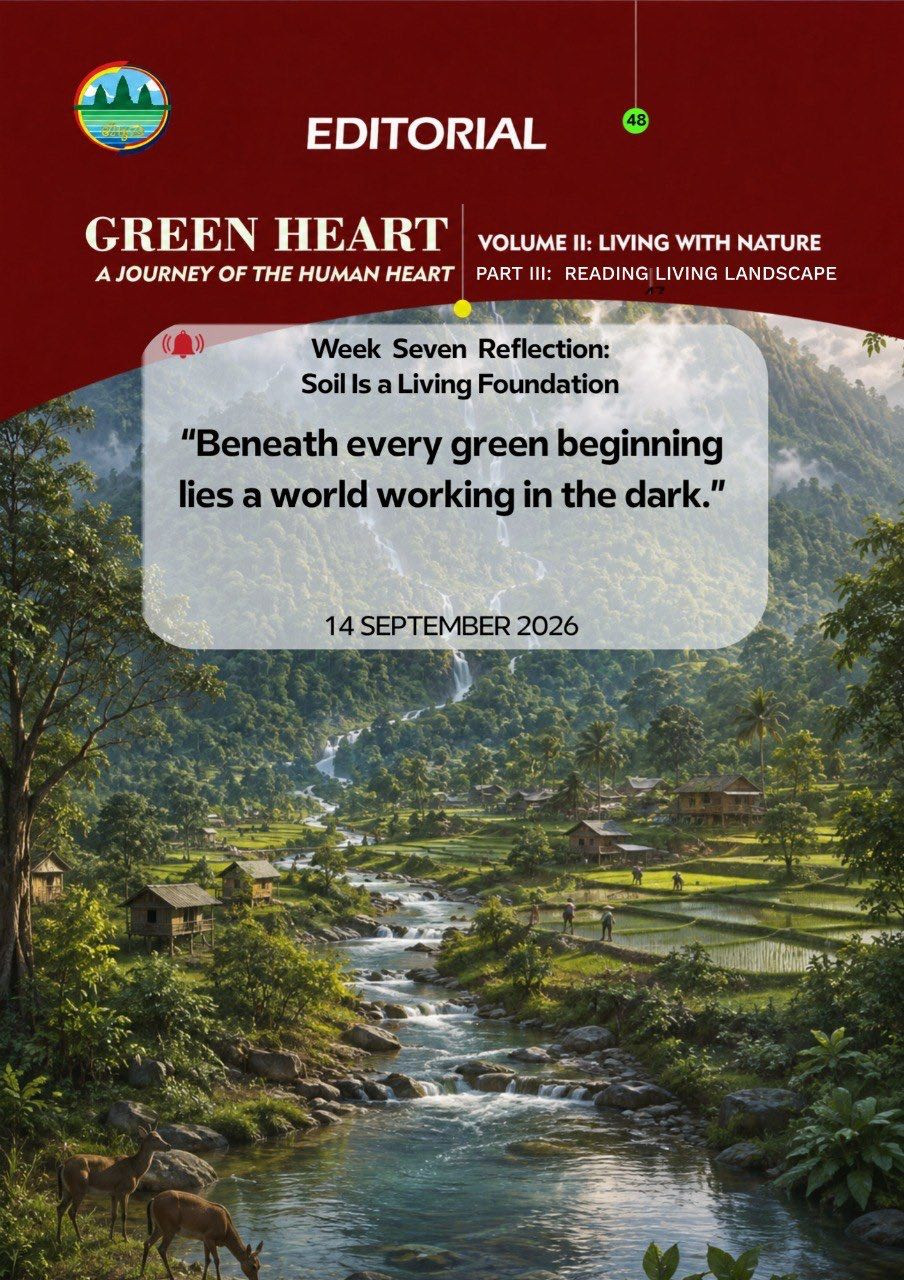
“Beneath every green beginning lies a world working in the dark.”
Different soils contain different proportions of sand, silt, clay, and organic material.
Their structure influences how water enters, drains, and remains available to plants. Soil acidity, nutrients, organisms, and depth also shape what can grow.
The living community can include bacteria, fungi, worms, insects, and countless other organisms.
They decompose material, cycle nutrients, form soil structure, and interact with plants. Much of this work is invisible.
Soil forms slowly. Rock weathers, organisms contribute organic material, and climate, topography, water, and time shape layers.
Productive topsoil can be lost rapidly through erosion if land is left unprotected.
Farmers and land managers use many methods suited to particular crops and places: keeping soil covered, rotating crops, adding organic matter appropriately, reducing disturbance, managing water, or using terraces and contour practices.
No method is universal, and local knowledge matters.
Contamination can damage soil and enter food or water. Waste, oil, heavy metals, pesticides, and other chemicals require responsible handling. Students should never touch suspicious material; report it to an adult.
Healthy soil also stores carbon, though amounts and stability vary.
Protecting and rebuilding soil can support food, water, biodiversity, and climate goals together.
Soil teaches that foundations are alive. We may build above them without noticing, but their condition shapes what becomes possible. A garden fails when only the leaves receive attention and the soil is ignored.
Take a small handful of safe garden soil only with permission. Notice its color, smell, texture, and moisture, then return it. Do not treat it as dead dust. Imagine roots, water, air spaces, and organisms sharing that handful.
The Earth beneath our feet is not merely a surface to stand on. It is a patient maker of possibility.
Protecting soil means protecting the beginning of forests, farms, food, and many lives.
Soil care rewards patience. A damaged soil may not recover after one rain or one application of compost. Structure, organic matter, and living communities develop over time.
Long-term improvement is an act of faith in gradual processes.
Each protected season gives the foundation another opportunity to heal.
Buddhist Reflection
Humility is related to the earth: grounded, steady, and supportive.
Soil receives fallen material and helps transform it into new growth. It reminds us that service can be quiet and still sustain the whole community.
Today’s Reflection
What would disappear from my life if healthy soil disappeared?
Today’s Action
Compare soil beneath vegetation with bare compacted ground without disturbing either. Record differences in moisture, texture, and signs of life.
Today’s Pledge
Today I will honor soil as a living foundation and protect it from waste and erosion.
When we protect nature, we protect all beings, including ourselves.
=FRESH NEWS