

EVIAN-LES-BAINS, France/DUBAI, June 16 (Reuters): Details began to emerge on Tuesday of the U.S. and Iran's interim agreement to end the war in the Middle East, with U.S. President Donald Trump saying it will rule out a nuclear weapon for Tehran and a U.S. official saying it allows Iran to sell oil upon signing.
The memorandum of understanding signed this week, though yet to be made public, extends a tenuous ceasefire announced in April by another 60 days to allow the countries to negotiate a permanent truce.
Under the deal, the U.S. will end its blockade of Iran's ports while Tehran will restore the passage of oil tankers and other maritime traffic through the Strait of Hormuz, which it has effectively blocked since the U.S. and Israel launched strikes on February 28.
The U.S. president said the agreement states clearly that Tehran will not have a nuclear weapon and the full text would be made public in a formal setting in a few days.
Iran has long said that it will not develop a nuclear weapon and that its nuclear program is for peaceful purposes only.
Trump has given shifting rationales for attacking Iran, but appears to have achieved little of what he has said he wanted: Iran's theocratic government remains in place, its ballistic missile program has not been dismantled, and it has not ended its support for anti-Israel militias like Hezbollah.
The accord exposes Trump, a Republican, to criticism from within his own party ahead of midterm elections in November. Meanwhile Iran's leaders could face renewed protests if they fail to ease economic pressures after a destructive war.
Israel has not directly participated in the negotiations and has distanced itself from both the April ceasefire and the latest U.S.-Iran agreement, adding uncertainty to whether the new ceasefire will hold.
The war has affected most countries in the region, killing more than 7,000 people, mostly in Iran and Lebanon, which Israel invaded in March after Iran-allied Hezbollah joined the fighting.
U.S. Vice President JD Vance said that the agreement included Israel and Lebanon, contradicting Israeli Prime Minister Benjamin Netanyahu, who said on Monday that Israel is not bound by it, and will not withdraw from southern Lebanon. A Hezbollah spokesperson told Reuters the group believed Iran would not agree to a permanent truce if the Israeli occupation was not ended.
Iran's military command, Khatam al-Anbiya Central Headquarters, warned that Israel should expect a hard response if it did not stop its attacks on southern Lebanon.
A senior U.S. official said the agreement allows Iran to immediately begin selling oil and fuel, and included banking, transportation and insurance services to facilitate the sales.
U.S. and Iranian officials say the deal could eventually deliver substantial economic benefits to Iran by lifting sanctions and unfreezing foreign assets. It could also set up a $300 billion reconstruction fund, paid for by neighbouring Gulf states that host U.S. military bases and were hit by Iranian attacks during the war, if Iran complies with other terms.
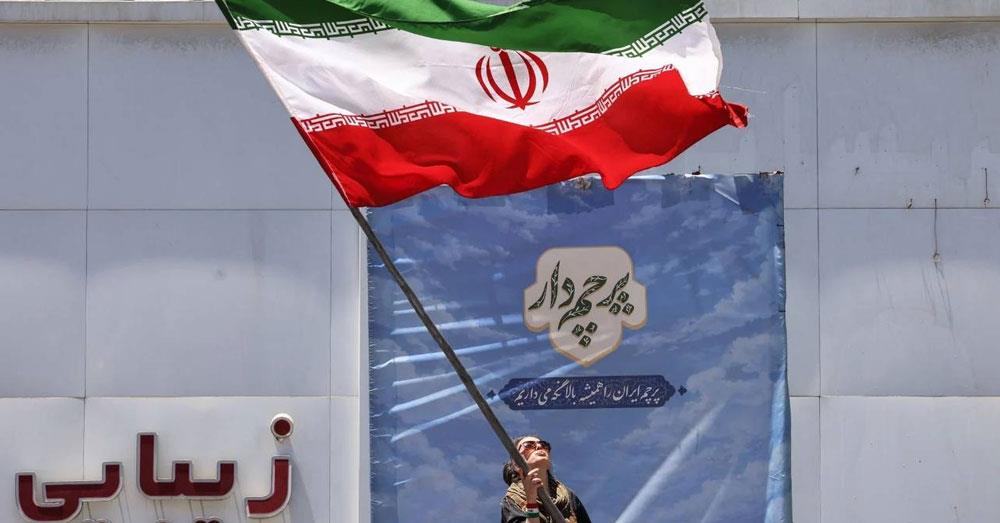
Photo from AFP