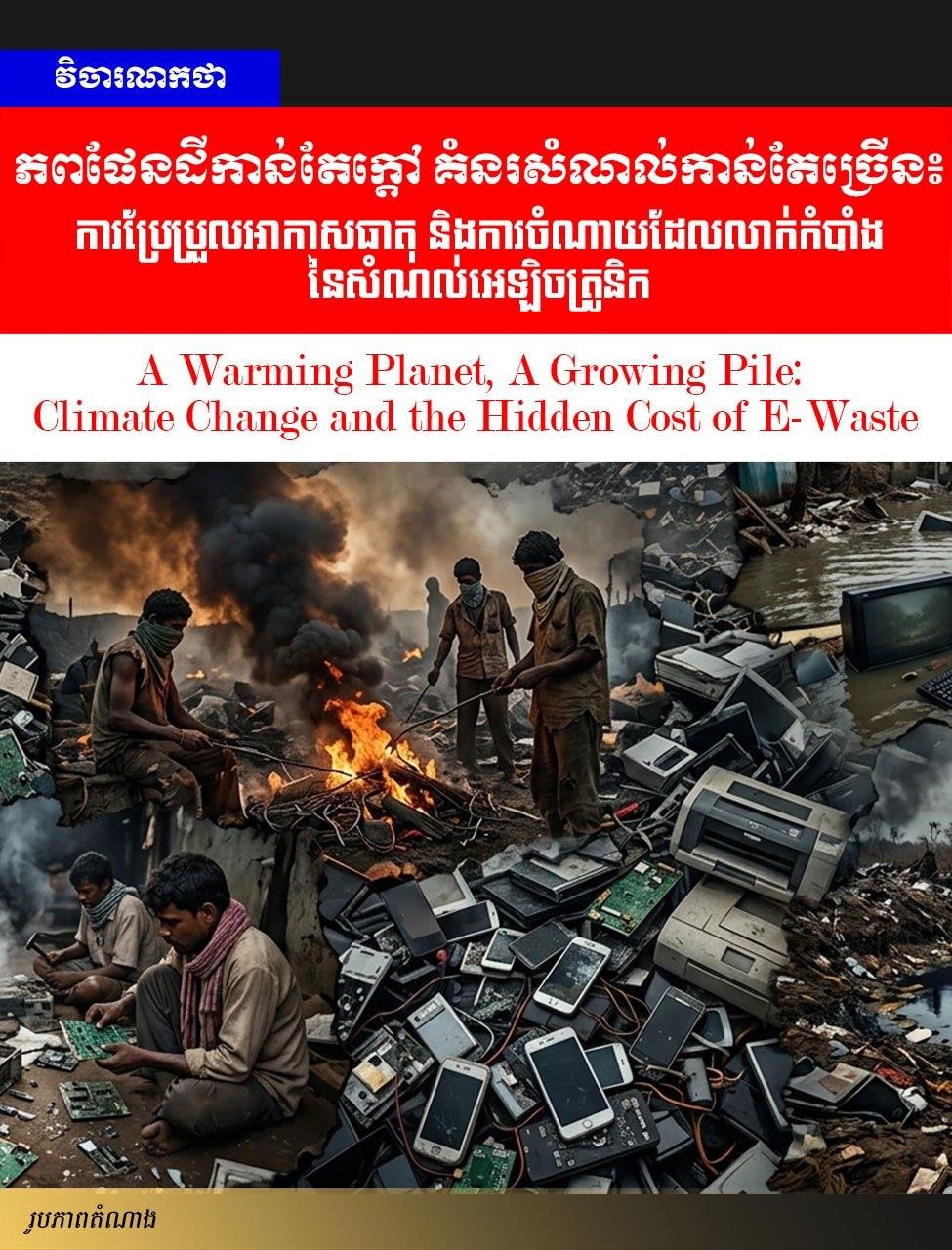

(Phnom Penh): In the global conversation on climate change, attention often centers on fossil fuels, deforestation, and transport emissions. Yet an equally urgent, and less visible, challenge is quietly expanding at the intersection of technology and waste: electronic waste, or e-waste.
As the world digitizes at unprecedented speed, the surge in discarded electronics is both contributing to climate change and being exacerbated by it.
E-waste is now one of the fastest-growing waste streams globally. Smartphones, computers, appliances, and batteries are replaced at accelerating rates, driven by innovation cycles and consumer demand.
Each discarded device carries an embedded carbon footprint, from raw material extraction and manufacturing to transport and disposal. When these products are not properly managed, they release greenhouse gases and toxic substances, compounding environmental damage.
The link between e-waste and climate change operates in two directions. First, the production of electronic devices is energy-intensive, often relying on fossil fuels.
Mining rare earth minerals, refining metals, and manufacturing components generate significant emissions. When devices are discarded prematurely rather than reused or recycled, the carbon cost of producing replacements rises.
Second, climate change itself is worsening the e-waste problem. Extreme weather events, floods, storms, and heatwaves, damage infrastructure, including electrical and electronic equipment. Entire stocks of devices can be destroyed in a single disaster, rapidly turning into waste.
Rising temperatures also shorten the lifespan of electronics, particularly batteries, increasing replacement rates and waste generation.
Improper disposal of e-waste further intensifies climate risks. In many parts of the world, informal recycling practices involve open burning or crude dismantling.
These methods release not only toxic pollutants such as lead, mercury, and dioxins but also climate-warming gases.
Landfills containing electronic waste can emit methane and contaminate soil and water, undermining ecosystems that serve as natural carbon sinks.
The human dimension is equally concerning. Informal workers, often among the most vulnerable populations,
are exposed to hazardous conditions while extracting valuable materials from discarded devices. Their livelihoods depend on a system that is both environmentally damaging and socially unjust.
Global efforts to regulate hazardous waste, such as the Basel Convention, have sought to control cross-border shipments of e-waste. However, enforcement gaps remain, and illegal trafficking continues to shift the burden to developing countries.
Without stronger international cooperation, the global south risks becoming a dumping ground for the digital age.
Yet within this challenge lies an opportunity. E-waste is not merely waste, it is a resource. Valuable materials such as gold, copper, and rare earth elements can be recovered and reused, reducing the need for new mining and lowering emissions.
A circular economy approach, designing products for durability, repairability, and recyclability, can significantly reduce both waste and carbon footprints.
To achieve this, systemic change is required. Manufacturers must take greater responsibility for the lifecycle of their products, through extended producer responsibility and eco-design standards.
Governments must strengthen regulations, invest in formal recycling systems, and support innovation in material recovery. Consumers, too, have a role to play by extending the life of devices and choosing sustainable options.
The intersection of climate change and e-waste highlights a broader truth: environmental challenges are interconnected.
Addressing one without considering the other risks shifting the burden rather than solving the problem.
As the world continues to embrace digital transformation, it must also confront the environmental cost of that progress.