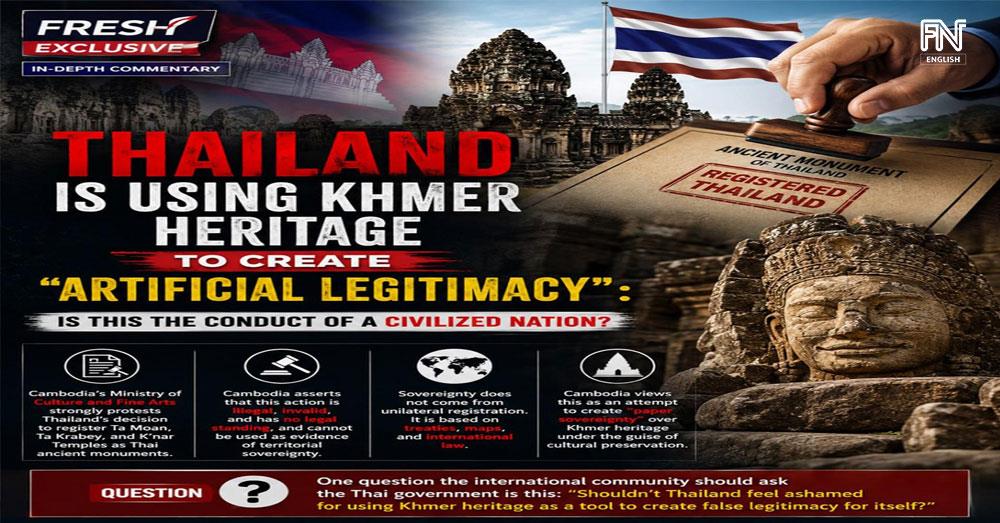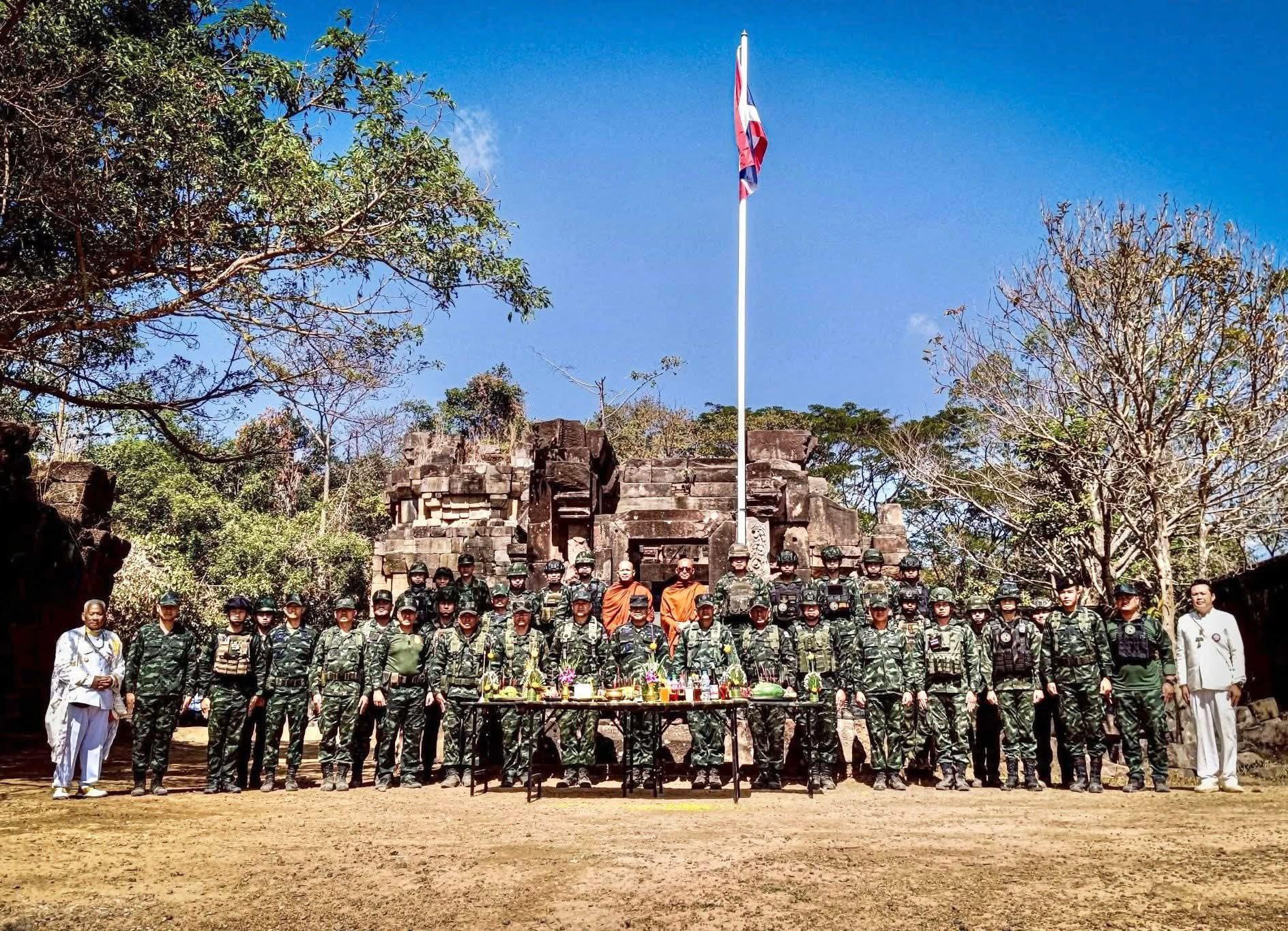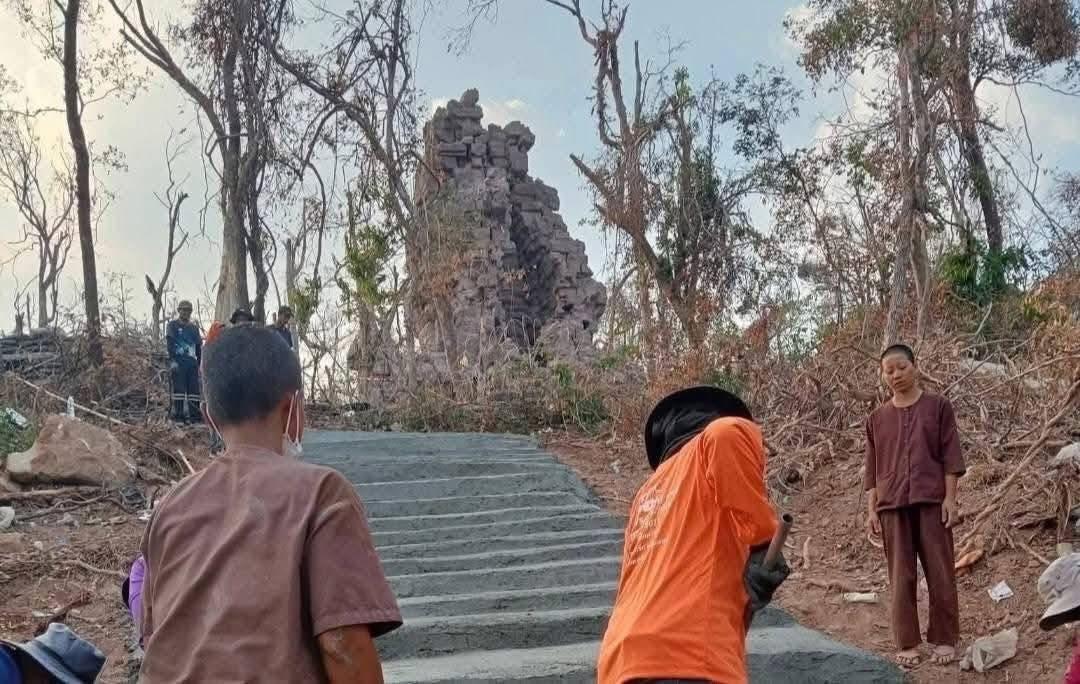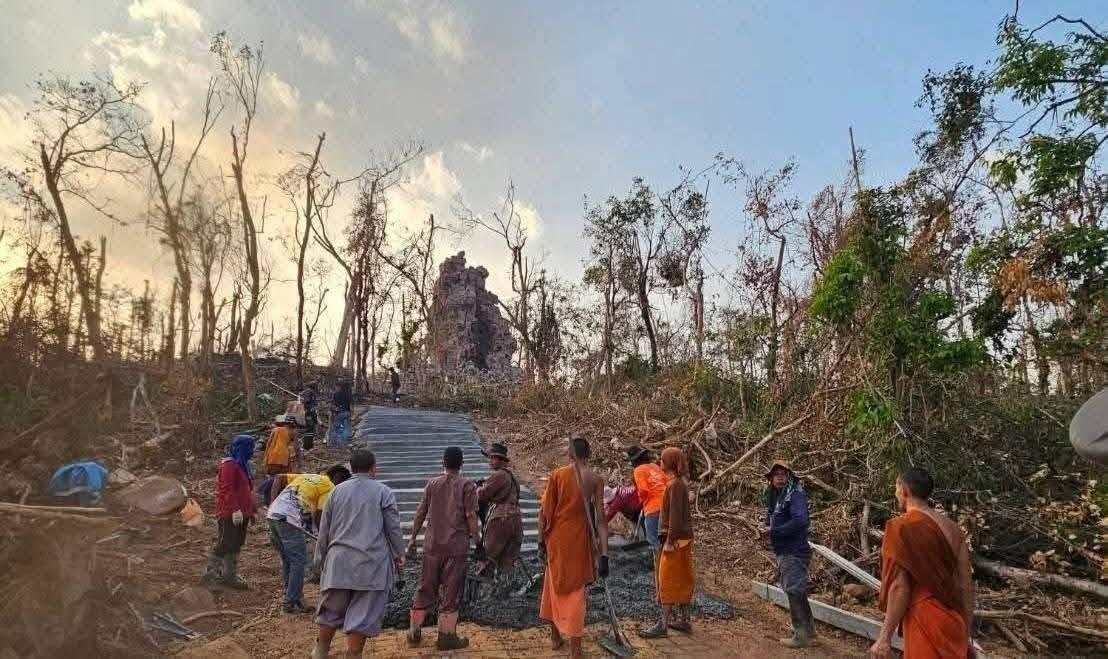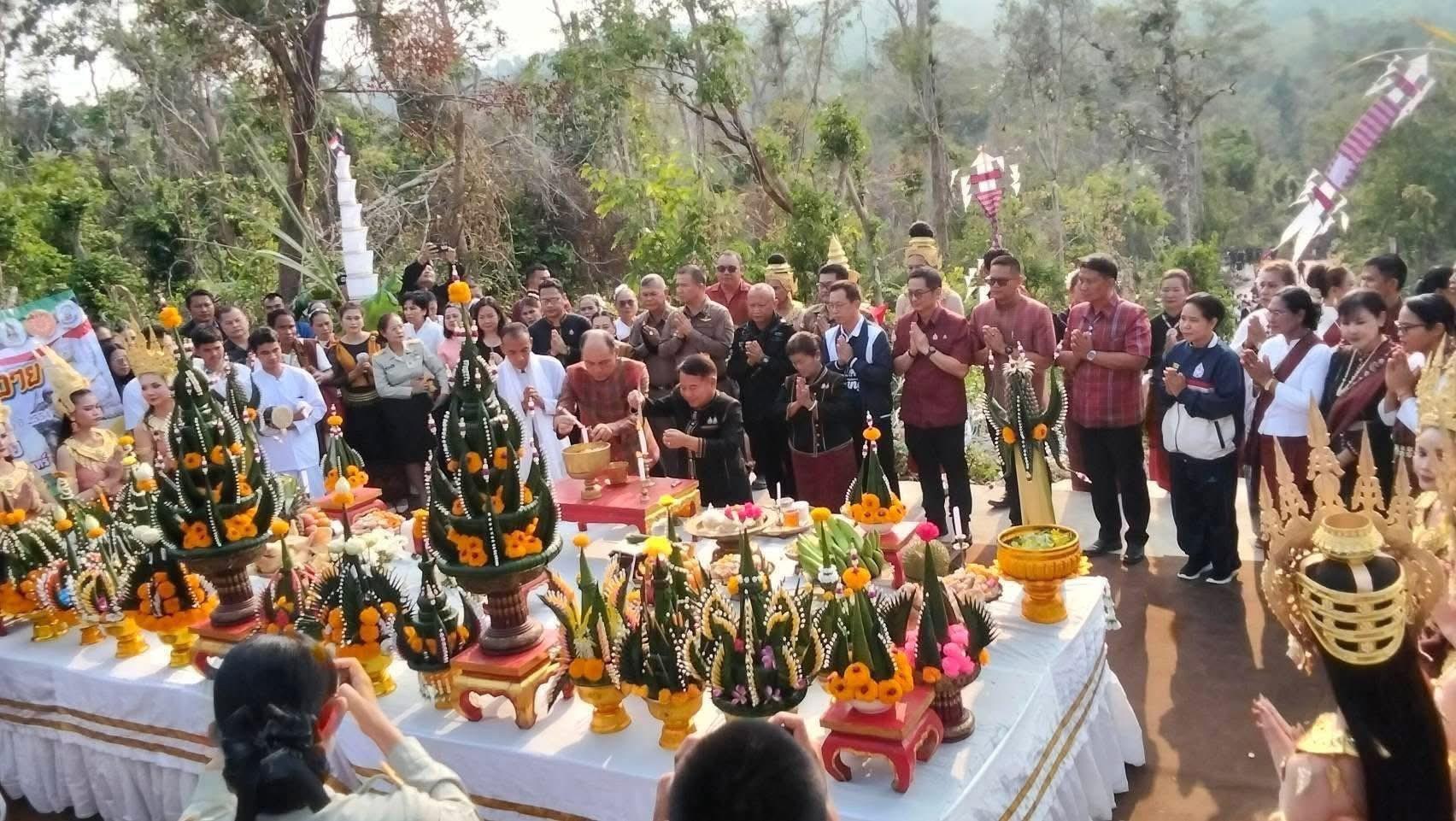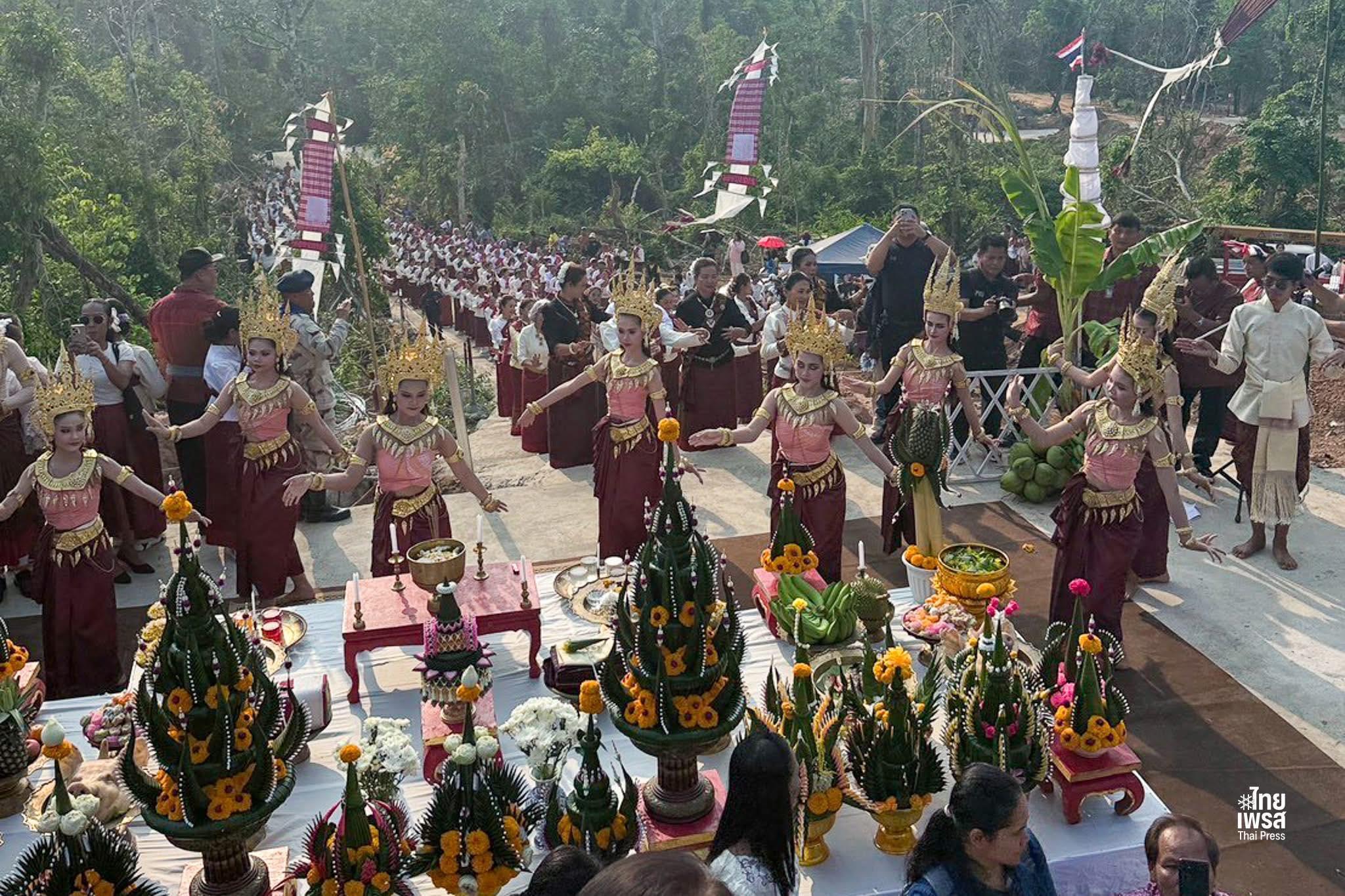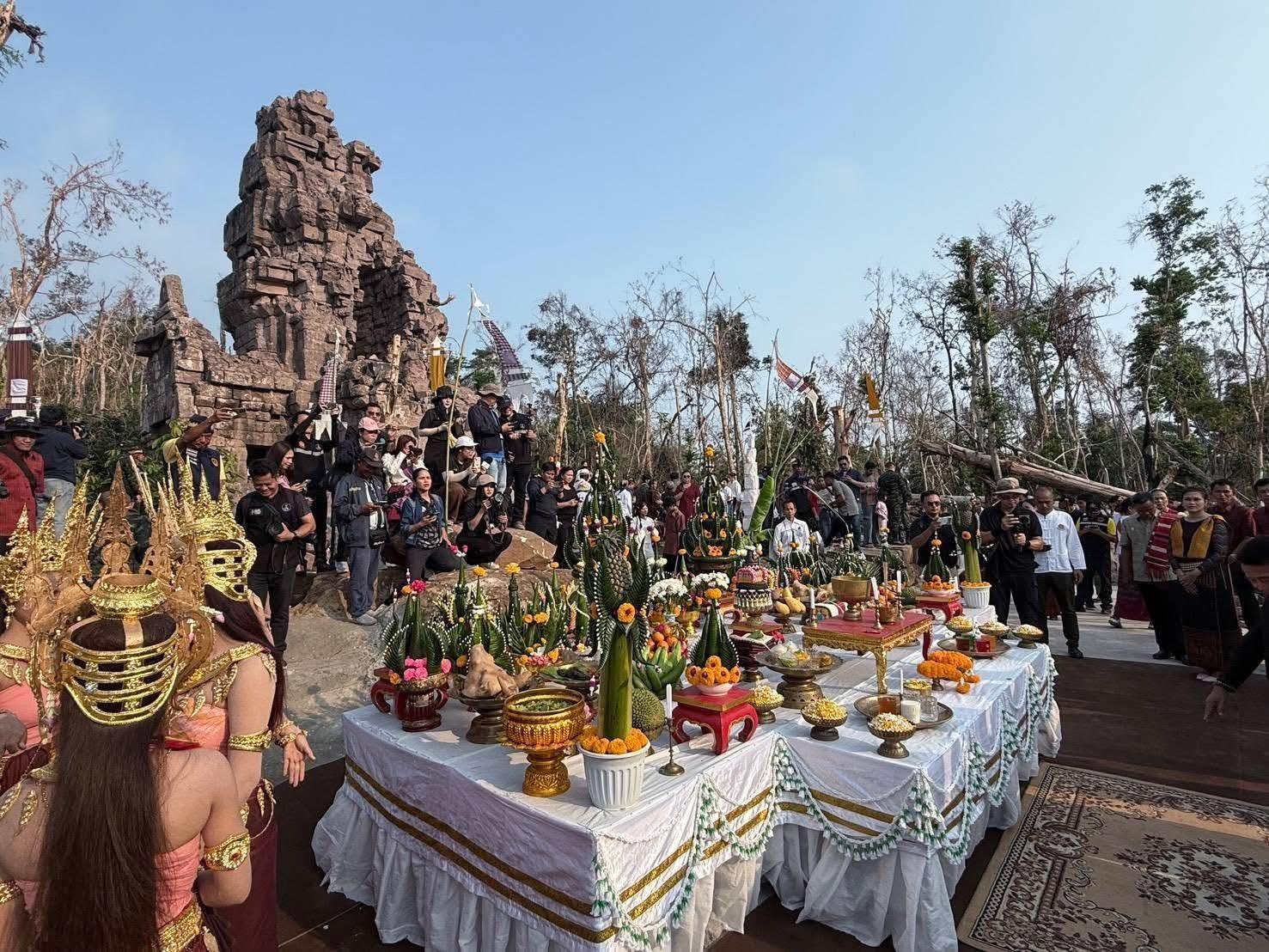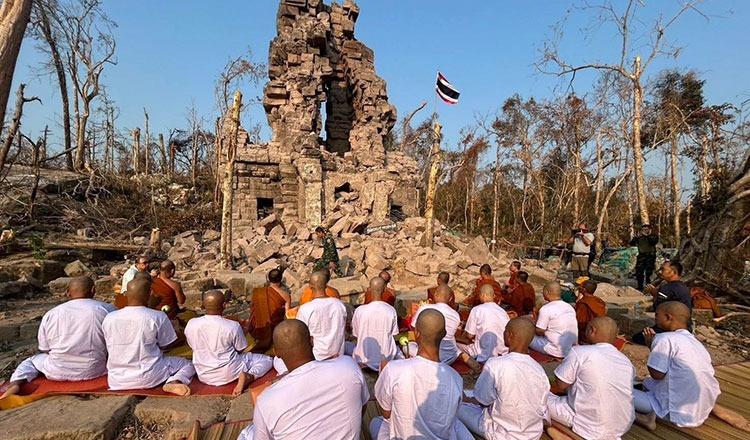

(Phnom Penh): The decision by Thailand’s Fine Arts Department to register the Ta Moan temple complex, Ta Krabey Temple, K’nar Temple, and several other archaeological sites along the border as Thai ancient monuments cannot be regarded as a routine administrative act in the cultural sector. These sites are located within territory long claimed and protected by Cambodia, supported by historical records, internationally recognized maps, and legal instruments. Therefore, Thailand’s action is not merely an act of cultural preservation. It is an attempt to construct “artificial legitimacy” over Khmer heritage under the guise of cultural conservation.
At a time when the international community increasingly emphasizes respect for international law and state sovereignty, the use of cultural institutions as instruments to advance political claims over a neighboring country’s territory reflects not only a lack of good-neighborly spirit, but also an effort to create a new narrative over issues that have not been resolved under international law.
Sovereignty Cannot Arise From Thailand’s Unilateral Registration
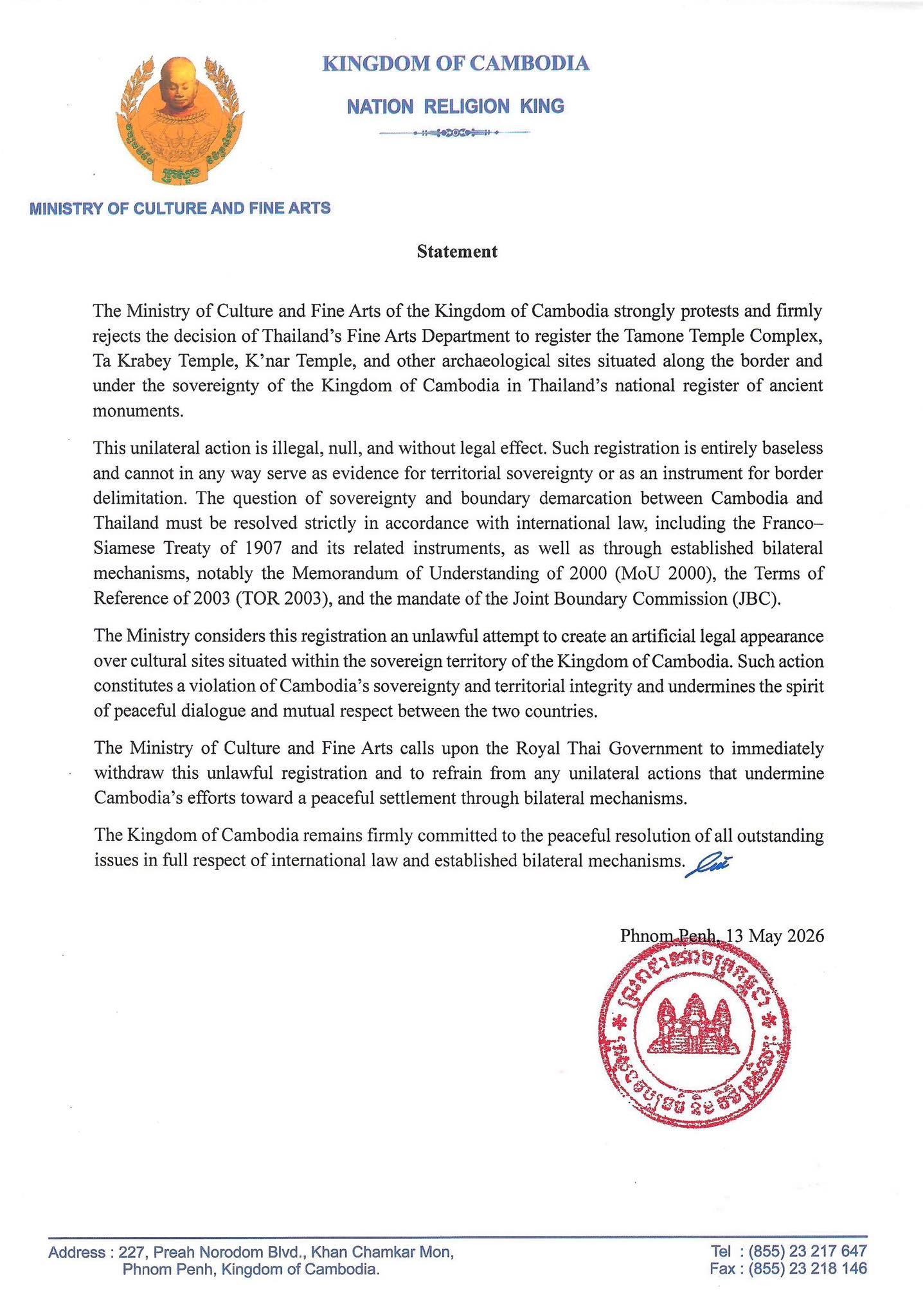
Cambodia cannot remain silent in the face of such an attempt to create a new legal and political narrative over its territory. The Ministry of Culture and Fine Arts of Cambodia issued a strong statement declaring that:
“This unilateral action is illegal, null and void, and without legal effect. Such registration is entirely baseless and cannot serve as evidence of territorial sovereignty or as an instrument for boundary delimitation by any means.”
This statement carries profound legal significance. Archaeological sites cannot be used as tools for border demarcation. Domestic legislation of one country cannot override international treaties, invalidate internationally recognized boundary maps, or create sovereignty over territories claimed or protected by a neighboring state. If any country were allowed to unilaterally register cultural sites along disputed borders and later use such registration as a basis for legal claims, the entire framework of international border order would be destabilized.
The Cambodian Ministry further stressed that:
“Questions of sovereignty and boundary demarcation between Cambodia and Thailand must be resolved strictly in accordance with international law, including the Franco–Siamese Treaty of 1907 and related instruments, as well as through established bilateral mechanisms, notably the 2000 Memorandum of Understanding (MoU 2000), the 2003 Terms of Reference (TOR 2003), and the mandate of the Joint Boundary Commission (JBC).”
These mechanisms represent a stable and internationally recognized legal framework, far more legitimate than unilateral actions that risk escalating tensions and undermining the spirit of peaceful dispute resolution.
Cambodia’s response is therefore not driven by emotional nationalism or political anger. It is grounded in legal principles, sovereignty, and the preservation of international order. Cambodia is defending a fundamental principle: state sovereignty cannot be manufactured through unilateral administrative registration or through the creation of “artificial legitimacy.”
When Culture Is Turned Into a Political Weapon
Thailand’s actions must be examined not only in the cultural context, but also in the broader context of sovereignty and international law. This is not simply a matter of heritage registration. It is a political act capable of creating artificial legal narratives over sites carrying sovereign significance. This is the danger of transforming culture into a geopolitical instrument.
The concept of “preservation” must not be used to conceal actions that undermine the sovereignty of another state. In a civilized international order, heritage conservation should aim to protect historical and cultural value — not to transform cultural heritage into a mechanism for territorial claims.
The Ta Moan complex, Ta Krabey Temple, K’nar Temple, and other Khmer archaeological sites along the border are not silent stones without identity. They are masterpieces of Khmer civilization, witnesses to centuries of history, and sacred legacies handed down from generation to generation. These heritage sites cannot be converted into political tools or absorbed into another country’s domestic legal system without Cambodia’s consent.
For this reason, Cambodia considers Thailand’s action not merely a challenge to sovereignty, but also an insult to historical truth and to the spirit of mutual respect between neighboring nations.
The Cambodian Ministry of Culture and Fine Arts clearly stated:
“The Ministry considers this registration an unlawful attempt to create an artificial legal appearance over cultural sites situated within the sovereign territory of the Kingdom of Cambodia. Such action constitutes a violation of Cambodia’s sovereignty and territorial integrity and undermines the spirit of peaceful dialogue and mutual respect between the two countries.”
This statement highlights that Cambodia does not regard the matter as a minor cultural dispute. It is a question of sovereignty, territorial integrity, and the foundational principles governing relations between states that respect international law.
Heritage Cannot Be Turned Into “Paper Sovereignty”
If Thailand genuinely seeks to preserve cultural heritage, such efforts should be carried out through cooperation, mutual respect, and established bilateral mechanisms. Preservation must not become a pretext for territorial control. Heritage registration must not become a tool for asserting sovereignty. Domestic cultural laws cannot be extended in ways that affect the sovereign rights of neighboring countries.
Cambodia is defending a core principle of international law: sovereignty cannot be created or altered through unilateral administrative acts. Cultural heritage must not be weaponized to manufacture “new realities” over disputed territories.
In a world governed by international law and respect for state sovereignty, no country should attempt to create “paper sovereignty” over unresolved territories. Sovereignty does not emerge from unilateral registration. It derives from treaties, maps, international legal instruments, actual practice, and lawful dispute resolution mechanisms recognized under international law.
For this reason, Thailand’s registration of Khmer archaeological sites should be withdrawn immediately.
Conclusion
Cambodia cannot accept any attempt to transform Khmer heritage into an instrument for constructing false sovereignty claims. Khmer temples are not merely ancient structures. They are historical, cultural, and national symbols inherited from generations of Khmer ancestors over many centuries. Unilateral registration cannot erase historical truth, invalidate legal evidence, or create new sovereign rights over Cambodian territory.
Cambodia will continue to stand firmly — firm in defending its territory, firm in protecting its heritage, and firm in rejecting any form of “artificial sovereignty” created through unilateral acts. Yet Cambodia’s firmness is not rooted in emotional confrontation. It is rooted in international law, treaties, bilateral mechanisms, and the principle of respect for state sovereignty.
Ultimately, what protects Khmer temples and Cambodia’s territorial integrity in the long term is not emotional nationalism alone, but the combination of historical memory, legal evidence, national spirit, and a steadfast commitment to defending sovereignty within the framework of international law and international order.