
(Phnom Penh): The global struggle against climate change is often measured in carbon emissions, rising temperatures, and extreme weather events.
Yet another dangerous crisis is expanding in parallel, often hidden from public attention: hazardous waste. As industrialization, urbanization, and technological consumption accelerate worldwide, the generation of toxic waste is increasing at the very moment climate change is making its management more difficult and more dangerous.
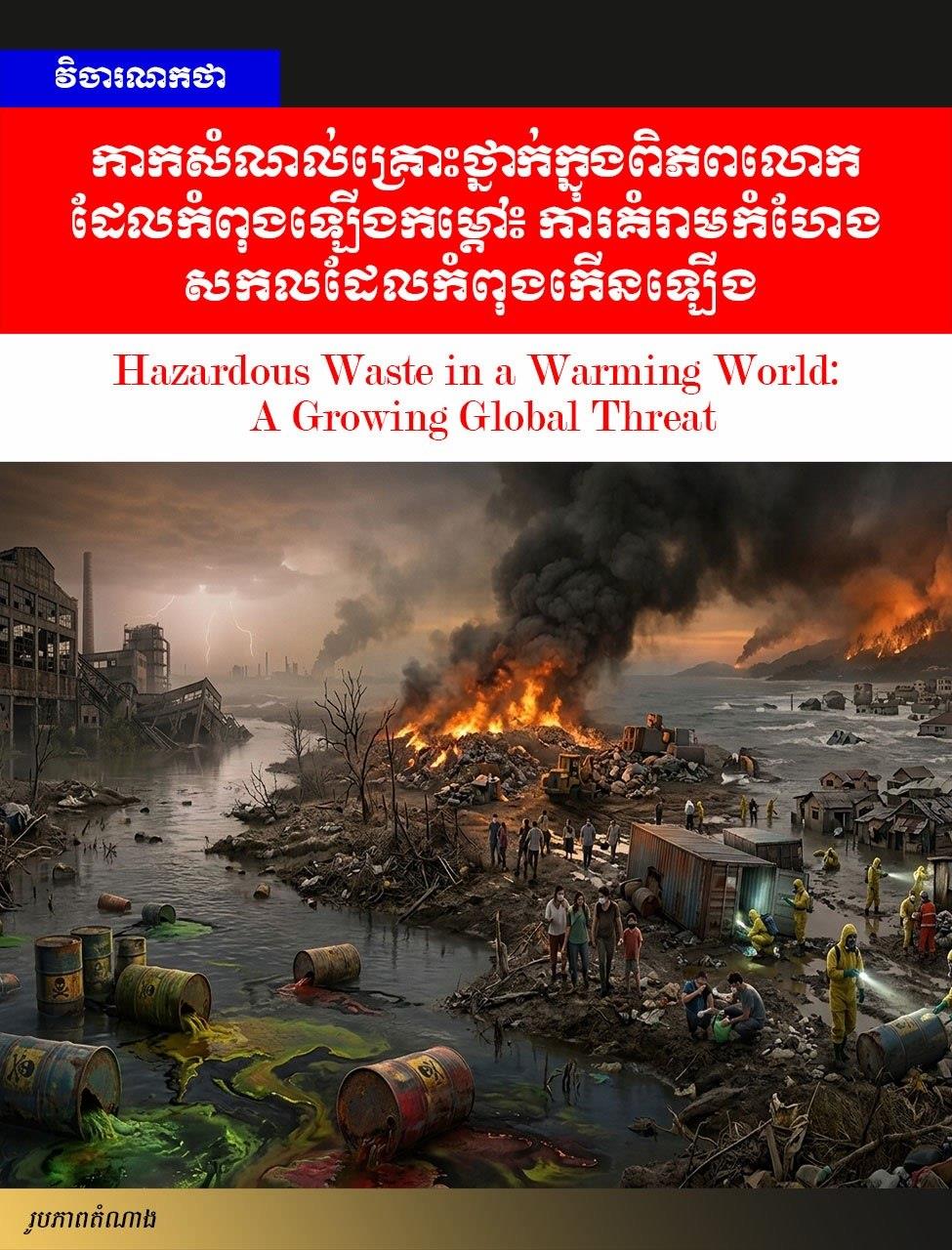
Hazardous waste includes industrial chemicals, toxic sludge, medical waste, pesticides, batteries, solvents, heavy metals, and electronic waste containing dangerous substances such as mercury, cadmium, and lead.
When poorly managed, these materials contaminate water, soil, and air, threatening ecosystems and human health for generations.
Climate change is intensifying these risks in ways the world is only beginning to fully understand. Rising temperatures can accelerate chemical reactions and increase the volatility of toxic substances.
Floods and storms can damage storage facilities, overflow landfills, and spread hazardous materials into rivers, farmland, and communities. Wildfires can release toxic fumes from industrial sites and waste dumps into the atmosphere, turning local pollution into regional public health emergencies.
Around the world, extreme weather events are exposing the vulnerability of hazardous waste infrastructure. Industrial zones located near coastlines and rivers, often chosen for economic convenience, are increasingly threatened by sea-level rise and flooding.
In many developing countries, inadequate waste management systems make the danger even greater. Informal dumping and poorly regulated disposal sites become ticking environmental time bombs under changing climate conditions.
The relationship also runs in the opposite direction: hazardous waste contributes to climate change itself. Many waste treatment processes rely heavily on fossil fuels or release greenhouse gases.
Open burning of toxic waste, still practised in some regions, emits not only dangerous pollutants but also carbon dioxide and black carbon, both of which contribute to global warming.
The human consequences are profound. Communities living near hazardous waste sites are often among the poorest and most vulnerable. They face higher exposure to contaminated water, toxic air, and disease. Climate-driven disasters can suddenly spread pollutants across entire regions, affecting populations far beyond the original source of contamination.
The global dimension of the problem is equally troubling. Illegal transboundary movement of hazardous waste continues despite international regulations such as the Basel Convention.
Wealthier nations and criminal networks sometimes exploit weaker regulatory systems in developing countries, shifting environmental and health burdens onto populations with fewer resources to respond.
This raises an urgent question of environmental justice. Climate change and hazardous waste disproportionately affect countries and communities that contributed the least to global pollution. Without stronger international cooperation and enforcement, the gap between environmental responsibility and environmental suffering will continue to widen.
Solutions exist, but they require political will and long-term vision. Governments must strengthen hazardous waste regulations, improve monitoring systems, and invest in climate-resilient waste infrastructure.
Industries must adopt cleaner production methods and reduce reliance on toxic materials. International cooperation is essential to combat illegal waste trafficking and support countries lacking technical and financial capacity.
Equally important is the transition toward a circular economy, where materials are reused, recycled safely, and designed for durability rather than disposal. Reducing waste generation at the source is far more sustainable than attempting to manage growing mountains of toxic materials after the fact.
The world can no longer treat hazardous waste and climate change as separate crises. They are deeply interconnected challenges that threaten public health, environmental stability, and sustainable development.
A warming planet does not simply magnify natural disasters; it magnifies human negligence. The true measure of global progress will not only be how much carbon the world reduces, but also how responsibly it manages the dangerous byproducts of modern civilisation.
In the age of climate change, hazardous waste is no longer just an environmental issue. It is a global test of governance, responsibility, and humanity’s ability to protect both people and planet.
=FRESH NEWS