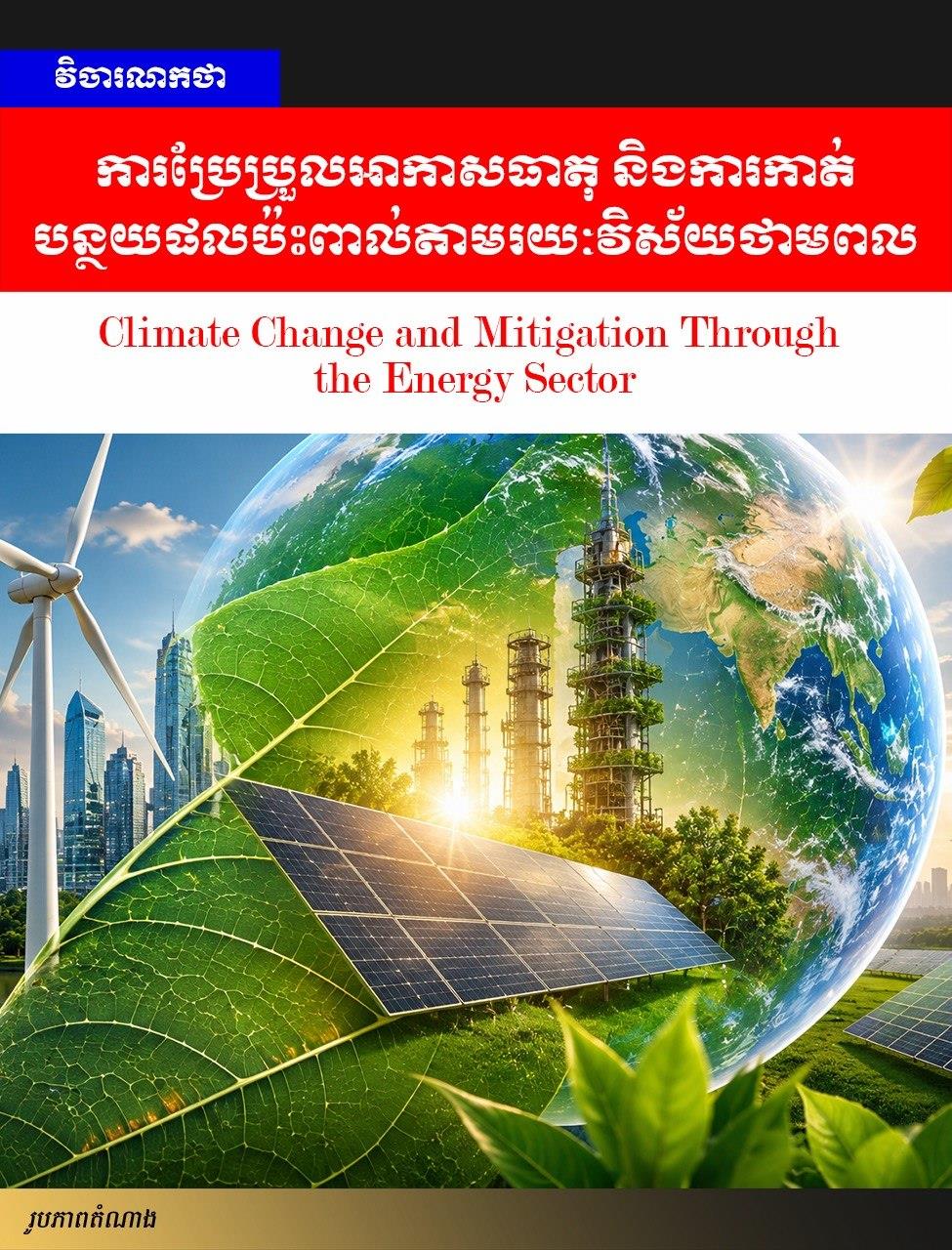

(Phnom Penh): Climate change has become one of the most urgent global challenges of modern civilisation. Across continents, nations are witnessing rising temperatures, devastating floods, prolonged droughts, stronger storms, melting glaciers, wildfires, and rising sea levels.
These environmental disruptions are increasingly affecting economies, food systems, public health, water security, and human livelihoods.
At the center of this global crisis lies one dominant factor: the energy sector.
For more than a century, the world’s economic growth has been powered largely by fossil fuels such as coal, oil, and natural gas. These energy sources fueled industrialisation, transportation, manufacturing, and urban development, helping nations modernise and expand. However, this progress also came with a heavy environmental cost.
The burning of fossil fuels releases massive amounts of greenhouse gases, particularly carbon dioxide, into the atmosphere, accelerating global warming and destabilising the Earth’s climate system.
Today, the energy sector remains the largest contributor to global greenhouse gas emissions. As a result, meaningful climate change mitigation cannot succeed without a major transformation of how the world produces, distributes, and consumes energy.
The global climate crisis has therefore become not only an environmental issue, but also an energy transition challenge.
The transition toward cleaner and more sustainable energy systems is increasingly viewed as one of the most important pathways to reducing emissions and slowing climate change.
Renewable energy sources such as solar, wind, hydropower, geothermal, and biomass are rapidly gaining global attention because they generate electricity with far lower carbon emissions compared to fossil fuels.
Among these, solar and wind energy have experienced remarkable growth in recent years. Technological advancements and falling production costs have made renewable energy more accessible and competitive in many countries.
Large-scale solar farms, offshore wind projects, and decentralised renewable systems are now transforming the global energy landscape.
The shift toward clean energy offers benefits beyond emission reduction. Renewable energy improves air quality, reduces pollution-related diseases, strengthens energy security, and creates new economic opportunities through green industries and employment.
In many developing countries, renewable energy also provides electricity access to remote communities that previously lacked reliable power infrastructure.
Energy efficiency is another critical component of climate mitigation within the energy sector. Improving efficiency in buildings, industries, transportation systems, and electrical grids can significantly reduce energy consumption and emissions without sacrificing economic productivity.
Smart technologies, energy-efficient appliances, sustainable construction, and modern public transportation systems are increasingly becoming part of climate solutions worldwide.
The transportation sector, heavily dependent on fossil fuels, is also undergoing transformation. Electric vehicles, cleaner fuels, and investment in public transportation systems are helping reduce emissions while modernizing urban mobility.
Many governments are adopting policies to phase out gasoline and diesel vehicles over the coming decades.
At the same time, challenges remain substantial.
Many countries continue to rely heavily on coal and fossil fuels to support industrial growth and national energy demand. Developing nations often face difficult choices between economic development, energy affordability, and environmental sustainability.
Energy transitions require large investments, technological capacity, infrastructure modernisation, and long-term policy stability.
Global inequality further complicates the issue. Developed countries historically contributed the largest share of greenhouse gas emissions, while many developing nations remain among the most vulnerable to climate impacts despite contributing relatively little to the problem.
This reality highlights the importance of climate justice, international cooperation, and financial support for clean energy transitions in lower-income countries.
Climate mitigation through the energy sector, therefore, requires global solidarity. International cooperation, technology transfer, green financing, and shared innovation are essential to accelerating the transition toward sustainable energy systems.
Importantly, climate mitigation is not only a government responsibility. Private companies, financial institutions, research institutions, and consumers all influence energy demand and investment patterns.
Businesses are increasingly investing in renewable energy and sustainable operations, while public awareness of energy conservation and environmental responsibility continues to grow.
The energy transition also reflects a deeper philosophical shift in humanity’s relationship with development. For decades, economic success was often measured by industrial expansion and energy consumption without sufficient regard for environmental consequences.
Today, the climate crisis is forcing the world to recognise that long-term prosperity cannot be separated from environmental sustainability.
The future of global development will depend largely on whether humanity can successfully decarbonise the energy sector while maintaining economic growth and social stability. This transformation will not happen overnight, but delay carries severe risks.
Continued dependence on fossil fuels will intensify climate disasters, environmental degradation, food insecurity, water shortages, and public health crises.
The transition toward sustainable energy is therefore more than an environmental necessity. It is an investment in global stability, economic resilience, public health, and human survival.
In the end, climate change mitigation through the energy sector represents one of humanity’s greatest tests of innovation, cooperation, and responsibility.
The choices made today regarding energy production and consumption will shape not only the future of the planet, but also the future of civilisation itself.
The world possesses the technology, knowledge, and resources to move toward cleaner energy and a more sustainable future. The remaining question is whether humanity has the collective will to act before the costs of inaction become irreversible.
=FRESH NEWS