
(Phnom Penh): In Cambodia’s political history, Samdech Akka Moha Sena Padei Techo Hun Sen has long emphasized the relationship between “power” and “service to the people.” Among his many public messages, one statement remains especially important for officials at all levels: “We are servants of the people, not masters of the people.”
Samdech Techo further reminded officials: “What I want to remind our officials is this: always remember and constantly remind yourselves that we are officials who must serve the people with honesty. We are not the masters of the people. Please grasp this point clearly.”
This message is not merely a moral appeal in politics. It is a profound warning against a chronic disease within public administration: officials who lie to their superiors, conceal the truth, and distort realities on the ground.
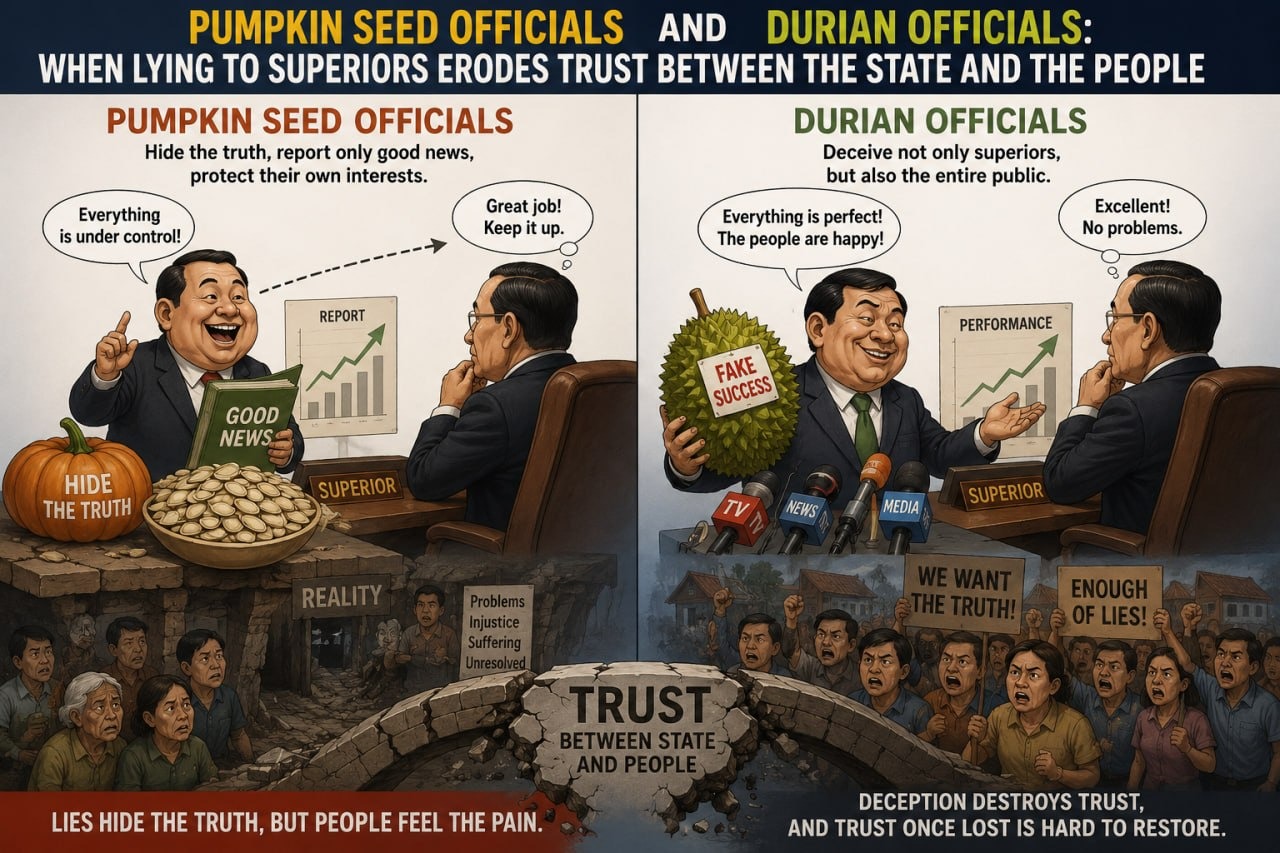
When some officials do not want national leaders to know the truth, they begin to create a culture of false reporting, staged narratives, and the misuse of power to pressure citizens. This is precisely what Samdech Techo has described through two striking metaphors: “pumpkin seed officials” and “durian officials.”
“Pumpkin Seed Officials”: Those Who Hide the Truth
Samdech Techo has explained that the term “pumpkin seed officials” comes from a metaphorical tale. It refers to officials who lie, hide the truth, lack competence, or report only pleasant stories to their superiors.
Such officials are dangerous not only because of their individual misconduct, but because they endanger the entire leadership system. When senior leaders do not receive truthful information, national decisions may be made on a false foundation.
Land disputes in some areas offer a clear example. In a community in Smach Daeng village, Ream commune, Preah Sihanouk province, people who have lived on their land for many years have reportedly been accused of occupying land allegedly belonging to a powerful tycoon. Behind such disputes, the issue is not merely land ownership; it may also involve networks of officials attempting to “cover the sky with their hands” by hiding the truth from reaching top leaders.
Officials of this kind do not protect the people. They protect their own networks of interest.
“Durian Officials”: When Deception Becomes a Social Danger
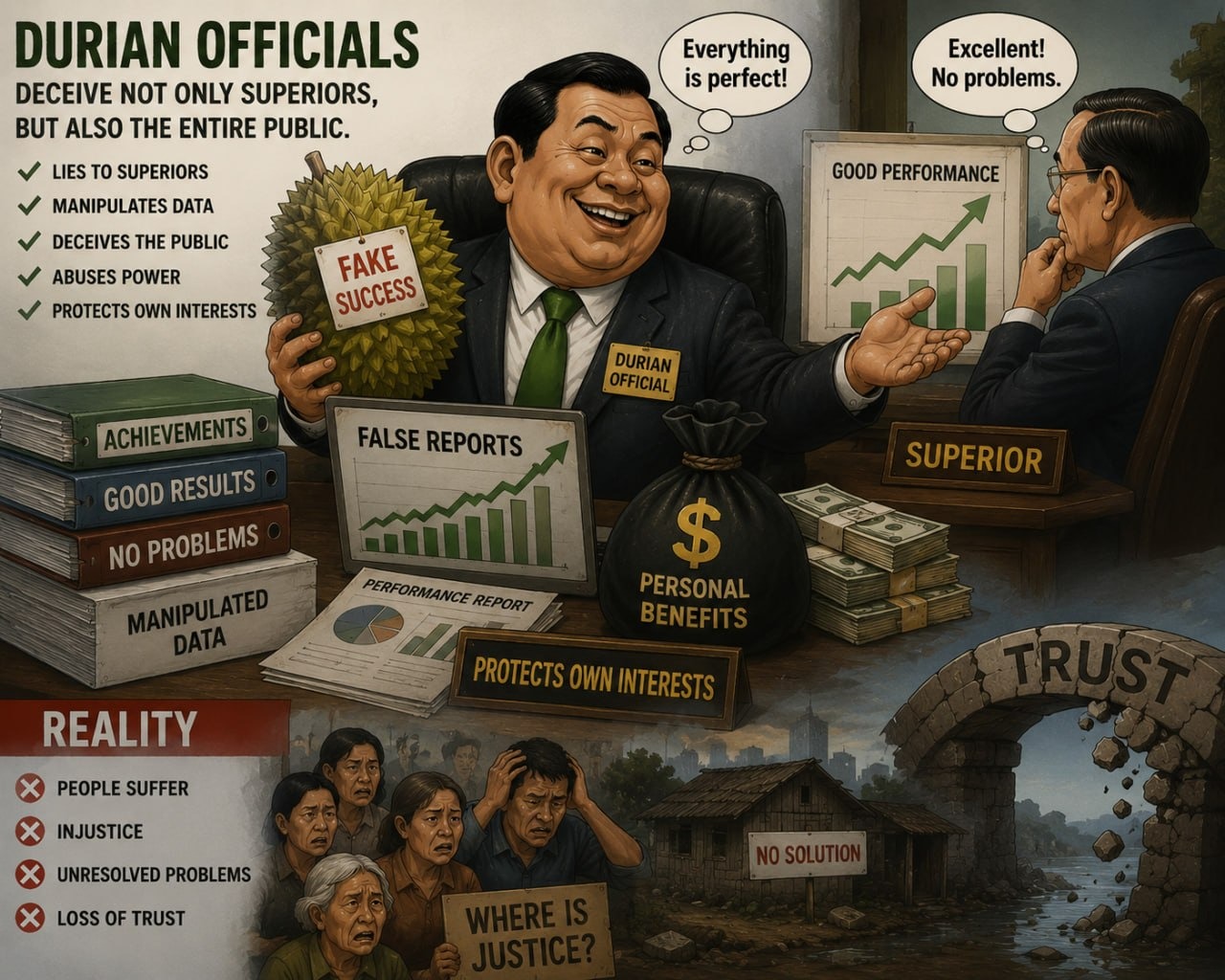
If “pumpkin seed officials” are a metaphor drawn from a tale, “durian officials” represent a real phenomenon that is damaging public trust.
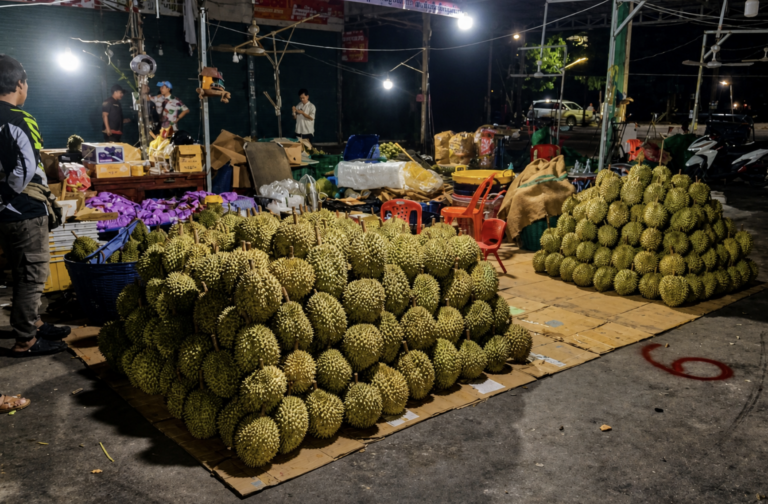
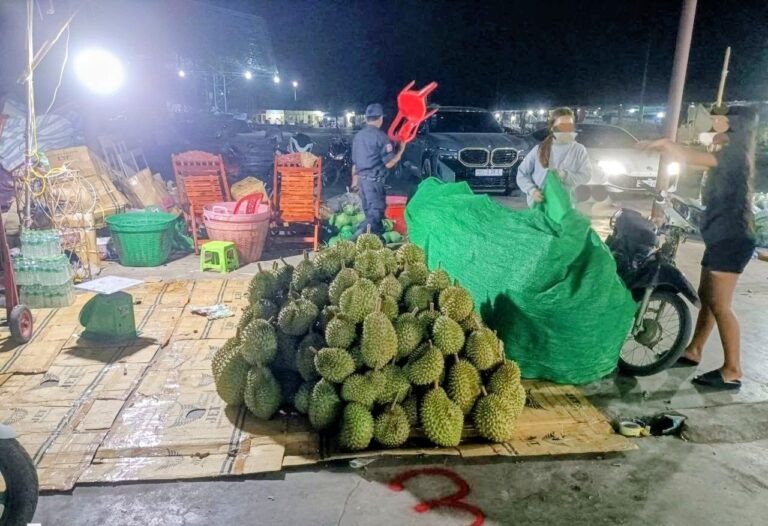
The durian case at Phou Puy market in Battambang province, which triggered public criticism and led to the removal of a provincial CCF chief, is a clear sign that citizens can no longer tolerate fraud, deception, and the distortion of facts.
“Durian officials” do not merely mislead their superiors. They mislead the public. They may produce polished reports, but the reality on the ground may be filled with suffering and injustice.
The greatest danger posed by this type of official is the destruction of public trust. In the 21st century, an era of information and social media, the truth can no longer be hidden for long.
The Officials People Need Are Those Who Dare to Tell the Truth
Samdech Techo Hun Sen has repeatedly reminded officials that the true strength of the party and the state does not lie in propaganda, but in clean, honest, and morally responsible officials.
A good official is not someone who merely tries to please superiors. A good official is someone who dares to tell the truth, even when that truth is difficult to hear. Truth can help solve problems. Lies merely delay crises.
A country can progress only when it has a public administration that respects the people. When some officials begin to think of themselves as masters rather than servants, power becomes a tool of pressure instead of a tool of public service.
Cambodia Must Not Suffer Because of Dishonest Officials
At a time when Cambodia is facing geopolitical pressure, economic competition, and challenges to national sovereignty, what the country needs most are officials who are honest toward the people and loyal to the truth.
A nation can suffer from external threats. But a nation can also be weakened from within by corruption, dishonesty, and the concealment of truth.
Therefore, Samdech Techo’s statement — “We are servants of the people, not masters of the people” — is not merely a lesson in political morality. It is a guiding principle for every public official.
In the end, citizens do not judge officials by the beauty of their speeches. They judge them by their actions, honesty, moral conduct, and courage to defend the truth.
Samdech Techo offered one final reminder:
“Always remind yourselves that we are servants of the people, not masters of the people. Serving the people must be the goal of our work. If an official does not regard serving the people as the goal, then there is no need to become an official. This is not only true in Cambodia; around the world, governments adopt people-centered approaches. For us, the people must be the central goal of our service, and the problems of the people are not small matters.”