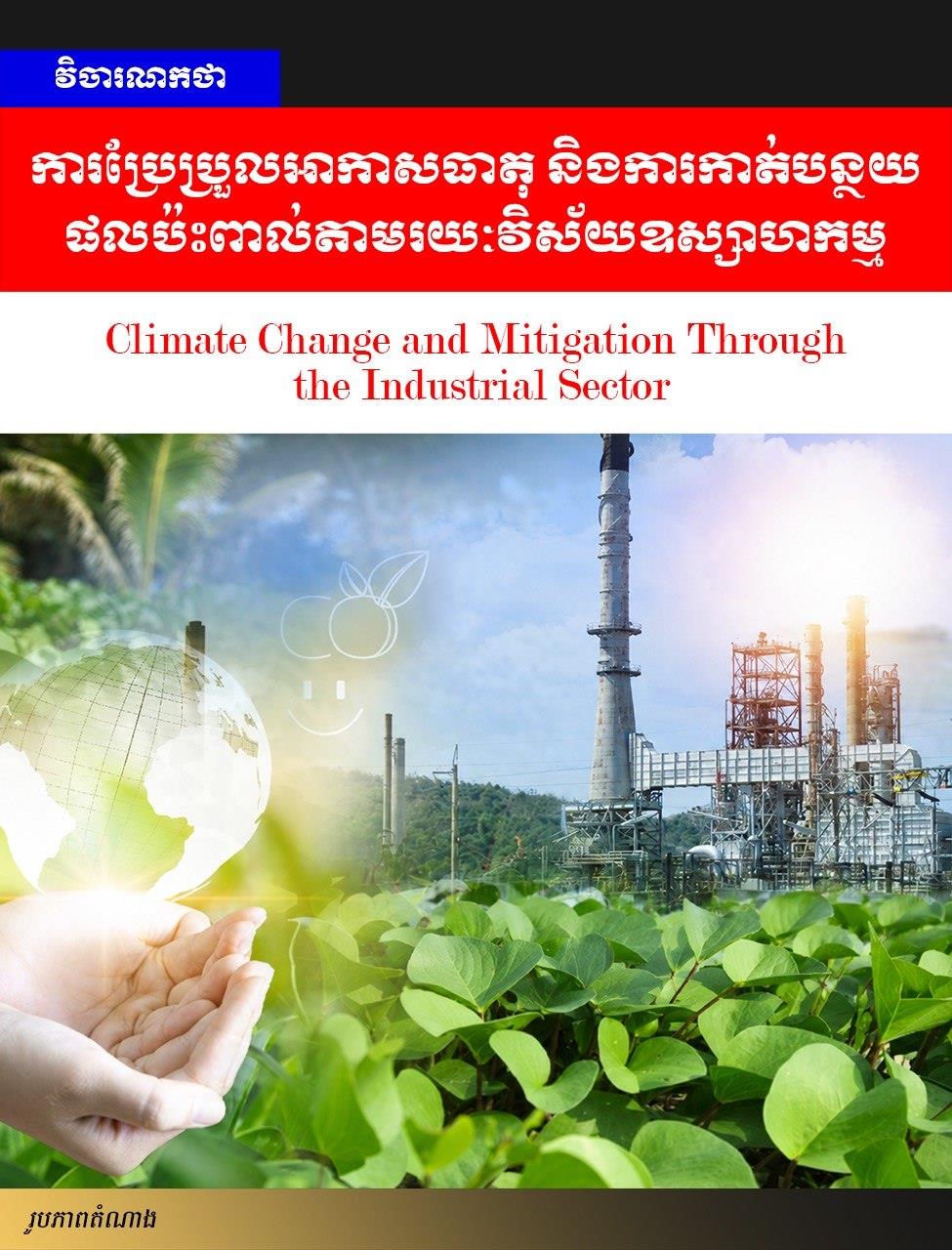

(Phnom Penh): Climate change has become one of the most serious global challenges confronting humanity in the modern era. Rising temperatures, extreme weather events, prolonged droughts, devastating floods, wildfires, melting glaciers, and sea-level rise are increasingly affecting economies, ecosystems, and human well-being across every continent.
While the impacts of climate change are global, so too are its causes. Among the largest contributors to greenhouse gas emissions is the industrial sector.
For decades, industrialization has been a driving force behind economic growth, technological advancement, urbanization, and improved living standards. Factories, manufacturing plants, mining operations, cement production, steel industries, chemical processing, and large-scale industrial systems have supported global development and modern civilization. Yet this progress has also generated enormous environmental pressure.
The industrial sector consumes vast amounts of energy, much of it derived from fossil fuels such as coal, oil, and natural gas. Industrial activities also release large quantities of carbon dioxide, methane, and other greenhouse gases directly into the atmosphere.
Heavy industries such as cement, steel, chemicals, and petrochemicals are particularly carbon-intensive and remain among the world’s largest emitters.
As the climate crisis intensifies, the global community increasingly recognizes that climate change mitigation cannot succeed without transforming industrial systems toward cleaner, more sustainable models of production.
The challenge is significant because industry remains central to economic development, trade, employment, and infrastructure. However, industrial growth and environmental protection no longer need to exist in opposition.
The future increasingly depends on creating industries that are both economically productive and environmentally responsible.
One of the most important mitigation pathways is improving industrial energy efficiency. Modern technologies can significantly reduce energy consumption while maintaining or even increasing productivity.
Upgrading machinery, improving manufacturing processes, optimizing supply chains, and reducing waste can lower emissions while strengthening industrial competitiveness.
The transition to renewable and cleaner energy sources is equally essential. Industries powered by solar, wind, hydropower, hydrogen, or other low-carbon energy systems can dramatically reduce greenhouse gas emissions.
Many companies around the world are now investing in clean energy infrastructure and adopting net-zero emission targets as part of long-term sustainability strategies.
Innovation also plays a critical role in industrial climate mitigation. Advances in green manufacturing, carbon capture technologies, sustainable materials, and circular economy systems are creating new opportunities for industries to reduce environmental impact. The circular economy model, in particular, encourages recycling, reuse, resource efficiency, and waste reduction, minimizing both pollution and excessive resource extraction.
Industrial waste management remains another major area for climate mitigation. Poorly managed industrial waste contributes to air, water, and soil pollution while releasing harmful greenhouse gases.
Proper treatment of wastewater, safe disposal of hazardous materials, responsible chemical management, and reduction of industrial burning are increasingly necessary for environmental and public health protection.
At the same time, industries are becoming more vulnerable to the impacts of climate change itself. Floods, heatwaves, water scarcity, supply chain disruptions, and energy instability increasingly threaten industrial productivity and global trade networks.
This reality is pushing many companies and governments to view climate mitigation not merely as an environmental obligation, but also as an economic necessity.
However, the transition toward greener industries faces significant challenges.
Developing countries often rely heavily on industrial growth to reduce poverty, create jobs, and strengthen national economies. Many industries still depend on affordable fossil fuels and older technologies.
Transitioning toward low-carbon industrial systems requires large investments, technological access, skilled labor, infrastructure modernization, and supportive government policies.
This raises important questions of climate equity and shared responsibility. Developed nations historically benefited from centuries of carbon-intensive industrialization and therefore carry an important responsibility to support developing countries in their climate transitions through financing, technology transfer, and international cooperation.
Governments also play a critical role in shaping industrial transformation. Environmental regulations, emissions standards, green incentives, carbon pricing mechanisms, and sustainable investment policies can accelerate industrial decarbonization while encouraging innovation and competitiveness.
Consumers and global markets are also influencing change. Around the world, demand is growing for environmentally responsible products and sustainable production systems. Investors increasingly evaluate environmental performance when making financial decisions, while companies recognize that long-term success increasingly depends on sustainability and corporate responsibility.
Climate change mitigation through the industrial sector therefore represents more than reducing emissions. It reflects a broader transformation in how humanity defines economic progress and industrial success.
For too long, industrial expansion often prioritized short-term production and profit without fully accounting for environmental consequences. Today, climate change serves as a global reminder that economic systems cannot remain sustainable if they continue degrading the natural systems that support human life.
The future of industry must therefore be cleaner, more efficient, more innovative, and more environmentally responsible.
The global climate crisis demands not the abandonment of industry, but its evolution. Industrial development and environmental sustainability must move forward together if humanity hopes to achieve long-term prosperity and stability.
In the end, climate change mitigation through the industrial sector is not only about protecting the atmosphere. It is about protecting human health, conserving natural resources, strengthening economic resilience, and ensuring that future generations inherit a world capable of sustaining both development and life itself.
The industrial sector helped build the modern world. It now has a critical responsibility to help protect its future.
=FRESH NEWS