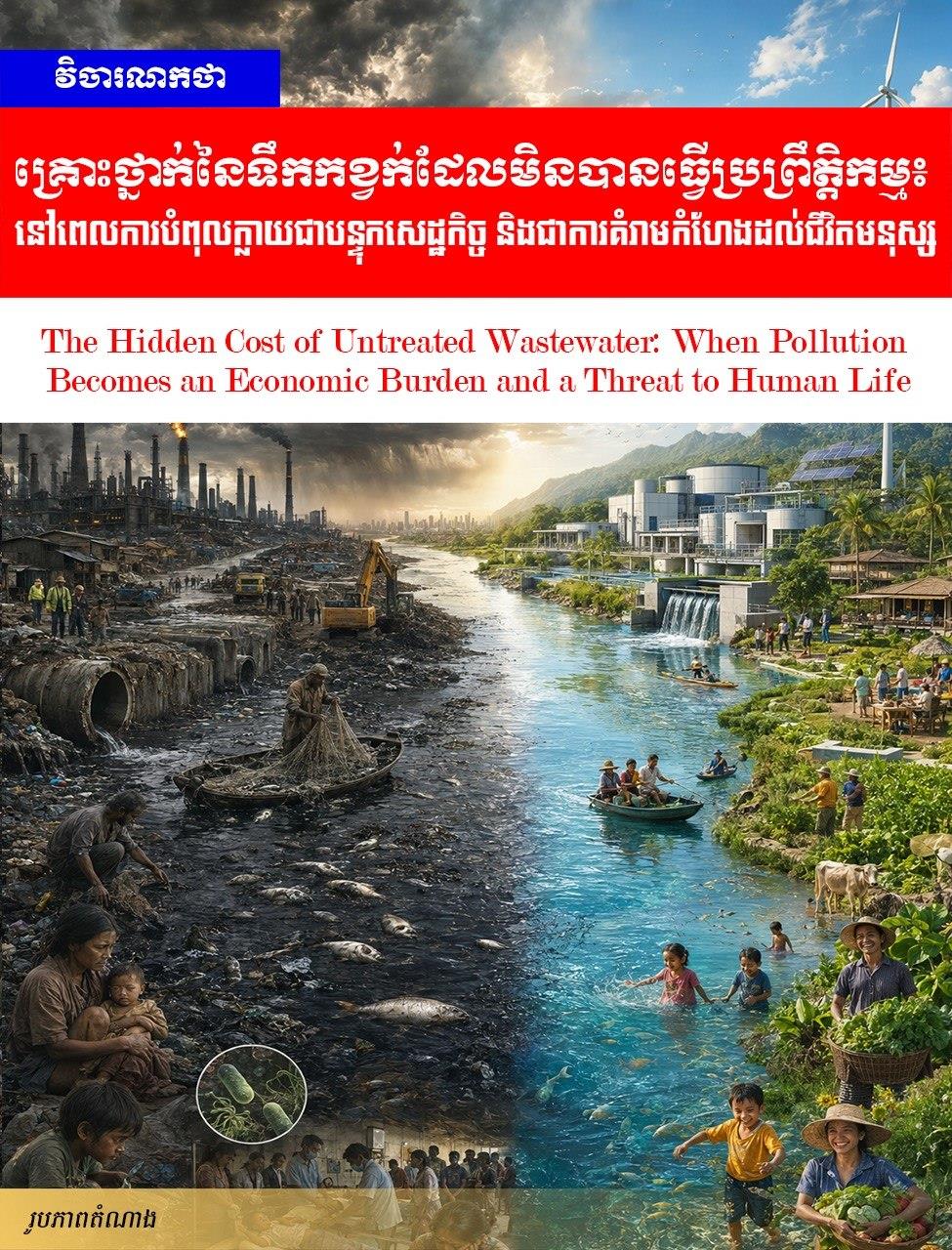

(Phnom Penh): Water is the foundation of life. It nourishes our bodies, sustains agriculture, supports industries, and maintains the ecosystems upon which human civilization depends.
Yet every day around the world, millions of cubic meters of untreated wastewater are discharged into rivers, lakes, streams, and coastal waters. What may appear to be a simple environmental problem is, in reality, an economic crisis and a public health threat.
Many people view wastewater treatment as an expense. In truth, failing to treat wastewater is far more costly.
When factories, businesses, or communities release untreated wastewater into natural water sources, the immediate victims are often fish, aquatic life, and local ecosystems. However, the consequences quickly extend to people.
Polluted water contaminates fisheries, destroys livelihoods, reduces agricultural productivity, and increases the cost of producing safe drinking water. Farmers face lower yields, fishermen catch fewer fish, and tourism destinations lose their attractiveness. Entire local economies can suffer.
The economic losses do not stop there. Governments must spend more money restoring damaged ecosystems, monitoring pollution, and responding to environmental emergencies.
Healthcare systems face increasing burdens as waterborne diseases and pollution-related illnesses become more common. Every dollar saved by avoiding wastewater treatment often becomes many dollars spent later on environmental rehabilitation and medical care.
More importantly, untreated wastewater threatens human life.
Contaminated water can carry harmful bacteria, viruses, parasites, heavy metals, and toxic chemicals. These pollutants can enter the food chain through fish, vegetables, and livestock.
People may unknowingly consume contaminated food and water, exposing themselves to serious health risks, including gastrointestinal diseases, skin disorders, organ damage, and certain forms of cancer.
Children are particularly vulnerable. Exposure to polluted water can affect physical growth, cognitive development, and overall well-being. For families living near polluted waterways, the risks are not abstract, they are part of daily life.
The challenge becomes even more serious in a world facing climate change. Rising temperatures, floods, and droughts can concentrate pollutants or spread contaminated water across larger areas. This increases health risks and places additional pressure on already stressed water resources.
The good news is that wastewater pollution is largely preventable. Modern treatment technologies are available and increasingly affordable. Strong environmental regulations, responsible business practices, and public awareness can significantly reduce wastewater pollution.
More importantly, investment in wastewater treatment should be viewed not as a cost but as an investment in public health, economic growth, and national prosperity.
Cambodia’s recent efforts to prevent millions of cubic meters of untreated wastewater from entering natural water sources demonstrate how environmental protection directly supports human well-being and economic development.
Protecting rivers and streams means protecting fisheries, agriculture, tourism, public health, and future generations.
The lesson is clear: clean water is not merely an environmental issue. It is an economic asset and a lifeline. Every drop of untreated wastewater discharged into nature carries a hidden cost.
Every drop of treated water represents an investment in healthier communities, stronger economies, and a more sustainable future.
In the end, protecting water is protecting life itself.
=FRESH NEWS