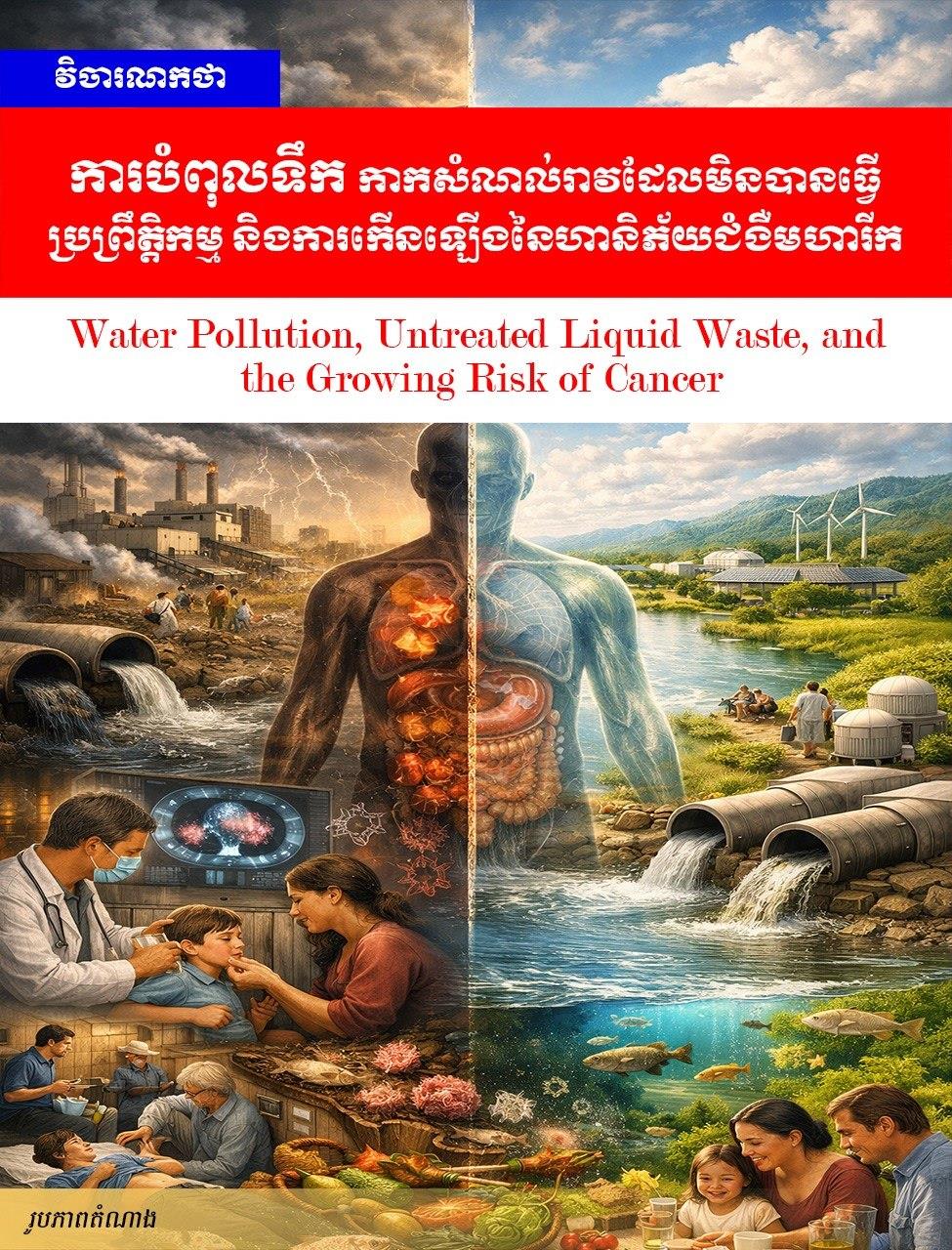

(Phnom Penh): Water is life. Every glass of water we drink, every fish we eat, and every crop we harvest depends on clean and healthy water resources.
Yet around the world, one of the most serious threats to public health is often invisible: untreated liquid waste discharged into rivers, streams, lakes, and groundwater.
While polluted water may appear dirty or smell unpleasant, the real danger often lies beneath the surface. Untreated wastewater can contain toxic chemicals, heavy metals, industrial solvents, pesticides, and other hazardous substances that may persist in the environment for years.
When these pollutants enter water sources, they can eventually find their way into the human body. One of the most concerning long-term consequences is the increased risk of cancer.
Scientific research has shown that prolonged exposure to certain pollutants found in contaminated water can contribute to the development of cancer. Heavy metals such as arsenic, cadmium, chromium, and lead, as well as some industrial chemicals and pesticides, have been linked to various forms of cancer.
People may be exposed through drinking contaminated water, consuming fish and other aquatic organisms from polluted waters, or eating crops irrigated with contaminated water.
The danger is often gradual. Unlike an infectious disease that causes immediate symptoms, cancer-related pollutants may accumulate in the body over many years. Individuals may not realise they are being exposed until serious health problems emerge decades later.
Communities living near polluted rivers and industrial zones often face the greatest risks. Fishermen who depend on local waterways, farmers who rely on river water for irrigation, and families using untreated groundwater may all be vulnerable if pollution is not properly controlled.
The economic cost is equally significant. Cancer treatment places enormous financial and emotional burdens on families. Healthcare systems face rising costs, while productivity declines when people become ill. The loss of a healthy workforce can affect communities and national development alike.
This is why preventing water pollution is not merely an environmental issue—it is a public health priority.
Governments, industries, and communities all have a role to play. Industries must ensure that wastewater is properly treated before discharge. Authorities must enforce environmental regulations and conduct regular monitoring of water quality.
Communities must support efforts to keep rivers and streams clean and report pollution when it occurs.
Regular testing of water quality, fisheries, and agricultural products is also essential. Monitoring helps identify potential risks early and allows authorities to take corrective action before pollution affects human health.
In Cambodia and many other developing countries, protecting water resources is increasingly important as economies grow and industrial activities expand. Economic development should never come at the expense of public health. Sustainable development means ensuring that growth, environmental protection, and human well-being advance together.
The lesson is simple but profound: every untreated discharge into a river carries consequences beyond the water itself. It can affect the fish we eat, the crops we grow, the water we drink, and ultimately the health of our families.
Clean water is one of humanity’s most valuable assets. By preventing untreated liquid waste from entering our waterways today, we reduce the risk of disease tomorrow, protect future generations, and build a healthier and more prosperous society for all.
The fight against water pollution is therefore not only a fight for the environment, it is a fight for human life.
=FRESH NEWS