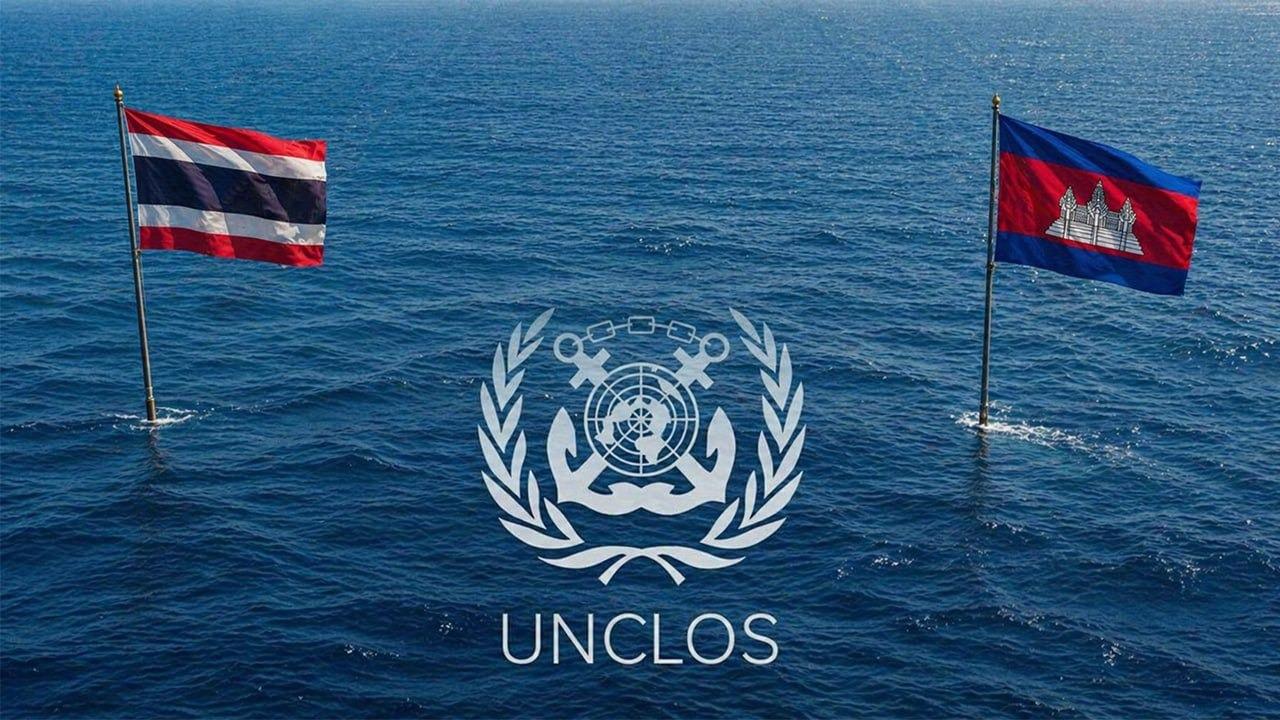

(Phnom Penh) — Over the past several months, Cambodia has consistently sought to send a clear message to the international community: the maritime dispute with Thailand should not be resolved through displays of power, political pressure, or unilateral interpretations. Instead, it should be addressed through international law, historical treaties, and peaceful mechanisms recognized by the international community.
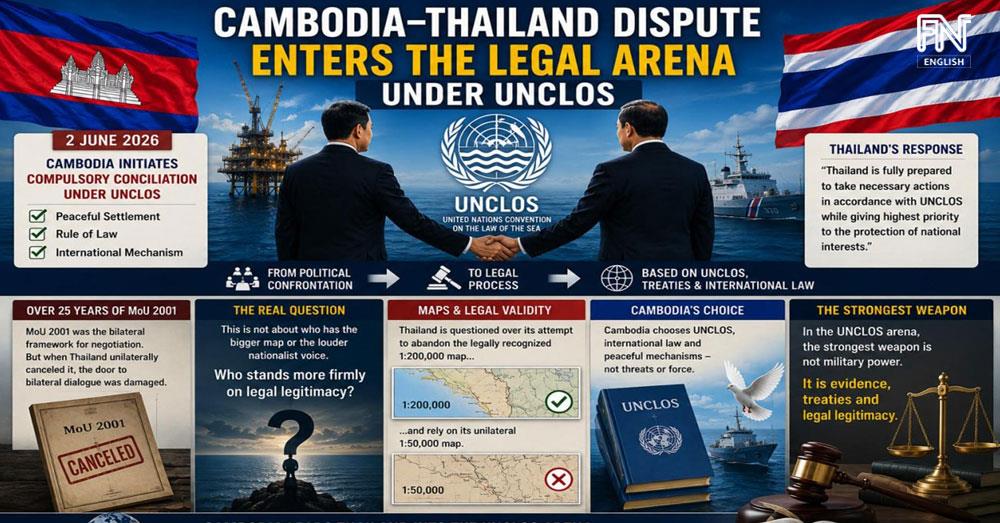
The announcement by Cambodian Prime Minister Hun Manet on June 2, 2026, that Cambodia had formally initiated the “Compulsory Conciliation” mechanism under the United Nations Convention on the Law of the Sea (UNCLOS), marked a significant turning point. It signaled that Cambodia had officially transformed the dispute from a matter of “political confrontation” into an “international legal process,” placing the issue within a framework grounded in treaties, legal principles, and internationally recognized mechanisms.
What became even more noteworthy, however, was the response from Thailand.
On June 3, 2026, Thai Foreign Minister Sihasak Phuangketkeow stated:
“Thailand is fully prepared to undertake all necessary actions in accordance with UNCLOS, while placing the highest priority on safeguarding Thailand’s national interests.”
At first glance, the statement may appear to be a routine defense of national interests. Yet in the language of diplomacy and international law, it carries far deeper implications.
For the first time in the context of this maritime dispute, Thailand did not reject the legal mechanism Cambodia is now invoking. Instead, Bangkok publicly declared that it was “prepared to act in accordance with UNCLOS.”
This suggests that although Thailand continues to emphasize the protection of its national interests, the language it now uses is the language of “engagement within an international legal framework,” rather than the language of “rejection of international mechanisms.”
In other words, the statement may be interpreted as an implicit acknowledgment that the dispute has already entered a new phase — one defined not primarily by political confrontation, but by international legal procedures based on UNCLOS, treaties, and internationally recognized legal legitimacy.
From the Cancellation of MoU 2001 to the UNCLOS Arena
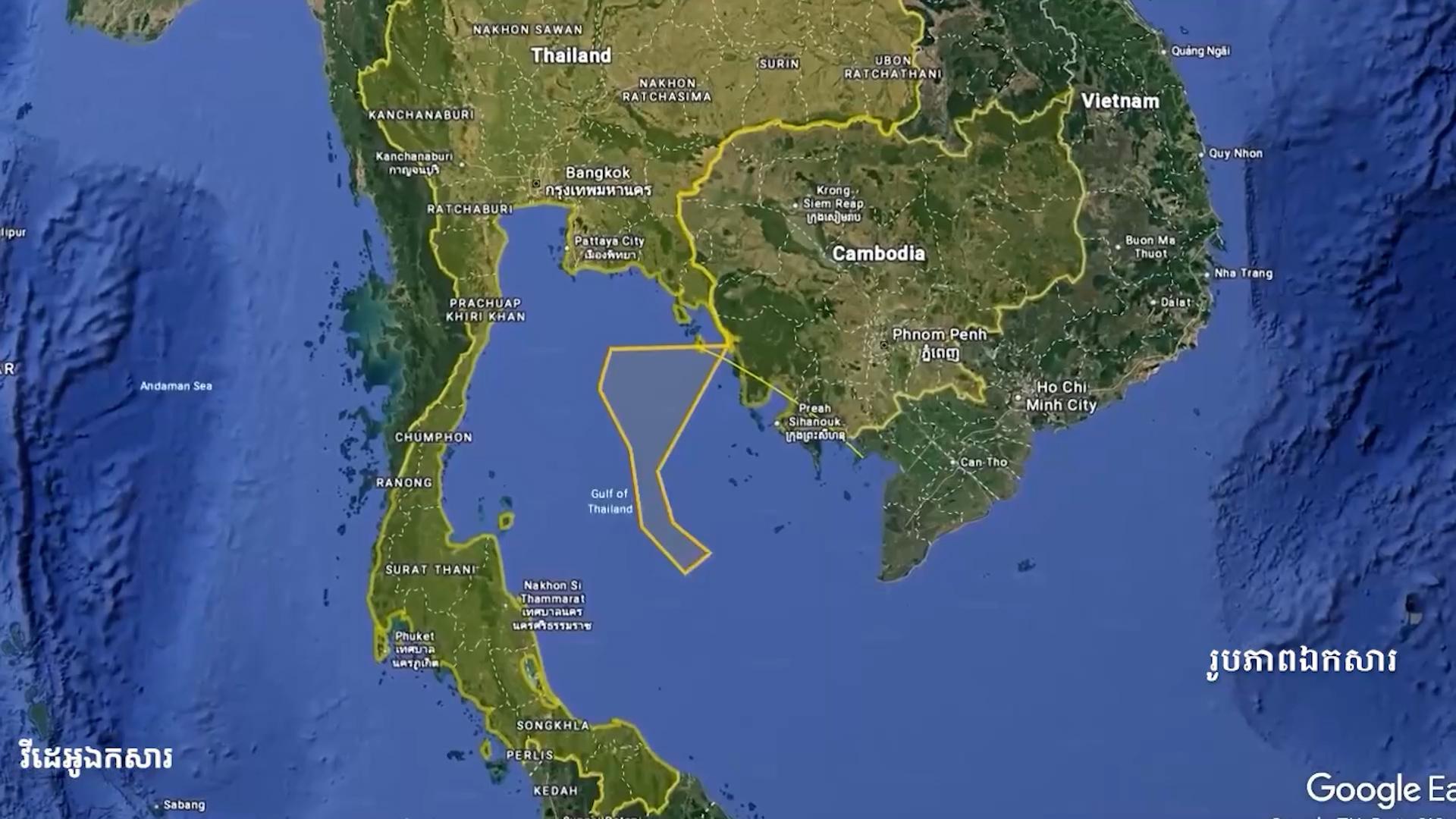
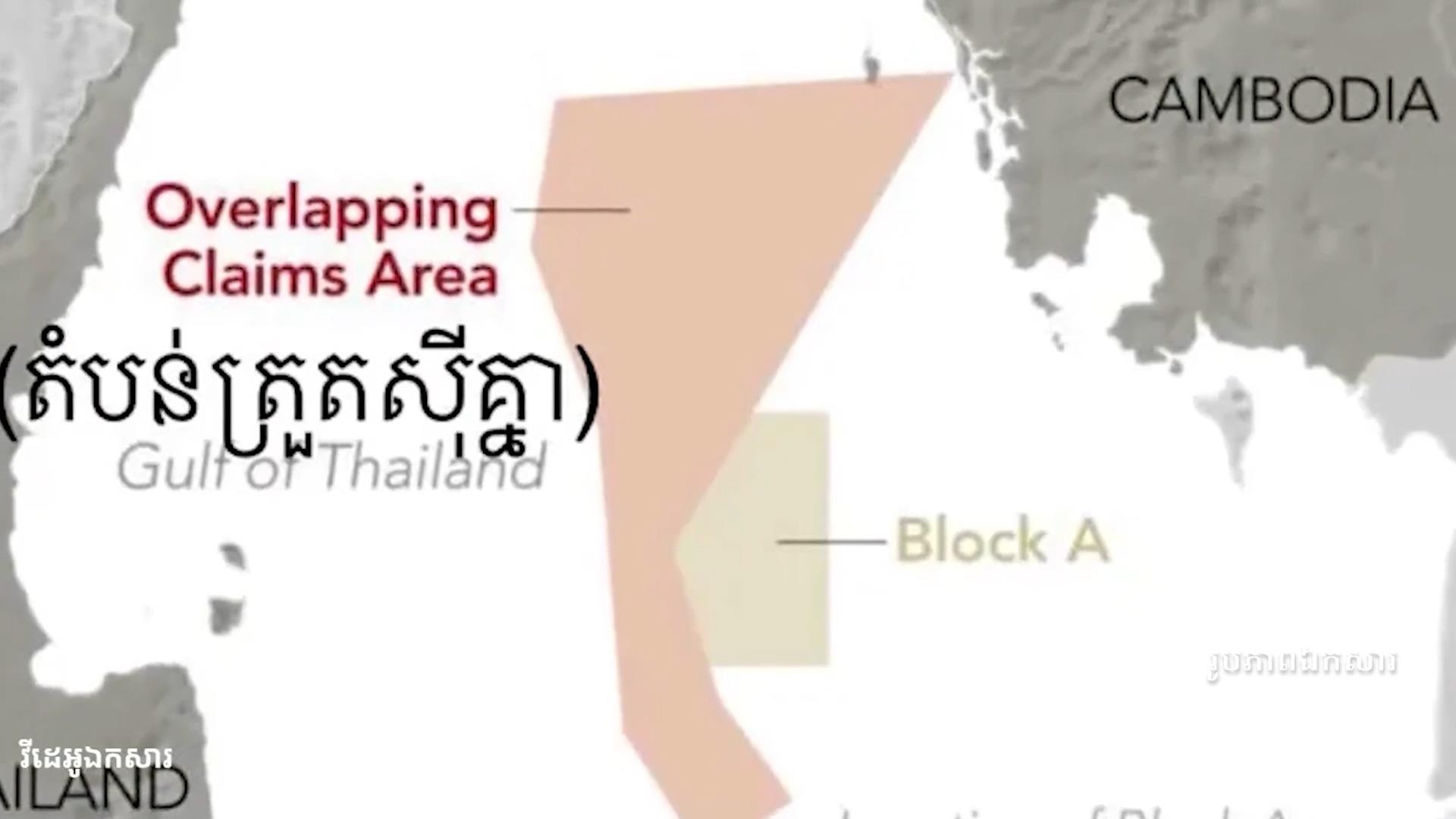
For more than 25 years, the 2001 Memorandum of Understanding (MoU 2001) served as an important bilateral framework for negotiations, management, and peaceful dialogue over the overlapping maritime claims between Cambodia and Thailand. Although the negotiations never produced a final settlement, the agreement at least kept the “door of bilateral dialogue” open.
However, when Thailand decided to unilaterally cancel MoU 2001, the bilateral framework that had long served as the foundation for negotiations began to lose both political credibility and practical relevance.
In other words, once the bilateral channel was weakened or effectively closed by one side, the dispute was almost inevitably pushed toward an international legal framework.
What is particularly significant is that, despite rising tensions, Cambodia did not choose military posturing, threats, or political escalation. Instead, Phnom Penh chose to invoke UNCLOS — a convention to which both Cambodia and Thailand are state parties.
This is precisely why the statement by Thailand’s foreign minister has become such a politically and legally significant signal. When Thailand says it is “prepared to act in accordance with UNCLOS,” it also implicitly acknowledges that UNCLOS has now become the central framework governing the dispute.
Put differently, the competition between the two countries is gradually shifting from a “political struggle” to a “contest of legal legitimacy.” In this new arena, the central question is no longer whose nationalist rhetoric is louder, but rather which side can stand more firmly on international law and gain greater international legitimacy.
The Real Issue Is Not Merely Sovereignty — But Legitimacy
Another striking development is that even within Thailand itself, voices have begun warning about potential “legal risks.”
Thai security and geopolitical analyst Surachart Bamrungsuk warned that abandoning the 1:200,000 map — which is linked to historical treaties, boundary commissions, and international legal recognition — in favor of Thailand’s unilateral 1:50,000 map could once again place Thailand in a “legal trap,” similar to the International Court of Justice rulings of 1962 and 2013.
This warning carries implications far beyond a technical debate over map scales.
In international disputes, the key issue is not whether a map is larger or smaller in scale, but whether it possesses legal validity and international recognition.
Thailand’s unilateral 1:50,000 map may hold technical or military value, but it does not carry the same legal weight as the 1:200,000 map, which is tied to historical treaties and has been referenced in the history of international legal proceedings.
This is why the international community is increasingly beginning to see that the dispute is no longer simply about territory or borders, but about the broader contest between “internationally recognized legal instruments” and “unilateral interpretations.”
In this context, Cambodia is attempting to demonstrate to the world that protecting national sovereignty does not require military threats, coercion, or unilateral reinterpretations. Rather, sovereignty can also be defended through international law, historical treaties, peaceful mechanisms, and principles recognized by the international community.
Conversely, Thailand’s apparent attempt to move away from internationally recognized maps and treaty-based frameworks in favor of unilateral cartographic interpretations is raising increasingly difficult questions: is this truly an effort to defend sovereignty, or an attempt to create a new basis for expanding territorial and maritime claims?
Perhaps this is precisely why Cambodia’s position is increasingly gaining weight in the eyes of the international community. While Cambodia is relying on legal principles, treaties, and peaceful international mechanisms, Thailand is facing growing scrutiny over its willingness to challenge internationally recognized legal documents and frameworks.
Ultimately, this dispute may no longer be merely a competition over sovereignty. It is increasingly becoming a contest over credibility, consistency, and adherence to international law.
And in this arena, Cambodia appears intent on demonstrating that the most powerful weapon in international affairs is not military force or unilateral interpretation, but legal legitimacy grounded in internationally recognized principles and historical agreements.
Conclusion
The statement by Thai Foreign Minister Sihasak Phuangketkeow may prove to be one of the most significant signals in this new phase of the Cambodia–Thailand maritime dispute.
Although Thailand continues to speak of protecting its national interests, its declaration that it is “prepared to act in accordance with UNCLOS” clearly indicates that the dispute can no longer remain confined to political rhetoric or unilateral interpretations. It is increasingly moving into the realm of international law, where evidence, treaties, and legal legitimacy matter most.
At this stage, Cambodia is attempting to show the international community that defending sovereignty does not require intimidation, military pressure, or unilateral map interpretations. Instead, sovereignty can be defended through international law, historical treaties, and peaceful mechanisms recognized by the world.
Meanwhile, the international community is paying increasing attention to Thailand’s apparent effort to distance itself from the 1:200,000 map linked to historical treaties and international legal history, while relying instead on its unilateral 1:50,000 map. This is no longer merely a technical dispute over cartography; it has become a question of legal validity and international credibility.
This growing contrast is beginning to shape how the two countries are perceived internationally. Cambodia is presenting itself as a state seeking peaceful legal resolution through recognized international mechanisms, while Thailand is facing growing questions over why it appears willing to move away from treaty-based frameworks and internationally recognized legal references that it once accepted.
In the end, the central question may no longer be “who possesses the larger map,” but rather “who stands more firmly on internationally recognized legal legitimacy.”
And in this contest over legitimacy, Cambodia appears determined to demonstrate that the strongest weapon in international affairs is not military power or unilateral interpretation, but consistency, legal integrity, and adherence to international law.