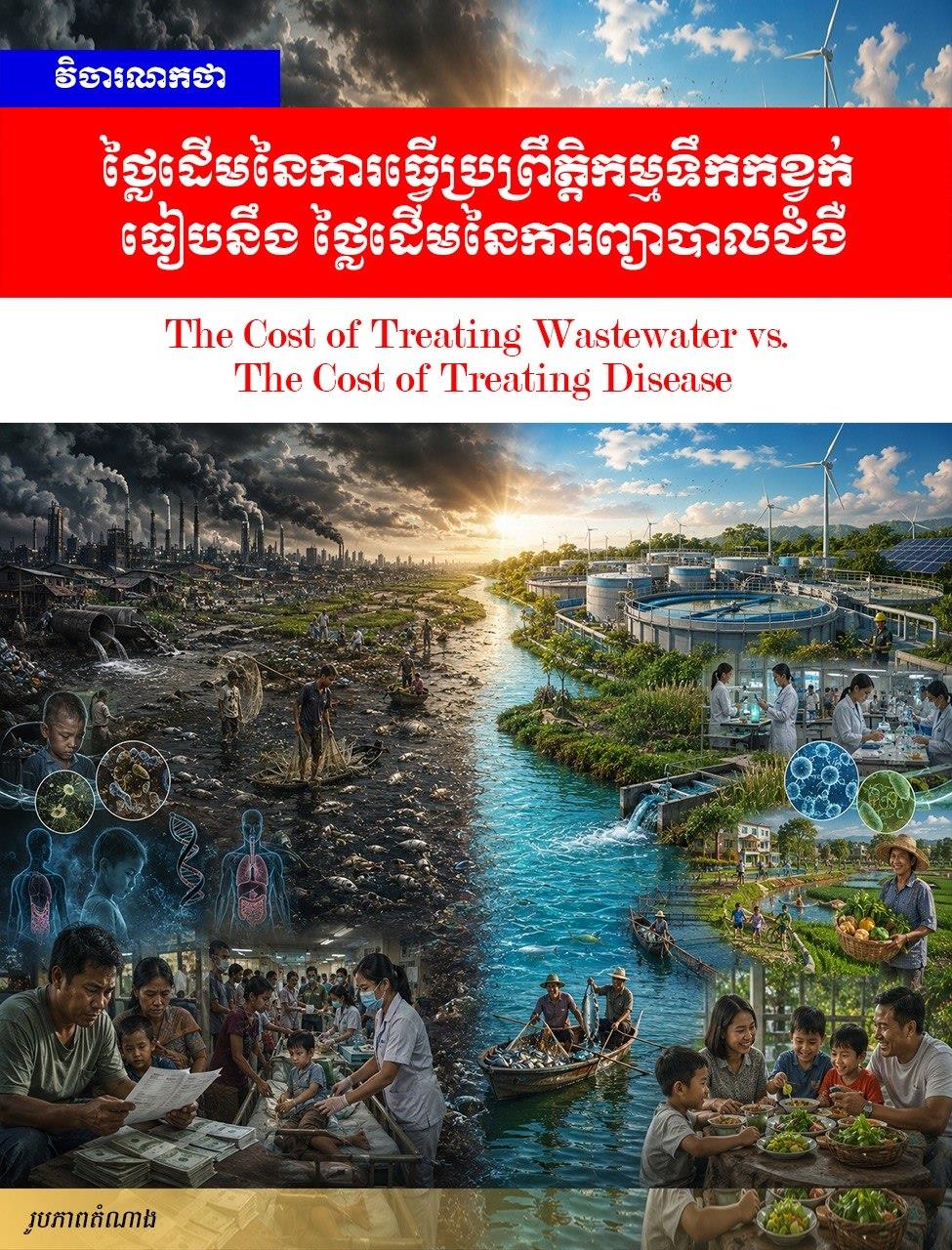

(Phnom Penh): Every society faces a choice. We can invest in preventing pollution today, or we can pay a much higher price treating illness tomorrow.
This choice is particularly clear when it comes to wastewater management.
Some businesses and communities view wastewater treatment as an expense that reduces profits or increases operating costs.
However, this perspective overlooks a much larger reality: the cost of treating polluted water is often far lower than the cost of treating the people who become sick because that water was not treated.
Water pollution does not disappear when wastewater is discharged into a river, stream, lake, or groundwater source. It merely changes location.
Pollutants travel through ecosystems, enter fisheries, contaminate crops, affect drinking water supplies, and eventually reach human beings.
When people are exposed to polluted water, the consequences can range from diarrhea, skin diseases, and respiratory illnesses to more serious long-term conditions involving the liver, kidneys, nervous system, and even cancer.
The financial burden of these illnesses can be enormous.
A wastewater treatment system may require investment in equipment, maintenance, monitoring, and trained personnel. Yet these costs are often predictable and manageable.
By contrast, the cost of medical treatment is uncertain and can be devastating.
A single hospitalization can cost more than months or years of pollution prevention measures. Chronic diseases may require lifelong treatment, medication, and care.
The economic impact extends beyond hospital bills. Sick workers are less productive.
Children who miss school due to illness lose educational opportunities. Families may lose income while caring for sick relatives.
Governments must allocate additional resources to healthcare services rather than investing in education, infrastructure, or economic development.
Perhaps most importantly, some costs cannot be measured in money.
No wastewater treatment plant is as expensive as the loss of a human life.
No pollution-control system costs as much as a child suffering from a preventable disease.
No industrial saving can compensate a family for the loss of a loved one.
This is why environmental protection and public health are inseparable. Every cubic meter of wastewater treated before discharge reduces risks to communities downstream.
Every pollution prevention measure represents an investment in healthier families, stronger economies, and a more sustainable future.
In many cases, wastewater treatment also creates economic benefits. Clean rivers support fisheries. Clean beaches attract tourists.
Clean water reduces treatment costs for drinking water providers. Healthy ecosystems provide services that support agriculture, livelihoods, and local economies.
The question, therefore, is not whether societies can afford to treat wastewater. The real question is whether societies can afford not to.
Around the world, experience has shown that prevention is almost always cheaper than cure.
A dollar invested in pollution prevention can save many dollars in healthcare expenses, environmental restoration, and economic losses. More importantly, it can prevent suffering before it occurs.
As countries pursue economic growth and industrial development, wastewater treatment should not be viewed as a burden. It should be viewed as a responsibility and a smart investment.
Development that pollutes water may generate short-term profits, but it often creates long-term costs that society ultimately must bear.
Clean water is not merely an environmental objective. It is a public health necessity, an economic asset, and a safeguard for future generations.
The lesson is simple: it is far less costly to treat wastewater than to treat the people harmed by polluted water.
Wise societies understand this principle and invest accordingly.
In doing so, they protect not only their rivers and lakes, but also their most valuable resource, the health and lives of their people.
=FRESH NEWS