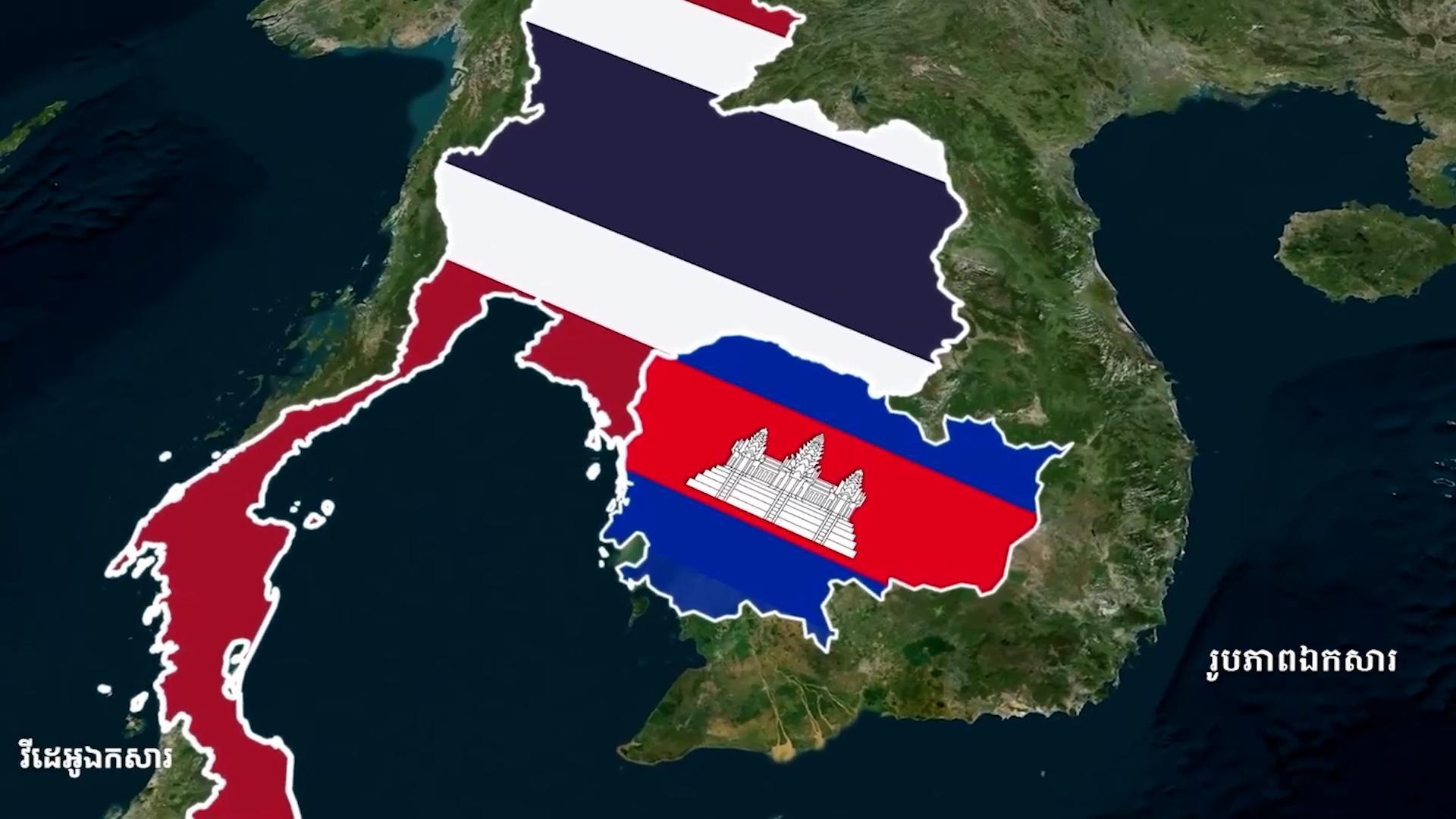

(Phnom Penh): When Thai scholars themselves begin openly criticizing their own society and political leadership for “failing to understand international law” and “addressing the dispute in the wrong way,” it signals that the Cambodia–Thailand dispute has entered an entirely new phase.
This is no longer merely a confrontation driven by nationalist emotions. Instead, it is increasingly evolving into a contest over international law, legal procedures, and legitimacy on the global stage.
This is no longer about who can shout louder, who possesses more military power, or who can ignite stronger nationalist sentiment. Rather, the dispute is becoming a test of who respects international law, who possesses stronger evidence, who can stand more firmly on the principles of the rule-based international order, and who is exploiting domestic politics and nationalism in ways that undermine regional stability.
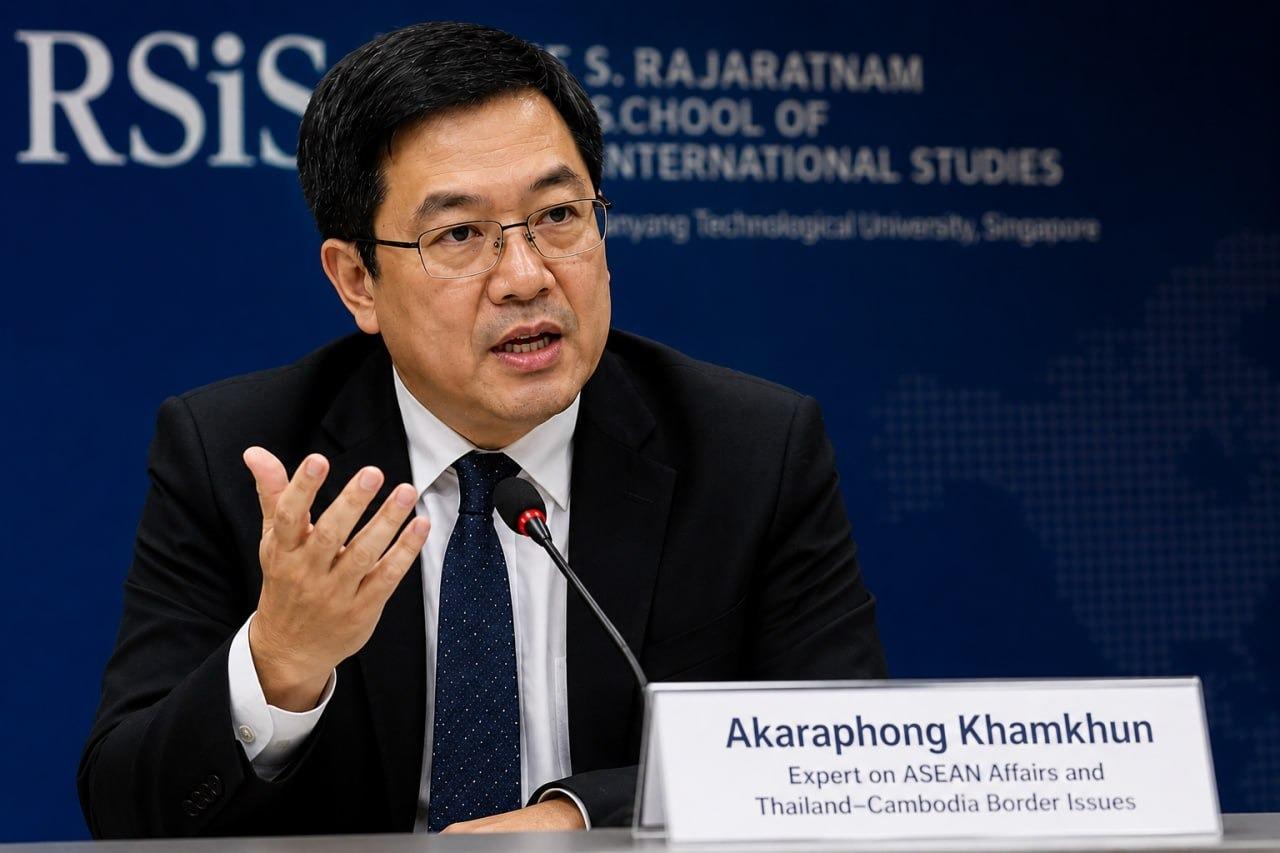
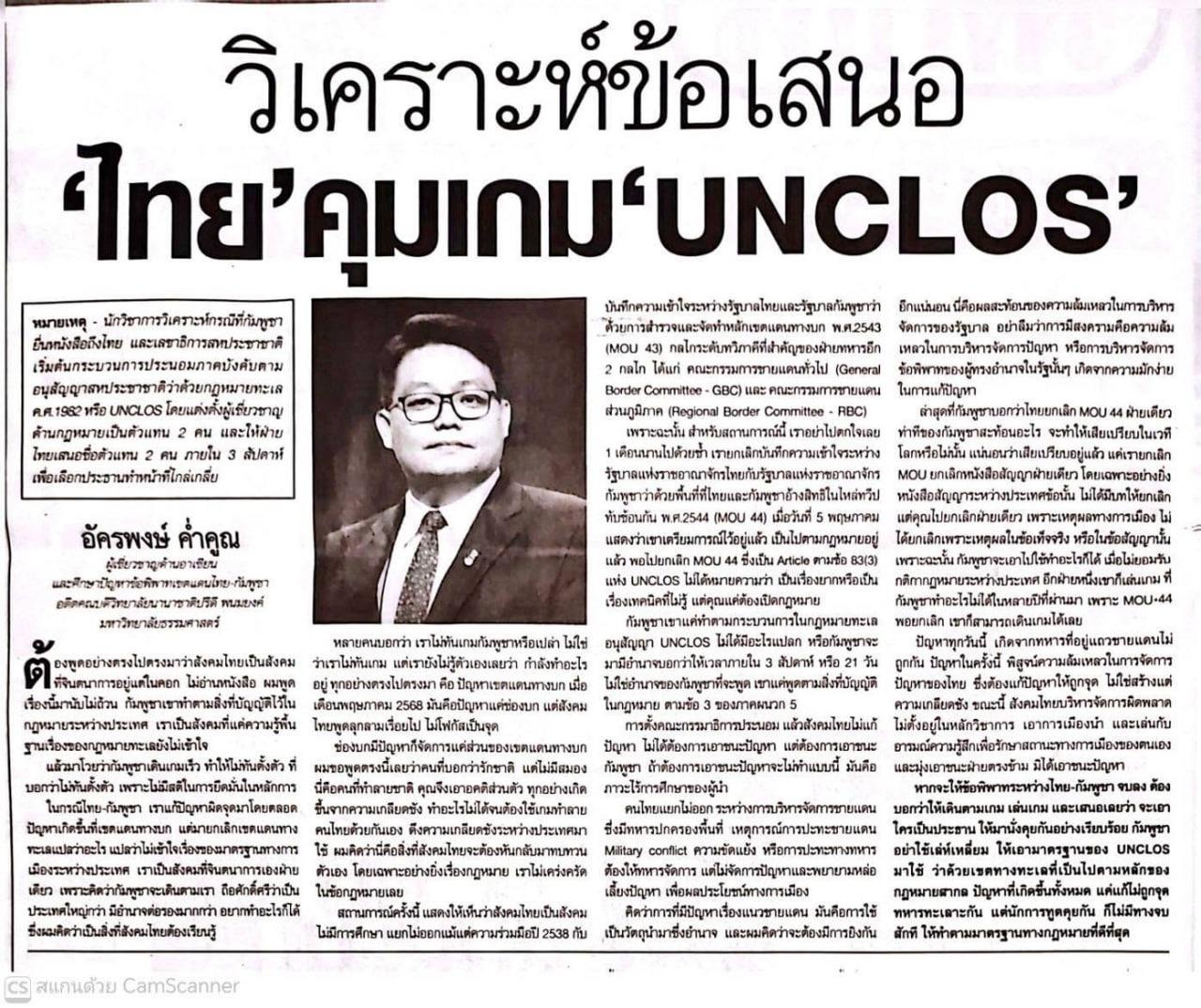
That is why the analysis by Professor Akaraphong Khamkhun, a Thai scholar specializing in ASEAN affairs and Cambodia–Thailand border disputes, is far more than an ordinary criticism. It represents an important political signal showing that even Thai analysts themselves are beginning to acknowledge that Thailand’s biggest problem may not be that Cambodia is “playing the game faster,” but rather that Thailand itself has failed to recognize that the conflict has already shifted from emotional nationalism and domestic political maneuvering into a battle over international law and legitimacy.
From a Border Dispute to a Legal War
The most important point in Professor Akaraphong’s analysis is his criticism that Thailand is “addressing the wrong problem” and replacing legal and diplomatic conflict management with domestic political emotions.
The tensions that erupted in May 2025 originated in the Chong Bok area along the land border. Under the logic of international dispute management, such issues should have been addressed through existing bilateral mechanisms, including:
- The 2000 Memorandum of Understanding (MOU 2000)
- The General Border Committee (GBC)
- The Regional Border Committee (RBC)
These mechanisms were specifically established to manage tensions and prevent military escalation along the land border.
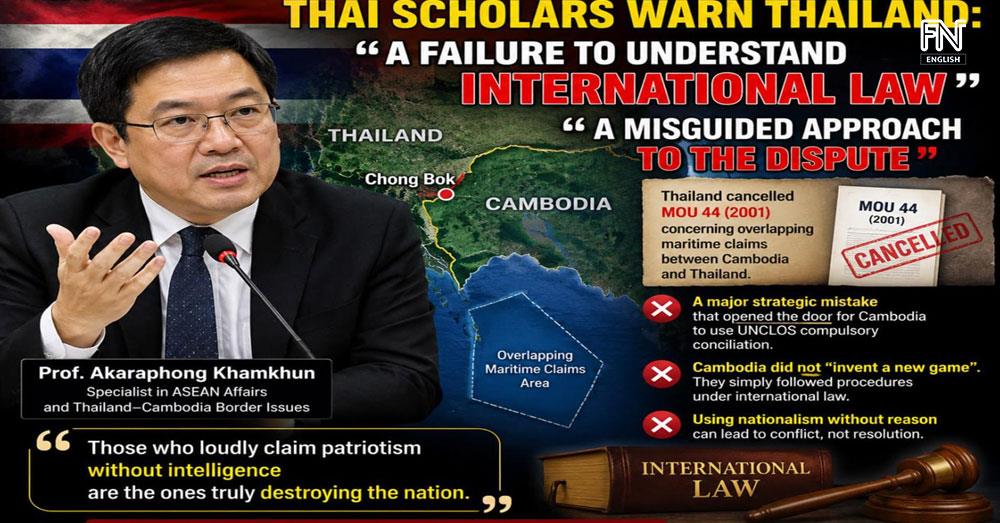
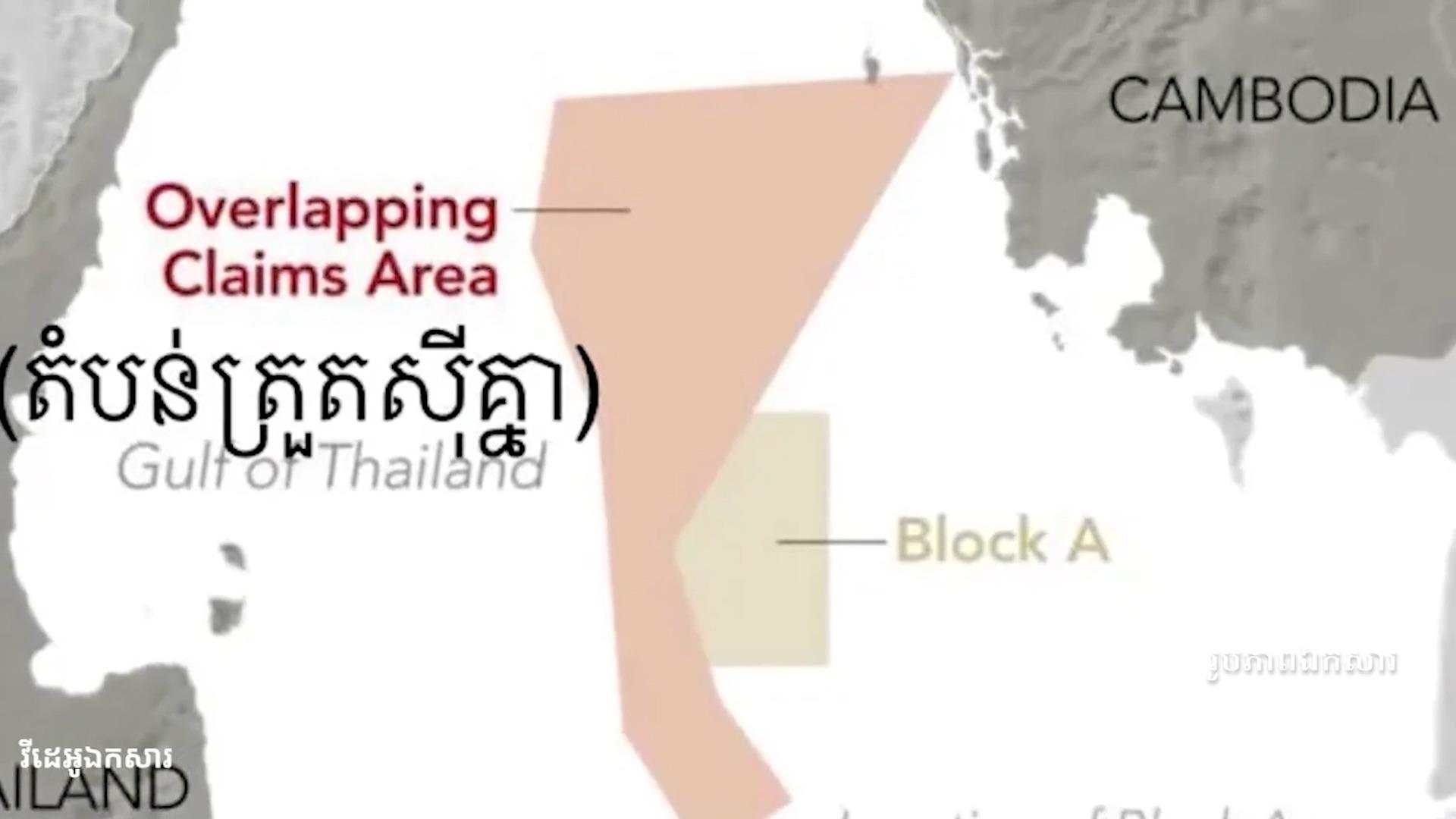
However, instead of relying on those mechanisms, the government of Prime Minister Anutin Charnvirakul decided to unilaterally terminate the 2001 Memorandum of Understanding (MOU 44), the bilateral agreement concerning overlapping maritime claims between Cambodia and Thailand.
According to Professor Akaraphong, this decision constitutes a major strategic mistake.
Why?
Because MOU 44 functioned as both a political and legal framework that kept the maritime dispute within bilateral negotiations. Once Thailand unilaterally withdrew from the agreement, Cambodia gained the legal opportunity to immediately initiate Compulsory Conciliation proceedings under the United Nations Convention on the Law of the Sea (UNCLOS).
In other words, Cambodia did not “invent a new game” or create an extraordinary legal maneuver. It simply exercised legal options that became available after Thailand itself dismantled the existing bilateral framework.
This is precisely why the Thai scholar warned that Thailand’s real problem is not that Cambodia is moving faster, but that Thailand itself is approaching the dispute in the wrong direction and failing to understand that the conflict has already transformed from an emotional confrontation into a legal and international dispute.
Evidence That Cambodia Is Following International Law
One reason Professor Akaraphong’s analysis carries such political and legal weight is because he did not reject Cambodia’s legal procedures. On the contrary, he openly acknowledged that Cambodia is acting within the framework of UNCLOS.
This means that even Thai analysts themselves are beginning to recognize that Cambodia is not acting outside international law but is instead utilizing mechanisms already provided under international legal frameworks.
Several facts support this conclusion:
1. Cambodia Officially Initiated UNCLOS Procedures
Cambodia formally submitted letters to both Thailand and the Secretary-General of the United Nations to initiate Compulsory Conciliation proceedings.
This was not an emotional political move. It was a procedure clearly provided under Annex V of UNCLOS, which allows state parties to initiate conciliation when bilateral negotiations can no longer progress.
This means Cambodia did not create a “new law” or a “new game.” It simply exercised procedural rights already established under international law.
2. Cambodia Followed the Required Conciliation Procedures
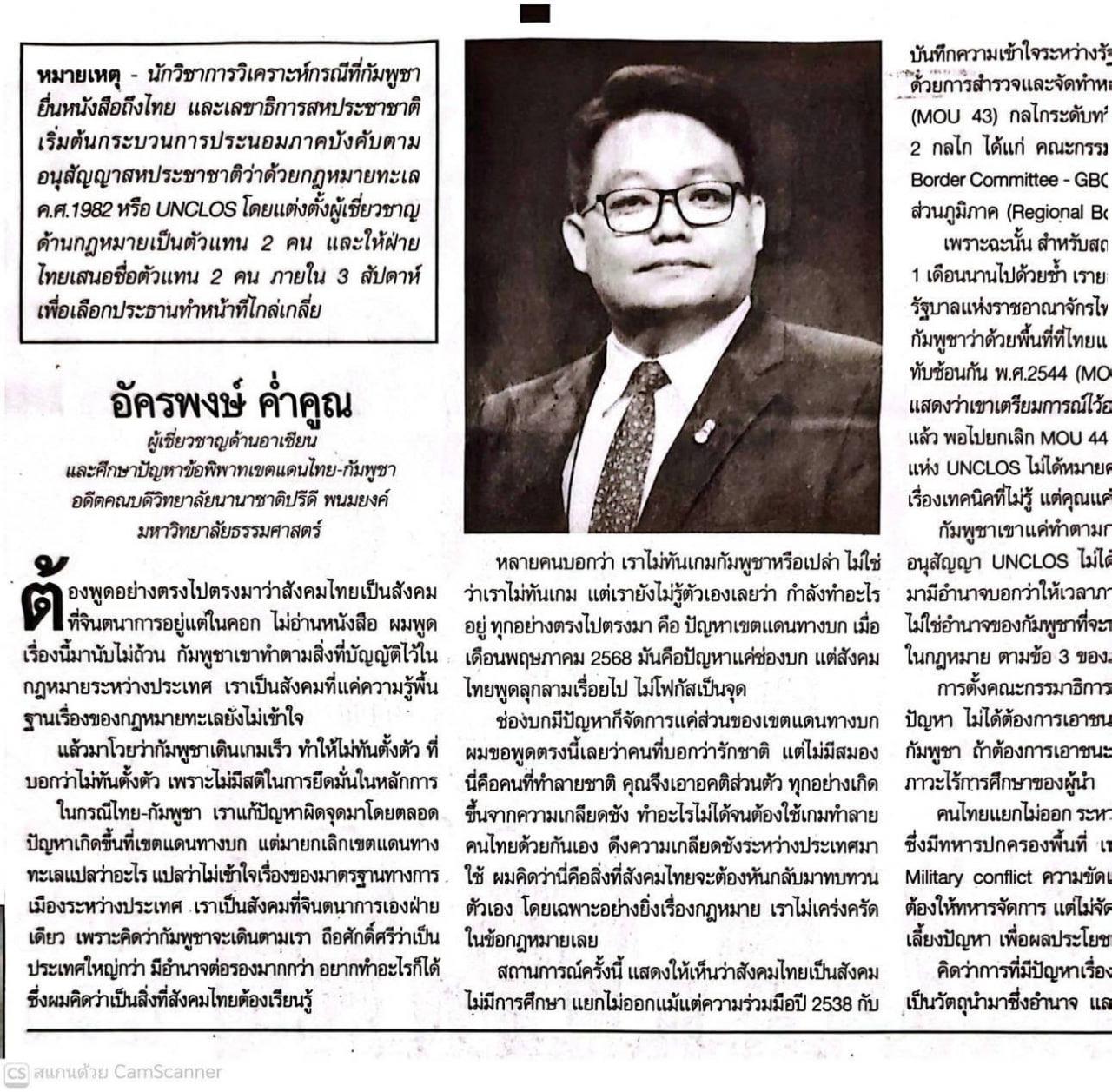
Cambodia appointed two legal experts as its representatives and gave Thailand three weeks to appoint its own two representatives in order to select the chairperson of the conciliation commission.
Importantly, Professor Akaraphong himself acknowledged that the three-week timeframe was not arbitrarily imposed by Cambodia but was consistent with procedures outlined under Annex V of UNCLOS.
This demonstrates that Cambodia is attempting to keep the process within legal and internationally recognized standards rather than relying on nationalist pressure or emotional politics.
3. Article 83(3) and the Principle of Peaceful Settlement
The Thai scholar further emphasized that Cambodia’s use of UNCLOS mechanisms is not a complicated legal trick or political manipulation. Rather, it is simply an application of Article 83(3) of UNCLOS, which concerns the management and settlement of overlapping maritime claims.
The article promotes a core principle of international law: disputes should be resolved peacefully through legal mechanisms and internationally accepted procedures.
In essence, Cambodia is pursuing a rule-based strategy rather than an emotion-based strategy.
This is exactly why some Thai analysts are now warning that Thailand’s greatest weakness may not be Cambodia’s speed, but Thailand’s own failure to recognize that the dispute has already entered the arena of international law.
Nationalism Without Reason Can Become Dangerous
Perhaps the most striking part of Professor Akaraphong’s analysis was his blunt statement:
“Those who loudly claim patriotism without intelligence are the ones truly destroying the nation.”
This was not an emotional insult. It was a warning rooted in political science and international relations.
Throughout world history, many conflicts did not erupt because of military weakness, but because of strategic miscalculations driven by nationalism and domestic political pressures.
When states manage disputes through hatred and nationalist competition instead of law and reason, the consequences can include:
- Strategic miscalculations
- Loss of international legitimacy
- Rising military tensions
- Unnecessary armed conflict
Professor Akaraphong warned that the Thai government now appears more interested in “defeating Cambodia” than in “solving the problem.”
That distinction is critical.
Solving disputes requires law, procedures, negotiation, and respect for international standards. Attempting to defeat another country, however, often traps politics inside emotional nationalism and competitive populism, causing dispute management to lose direction entirely.
The scholar further criticized Thai society for replacing understanding of international law with anger, hatred, and emotional reactions. Under such conditions, issues that should be resolved through diplomacy and legal mechanisms can easily evolve into unnecessary political and security crises.
That is why he warned that nationalism without reason cannot truly protect a nation. Instead, it can push a country toward a loss of legitimacy and a crisis that becomes increasingly difficult to control internationally.
War Is a Symbol of Failure
The final and perhaps most serious warning in Professor Akaraphong’s analysis was this:
“War is a symbol of failure in managing disputes.”
This is not simply philosophical language. It is one of the core principles of international relations theory.
When states fail to manage disputes through legal mechanisms, diplomacy, and negotiation, the risk of military confrontation inevitably rises.
What makes his warning especially alarming is that he believes border tensions are increasingly being used as political tools.
He warned that some actors appear to believe that keeping border disputes unresolved and ambiguous can help strengthen political power and inflame nationalist sentiment domestically.
This is the most dangerous point of all.
Once border disputes are transformed from legal and diplomatic matters into instruments for domestic political competition, conflict management loses direction, and the risks of military escalation continue to grow.
Professor Akaraphong further warned that if such political tactics continue — maintaining border disputes as unresolved controversies for political gain — then:
“I believe there will inevitably be another exchange of gunfire.”
This warning carries profound significance because it shows that even Thai analysts themselves are beginning to fear that if the dispute continues to be driven by nationalism and domestic politics instead of law and international mechanisms, another armed confrontation may become difficult to avoid.
That is precisely why Professor Akaraphong is calling on Thailand to “return to the law” and “play according to UNCLOS standards” rather than relying on emotional politics and nationalist mobilization for domestic political advantage.
In international politics, war is not a sign of strength. It is evidence that those in power have failed to manage disputes before they escalate into armed conflict and regional instability.
Conclusion
Professor Akaraphong Khamkhun’s analysis clearly demonstrates that the Cambodia–Thailand dispute has moved far beyond ordinary nationalist confrontation. It is increasingly becoming a contest over law, legal procedures, and legitimacy on the international stage.
This is no longer simply a dispute between two neighboring states. It is a confrontation between emotional politics and the rule-based international order.
The central message the Thai scholar appears to be sending to his own society is that in today’s world, military power, nationalist rhetoric, and loud political slogans can no longer guarantee victory internationally.
Instead, the actors that endure and maintain legitimacy are those capable of standing firmly on law, evidence, procedures, and internationally recognized standards.
Perhaps the greatest lesson emerging from this dispute is that in an increasingly interconnected world, war may produce temporary pressure, but only law and respect for international standards can create lasting legitimacy and sustainable stability.