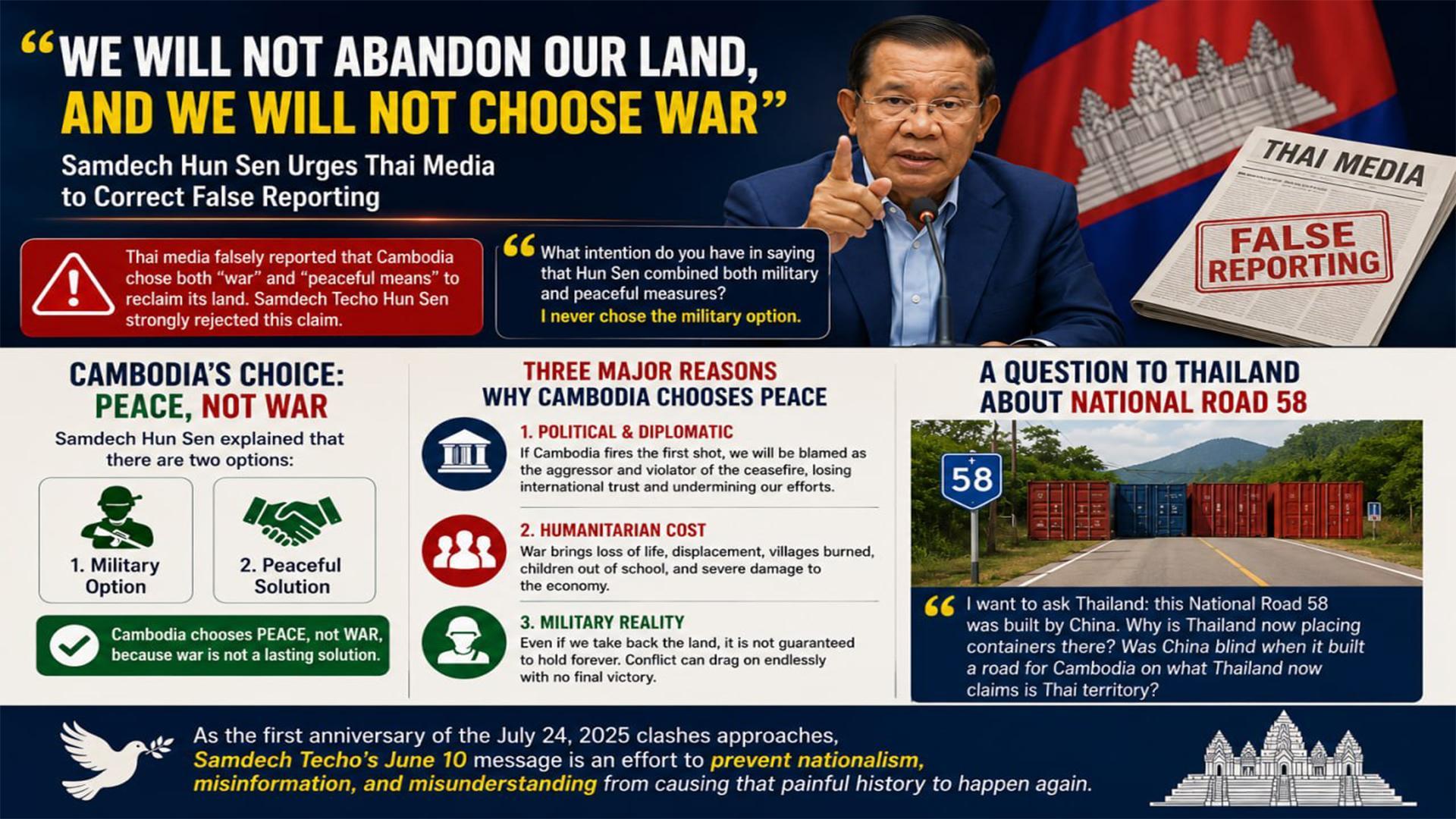

(Phnom Penh): At a time when Cambodia–Thailand tensions remain fragile and increasingly vulnerable to misinformation and disinformation, Samdech Akka Moha Sena Padei Techo Hun Sen, Acting Head of State of the Kingdom of Cambodia, has publicly demanded that Thai media outlets correct what he described as inaccurate reporting claiming that Cambodia had chosen both military and peaceful means to reclaim territory currently under Thai control.
Samdech Hun Sen firmly clarified that Cambodia “will neither abandon its territory nor choose war.”
“What intention do you have in saying that Hun Sen combines both military and peaceful measures? I never chose a military option,” He said.
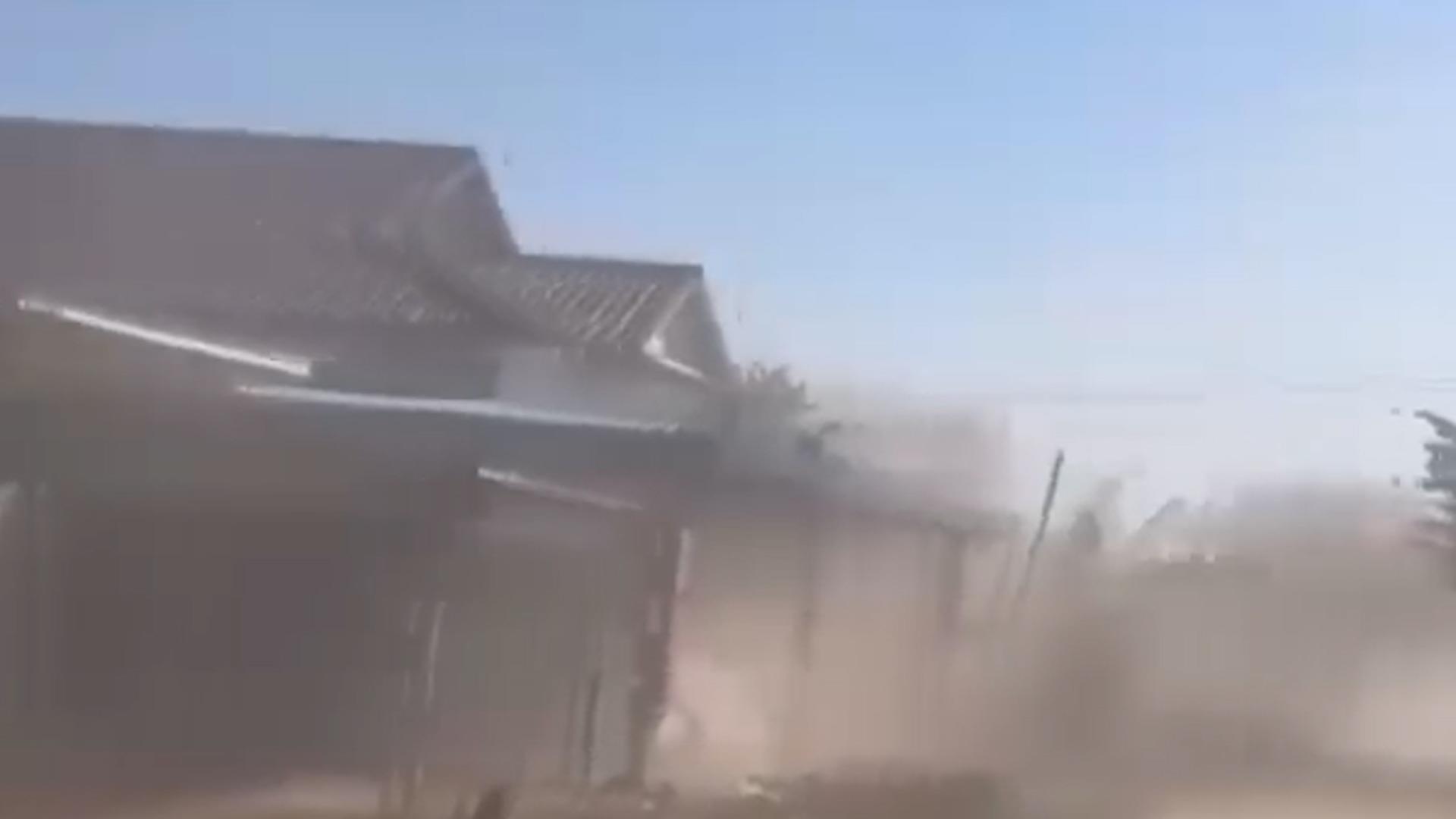
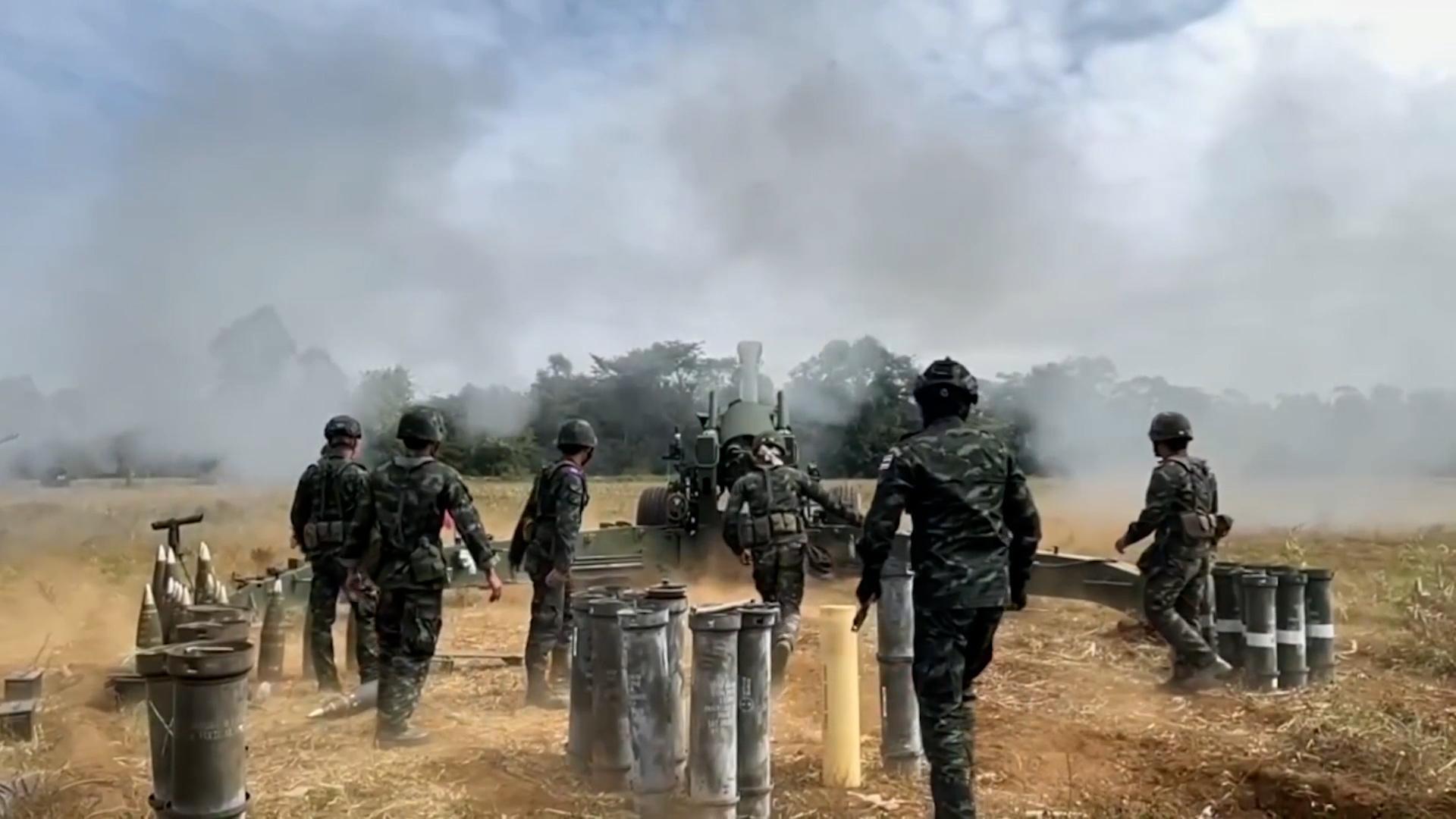
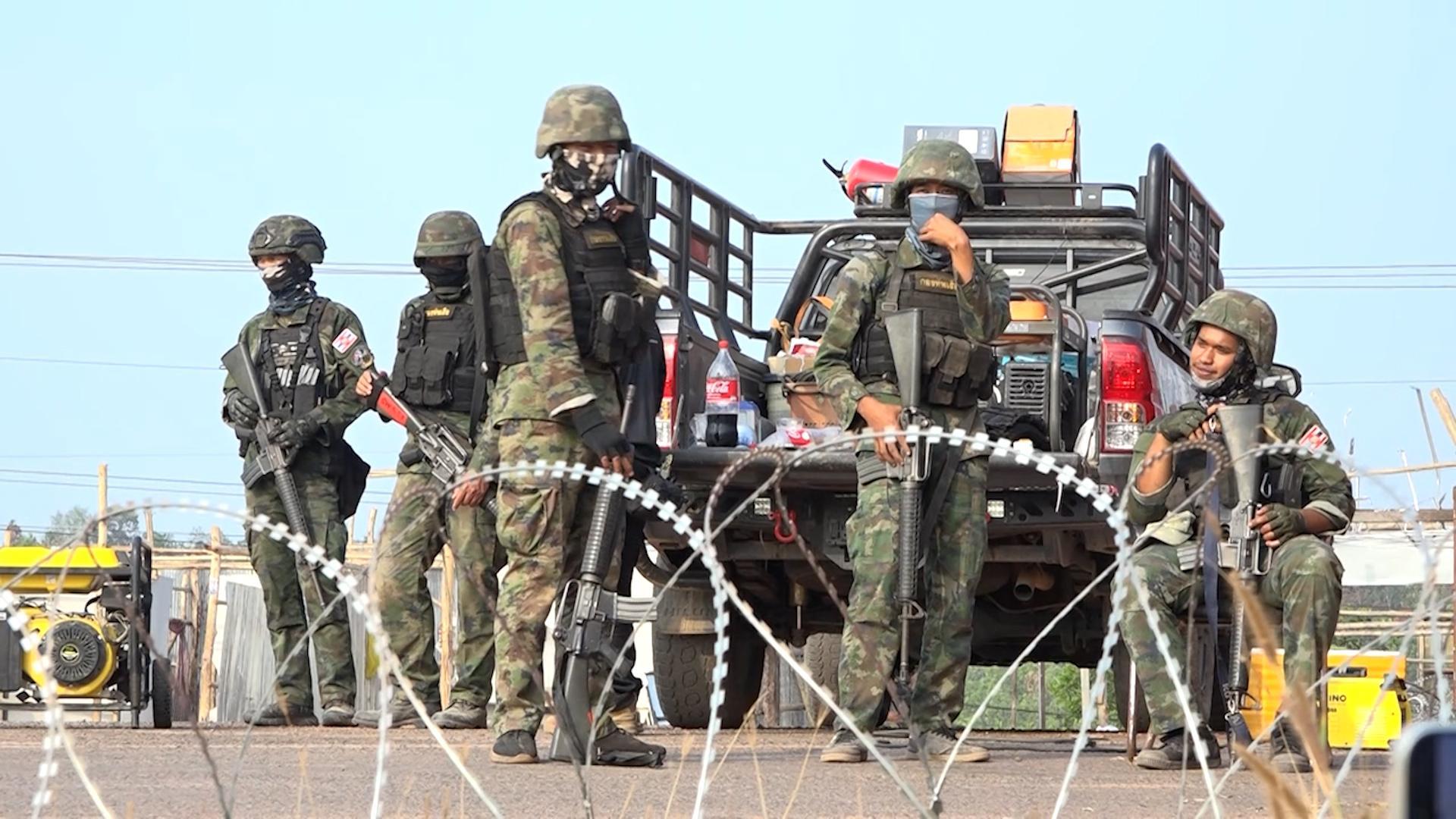
His clarification comes amid growing concerns in both Cambodia and Thailand that a third round of armed conflict could erupt, as the first anniversary of the July 24, 2025 clashes — regarded as the most serious confrontation between the two countries in decades — approaches in the coming weeks.
Peaceful Resolution Is Cambodia’s Chosen Path
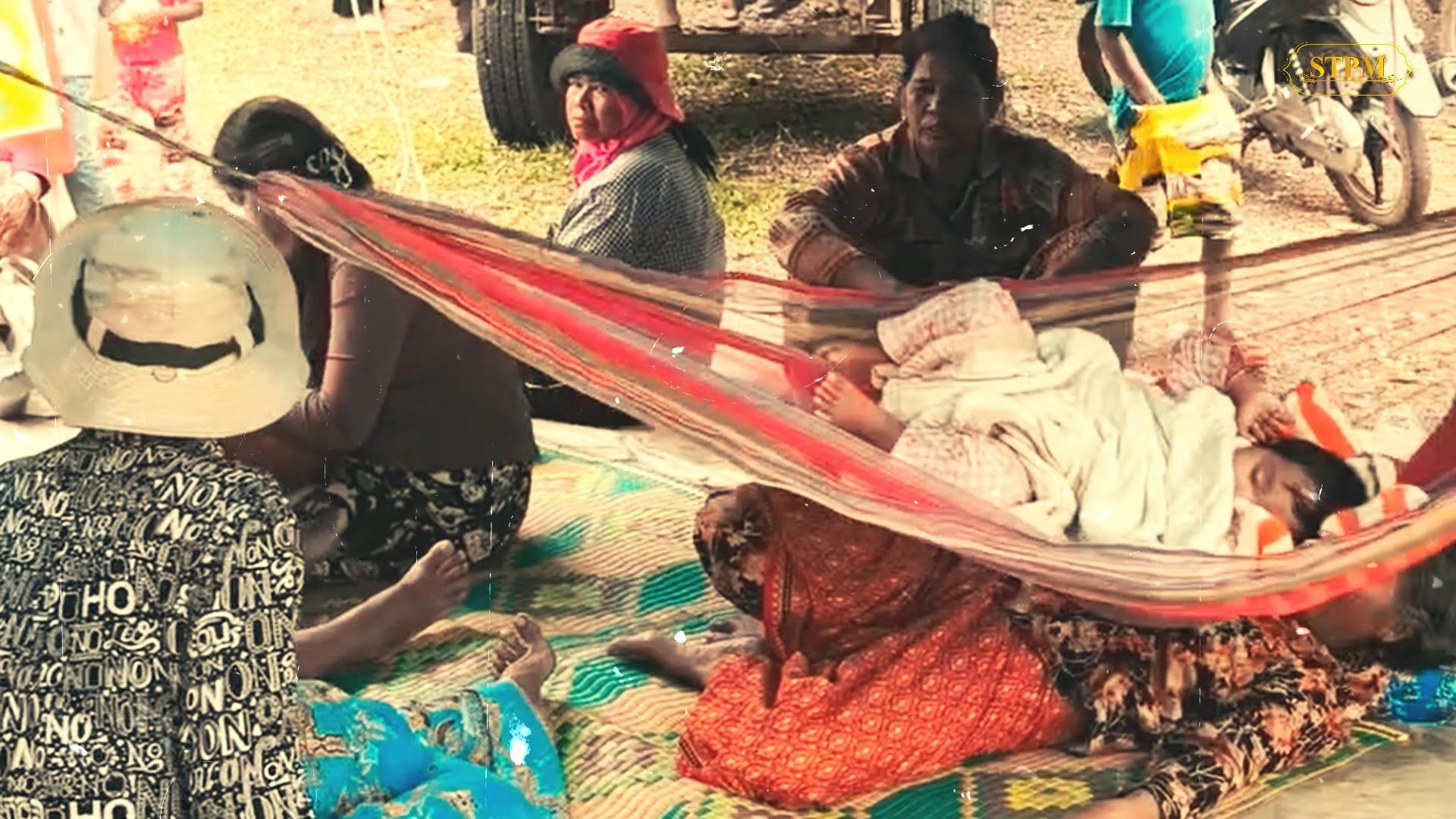
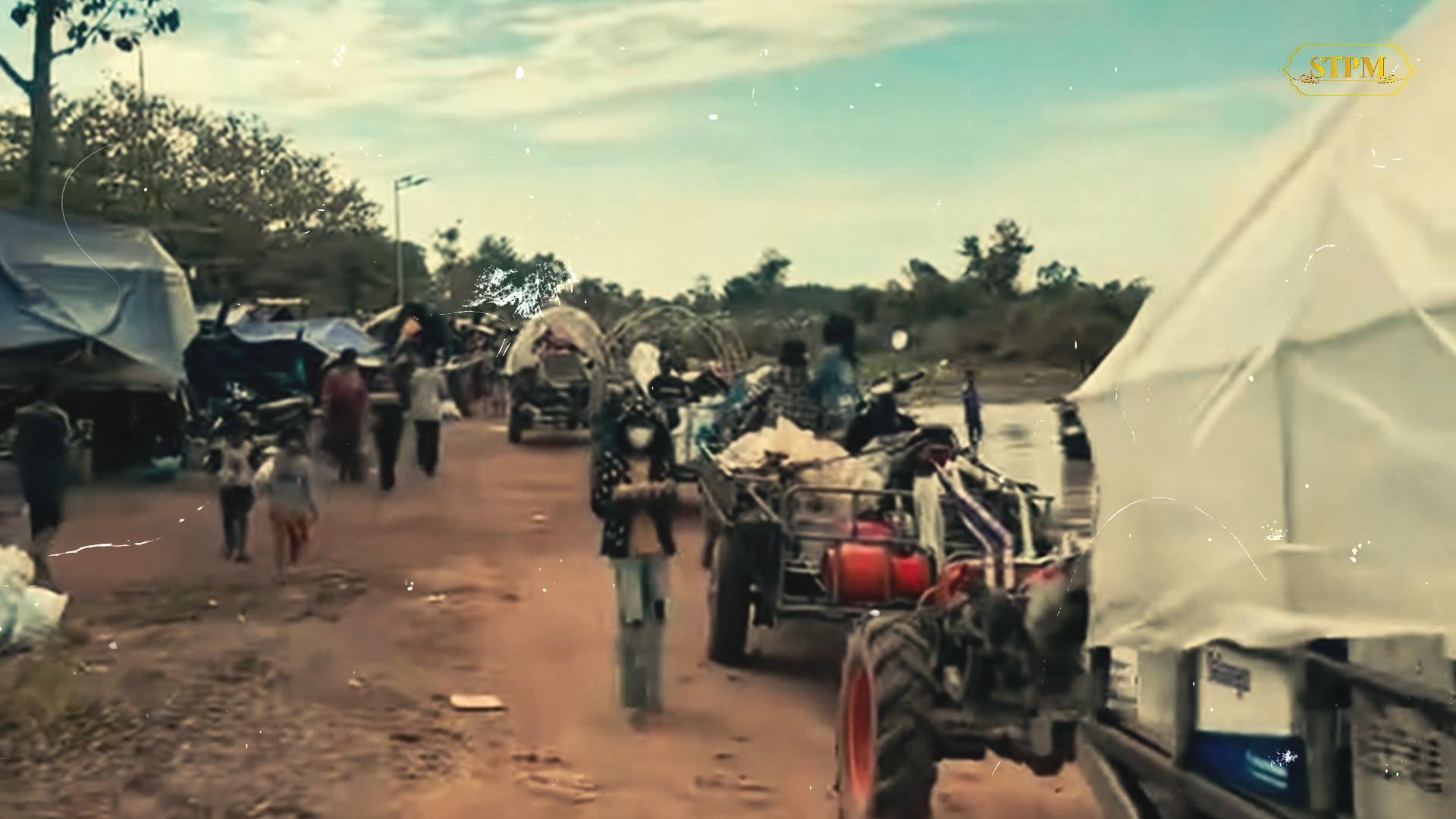
During remarks delivered on June 9, 2026, Techo Hun Sen explained to Cambodian displaced families that Cambodia essentially faced two options: the use of military force or peaceful negotiation.
However, he stressed that Cambodia had chosen the path of peaceful resolution and international law.
On June 10, Samdech Hun Sen further reinforced this position, stating:
“Military means can prolong suffering across generations. Only peaceful means can produce a sustainable solution and become a ‘solid blueprint’ for future generations.”
This statement represents the core message of Techo Hun Sen’s speech: Cambodia is choosing peaceful resolution, not armed confrontation.
At the same time, Samdech Hun Sen explained in detail why Cambodia does not choose military force to reclaim disputed territory. At least three major reasons were highlighted to demonstrate why war is not the path Cambodia intends to pursue.
First Reason: Political and Diplomatic Consequences
Techo Hun Sen warned that if Cambodia were the first side to open fire, Cambodia would immediately be accused of initiating war and violating the ceasefire agreement.
According to Samdech Hun Sen, firing the “first shot” could seriously damage Cambodia’s international credibility and undermine years of diplomatic and legal efforts undertaken through international mechanisms.
In other words, Techo Hun Sen emphasized that military victory on the battlefield does not necessarily translate into political or diplomatic victory.
Second Reason: Humanitarian Costs
Samdech Hun Sen also stressed the devastating human cost of war.
War is not simply about reclaiming territory, he argued. It brings deaths, displaced civilians, burned villages, children losing access to education, and severe economic destruction.
These concerns carry even greater weight as the anniversary of the July 24, 2025 conflict draws near — a conflict that caused deaths, injuries, and the displacement of hundreds of thousands of civilians along the border.
Third Reason: Military Reality
Samdech Hun Sen openly acknowledged another difficult reality: war rarely produces a quick or lasting victory.
He explained that even if territory could be retaken militarily, there would be no guarantee that it could be permanently secured, as conflict could continue indefinitely through cycles of retaliation.
Through this argument, Tech0 Hun Sen sought to send a broader message to the public: war is not a sustainable solution, whereas negotiation and international law offer the possibility of building a durable “solid blueprint” for long-term peace.
National Road 58 and a Question Directed at Thailand
Samdech Hun Sen also revisited remarks made by Thai Prime Minister Anutin Charnvirakul, who previously claimed that Thailand had not violated Cambodian territory.
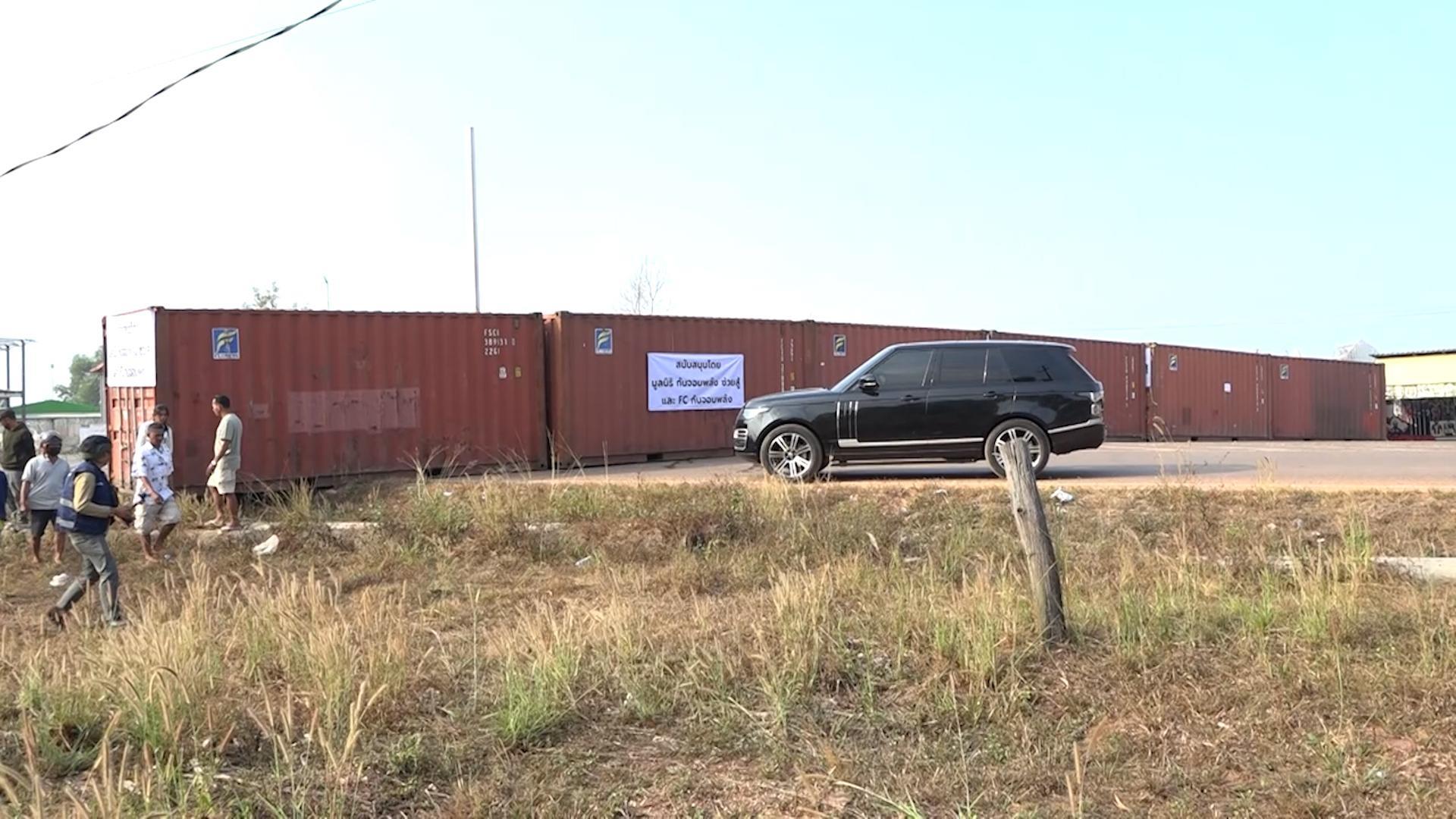
In response, Techo Hun Sen raised questions regarding National Road 58, a road running along the Cambodian border that was constructed with Chinese assistance. He noted that Thai authorities are now placing containers and barriers in the area.
Techo Hun Sen questioned why Thailand had never protested during the years when China was building the road for Cambodia shortly after Cambodia emerged from decades of war.
“Now I want to ask Thailand: this National Road 58 was built by China. Why is Thailand now placing containers there? Was China blind when it built a road for Cambodia on what Thailand now claims is Thai territory?” He asked.
The question carried significant political and diplomatic implications, as Techo Hun Sen was using what he described as “facts on the ground” to challenge claims that the area belongs to Thailand.
At the same time, Samdech Hun Sen urged Thailand to continue implementing the ceasefire agreement and resume border demarcation work through the Joint Boundary Commission (JBC), a mechanism both countries had previously agreed to under formal bilateral agreements.
Conclusion
Techo Hun Sen’s speech on June 10, 2026 was not merely an attempt to correct what he viewed as false reporting by sections of the Thai media. It was also a clear political message directed at Cambodian citizens, Thailand, and the international community.
The message was straightforward: Cambodia will not abandon its territory, but Cambodia will also not choose war as the means to resolve disputes.
As the first anniversary of the July 24, 2025 conflict approaches, Techo Hun Sen’s remarks also appear aimed at preventing nationalism, misinformation, and misunderstanding from reigniting another painful chapter in Cambodia–Thailand relations.