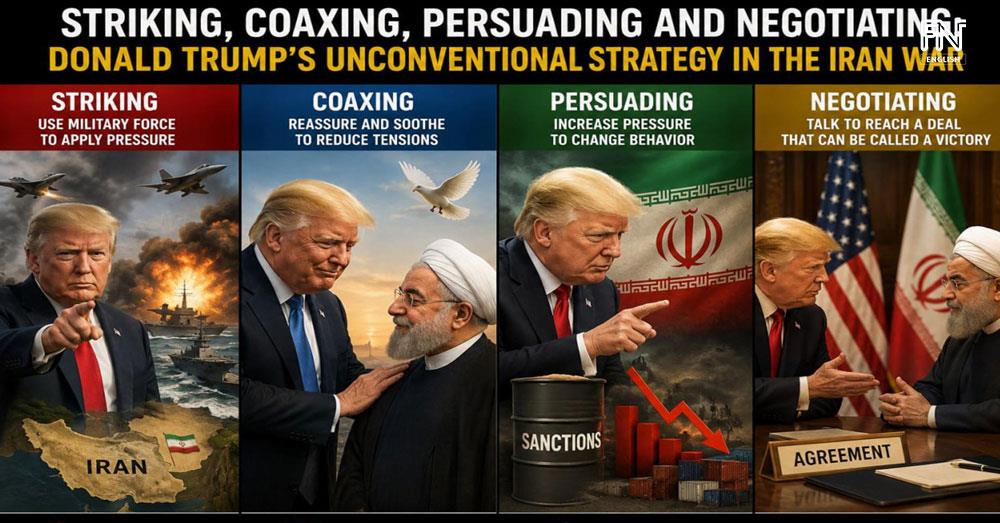

(Phnom Penh): In a conventional war, leaders are generally forced to choose between two paths: fighting or negotiating. Donald Trump, however, appears unwilling to choose either. Instead, he is pursuing both simultaneously — striking, coaxing, persuading and negotiating all at once.
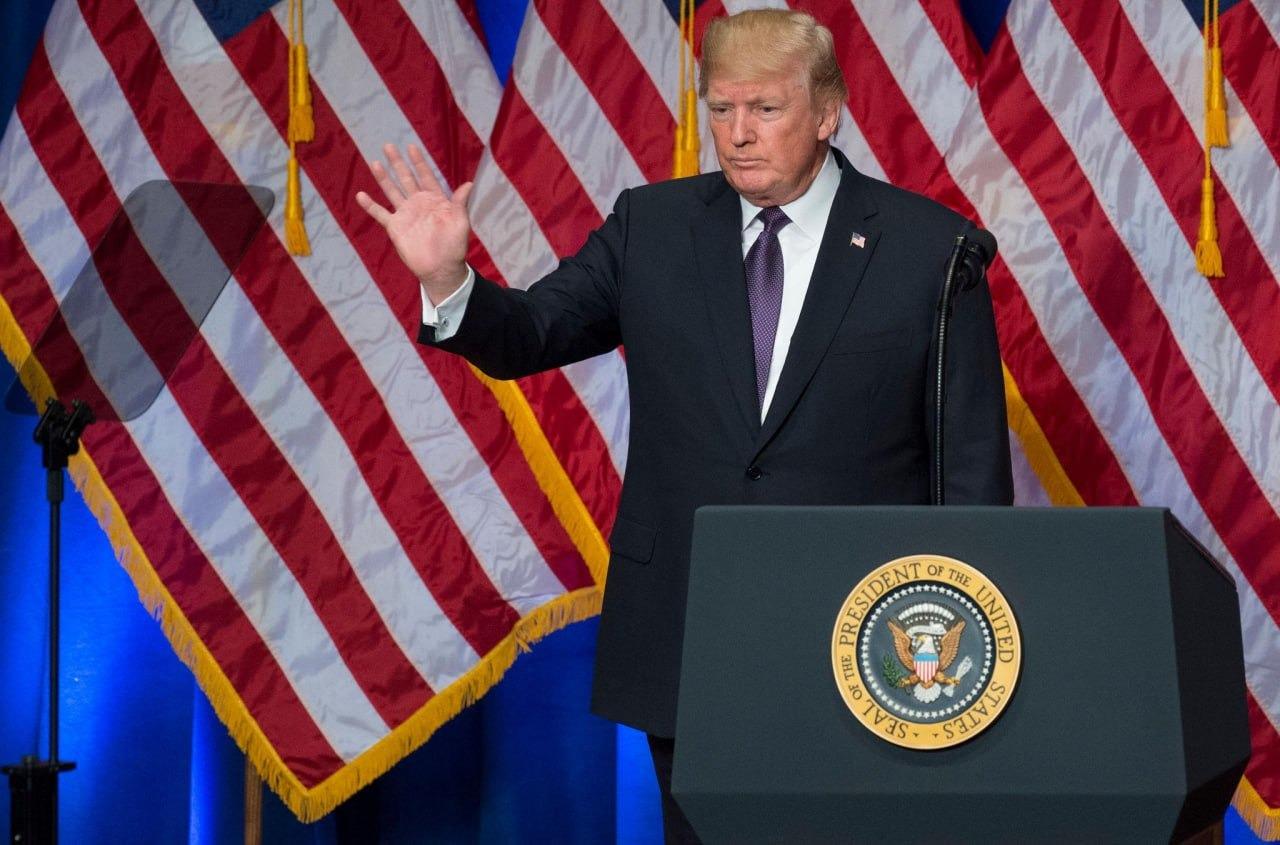
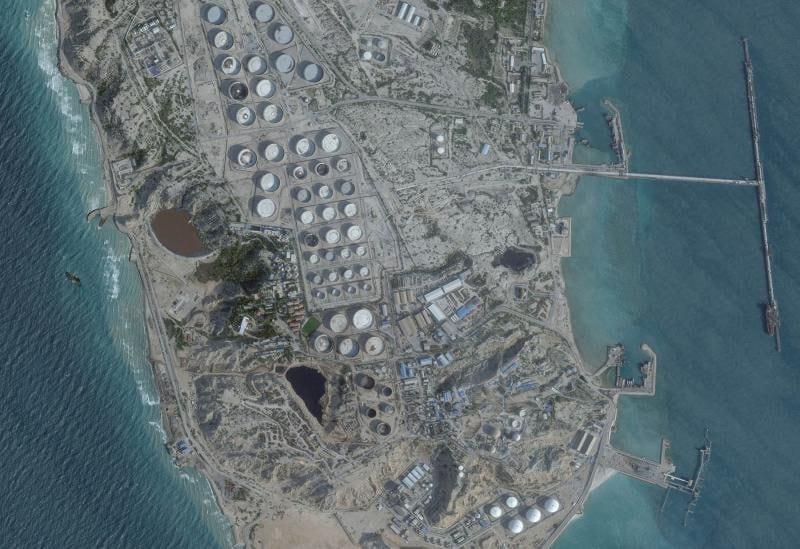
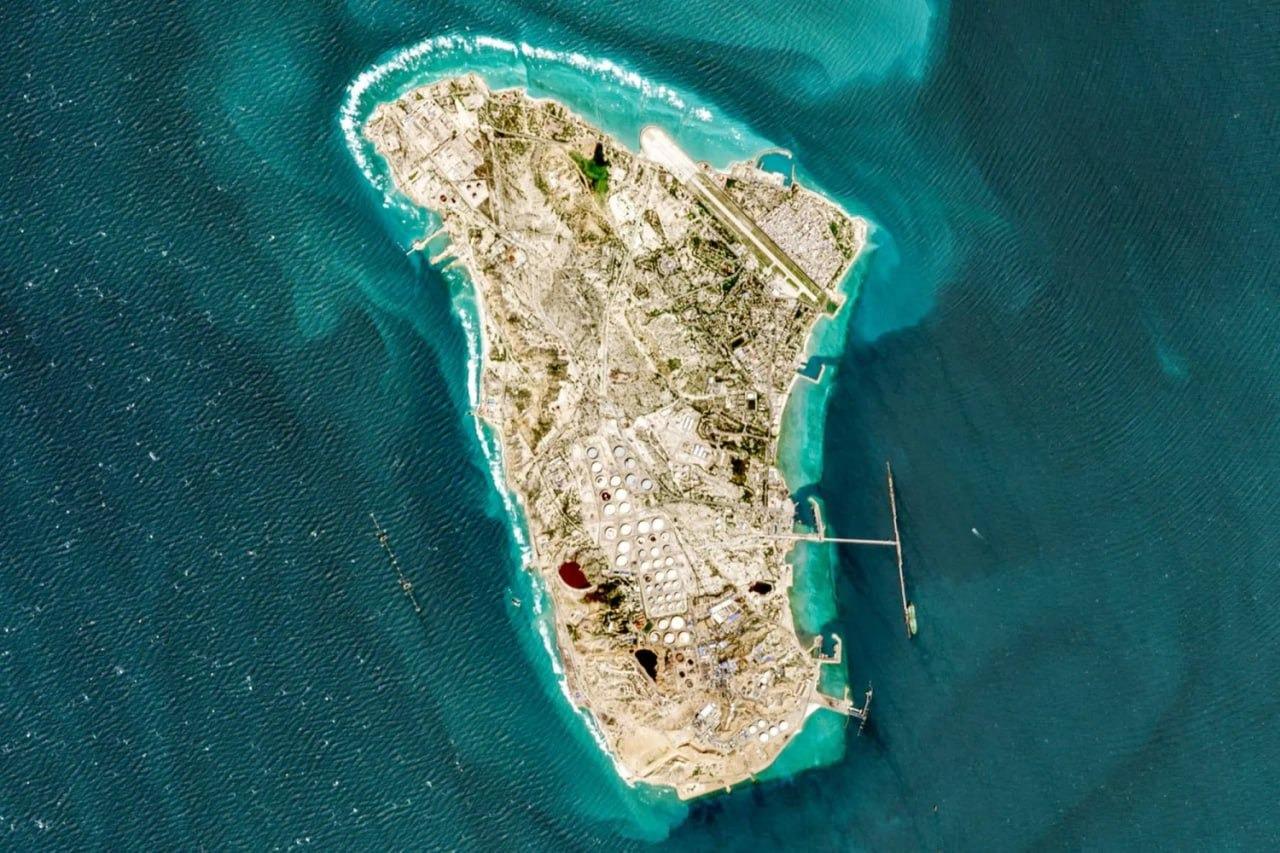
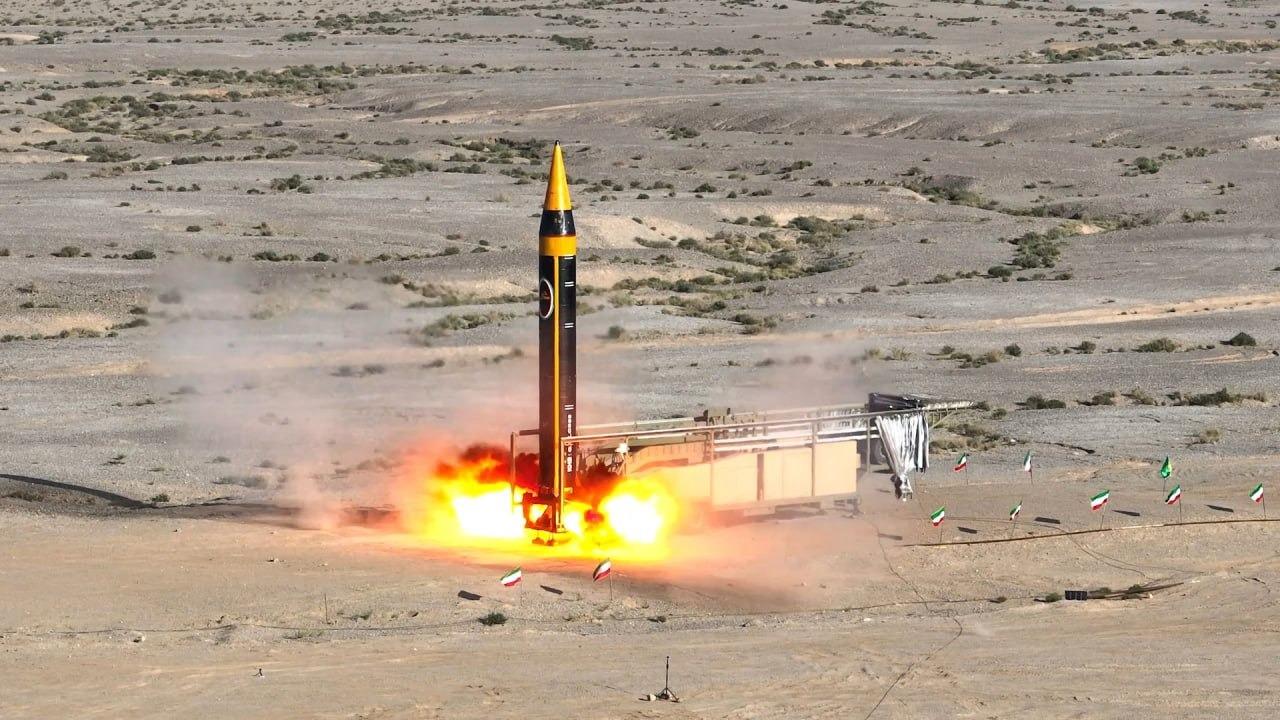
On the morning of June 11, Trump threatened to hit Iran “very hard” and even suggested that the United States could seize Kharg Island, the strategic hub through which most of Iran’s crude oil exports flow. Yet only hours later, he cancelled a new round of strikes and announced that an agreement with Tehran was entering its final stage.
This apparent contradiction may not be a sudden shift in policy. Rather, it reflects a distinctive political strategy in which military force is used as a diplomatic instrument, while diplomacy itself is employed to avoid a wider war.
War as an Instrument of Diplomacy
A closer examination of Trump’s approach over recent months reveals a recurring pattern. First comes pressure. Then comes military action. Finally comes an invitation to negotiate.
Security analyst Richard Weitz describes this approach as “escalate to de-escalate” — increasing pressure in order to reduce conflict.
Under this logic, threats and military strikes are not the ultimate objective. They serve as tools designed to compel an adversary back to the negotiating table and encourage acceptance of terms that might otherwise be rejected.
In this sense, Trump is not using diplomacy to avoid war. Rather, he is using war as an instrument of diplomacy. Military force, coercion and battlefield pressure are deployed to strengthen America’s leverage at the negotiating table.
Put differently, for Trump, war is not the opposite of diplomacy. It is an extension of diplomacy by other means.
The Politics of the “Stick and the Rose”
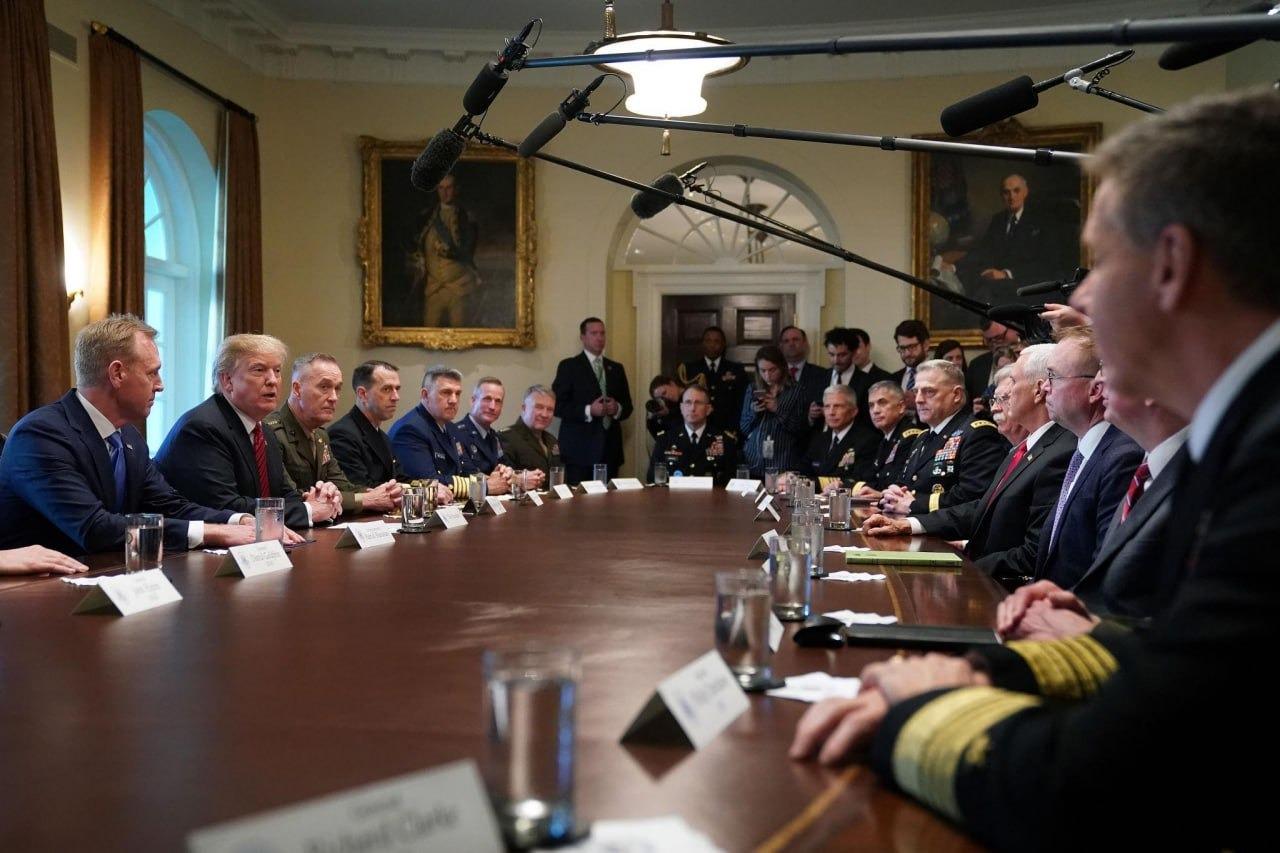
While fighter jets and missiles speak their own language, Trump is simultaneously speaking another language — the language of deal-making.
On the same day that he warned Iran of severe military consequences, he also declared that a memorandum of understanding with Tehran was in its “final stage” and could be signed within days.
These seemingly contradictory actions reflect what might be described as “Stick and Rose Diplomacy.” One hand holds a stick to threaten and apply pressure. The other holds a rose to reassure, persuade and invite negotiation.
Trump is therefore sending two messages at once. If Iran refuses to negotiate, it risks facing greater military pressure. If it agrees to negotiate, the door remains open to a deal and the easing of tensions.
Such a strategy makes it difficult for adversaries to determine Washington’s true intentions. Are the threats genuine, or merely bargaining tactics? Is diplomacy a sincere effort to achieve peace, or simply a pause before additional pressure is applied?
This ambiguity itself may be one of Trump’s most powerful political weapons.
Strategy or Policy Inconsistency?
Yet an important question remains: Is this a deliberate strategy, or simply policy inconsistency?
Across Washington, analysts remain divided.
Supporters argue that Trump is practicing Strategic Ambiguity — intentionally keeping opponents uncertain about America’s next move. In this view, uncertainty is not a weakness but a calculated tool of political and psychological pressure.
Critics, however, point out that Trump has repeatedly claimed that a deal with Iran was imminent, only for the agreement to remain unsigned. The gap between repeated declarations and tangible outcomes risks creating what political analysts call a Credibility Gap.
In both politics and diplomacy, credibility is among a leader’s most valuable assets. When victory is declared before it is secured, the danger is not merely disappointment, but erosion of trust.
The unanswered question, therefore, is whether Trump is using uncertainty to pressure Iran into negotiations — or whether that uncertainty is beginning to undermine his own credibility.
Iran Is Not Surrendering
Despite Trump’s assertion that Iran wants a deal more than the United States does, Tehran has shown little sign of outright capitulation.
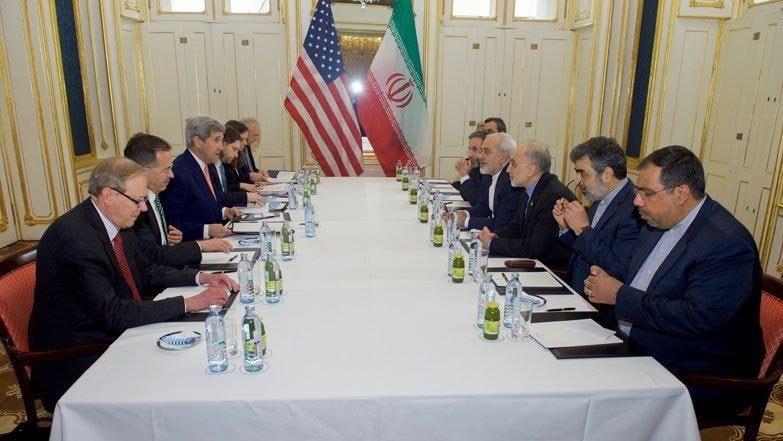
Iranian officials continue to insist that no final agreement has been reached and accuse Washington of repeatedly altering its demands during negotiations.
For Tehran, any acceptable agreement must include security guarantees, sanctions relief, the unfreezing of Iranian assets and meaningful economic relief after years of pressure.
What is unfolding, therefore, is not a negotiation between a clear winner and a clear loser. Rather, it is a contest over public perception and political legitimacy.
Both sides are crafting different narratives for their domestic audiences.
Trump seeks to demonstrate that American military and economic pressure forced Iran toward compromise. Iran, meanwhile, seeks to show that it has defended its sovereignty, dignity and core principles without yielding to American coercion.
In this sense, the struggle is taking place not only on the battlefield or at the negotiating table, but also in the realm of political perception. Both sides are negotiating a settlement while simultaneously competing to define who ultimately appears victorious.
Netanyahu and the Complicated Equation
The story does not end with Washington and Tehran. Israel remains a critical element in the equation.
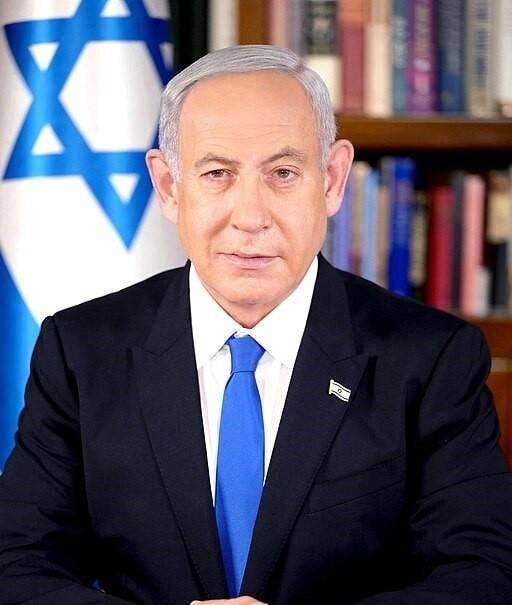
Israeli Prime Minister Benjamin Netanyahu wants any final agreement to go beyond nuclear restrictions. His vision includes dismantling Iran’s nuclear infrastructure, limiting missile development and ending support for Tehran’s regional proxy networks.
Trump’s public remarks, however, have focused overwhelmingly on preventing Iran from acquiring nuclear weapons.
This difference suggests that Trump and Netanyahu may define “victory” differently.
For Trump, success may be a deal that can be achieved quickly, prevents further military escalation and reduces risks to the global economy.
For Netanyahu, success requires a broader transformation of Iran’s military capabilities, regional influence and strategic networks.
As a result, Trump is negotiating not only with Iran, but also with the expectations of America’s closest Middle Eastern ally.
His diplomacy is therefore not a balancing act between Washington and Tehran alone. It is a triangular balancing act involving Washington, Tehran and Jerusalem — three actors with very different definitions of peace, security and victory.
When Politics Remains Unresolved, the World Pays the Price
While politicians negotiate, the rest of the world absorbs the consequences.
The World Bank has warned that the Iran war could reduce global economic growth to its weakest level since the Covid-19 pandemic. If hostilities expand further or energy supplies face additional disruptions, the consequences could extend far beyond the Middle East.
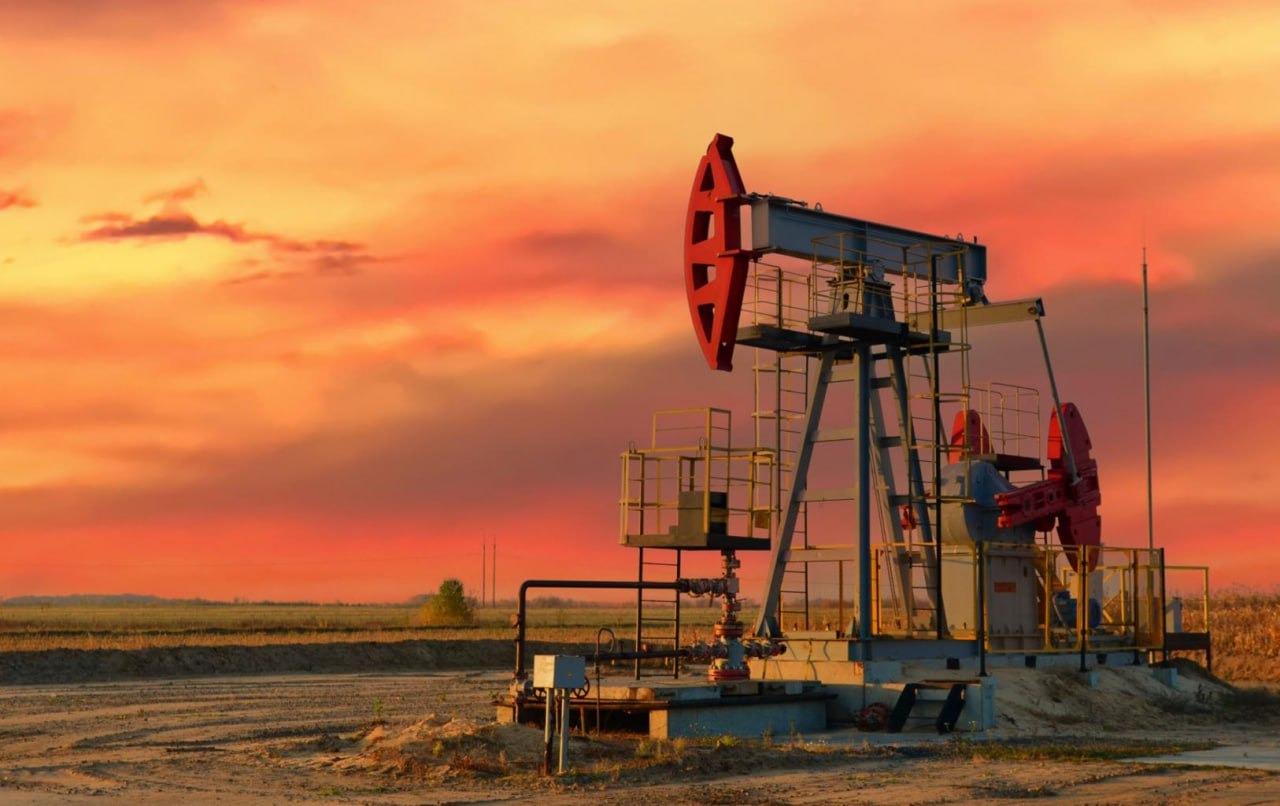
Disruptions in shipping through the Strait of Hormuz have already driven up oil, gas and fertilizer prices, while global markets closely monitor every development in the conflict.
For many countries, the issue is no longer about who wins or loses the war. The greater concern is how rising energy prices, inflation and food insecurity will affect their populations if the conflict continues.
This means Trump is confronting more than Iran. He is also confronting time, global economic pressure and an increasingly anxious international community eager to see the conflict end.
As long as Washington and Tehran remain unable to reach a final agreement, the global economy will continue paying the price.
Conclusion
Donald Trump is not fighting this war in order to win a war. He is using war as a diplomatic instrument.
He threatens in order to compel. He strikes in order to increase pressure. He reassures in order to reduce tensions. And he negotiates in search of an agreement that can be presented as a victory.
History, however, repeatedly demonstrates that when leaders use war as a negotiating tool, the greatest danger is not diplomatic failure.
The greatest danger is a single miscalculation, a single misunderstanding or a single mistimed response that transforms a strategy of “escalation for de-escalation” into a full-scale conflict beyond anyone’s control.
Today, Trump appears to be walking a narrow tightrope between war and peace. Yet that rope connects far more than Washington and Tehran. It also connects global markets, energy security and the broader stability of the Middle East.
The unresolved question is whether Trump can successfully convert military pressure into lasting peace — or whether that pressure will ultimately become a fire that spreads beyond his ability to contain it.