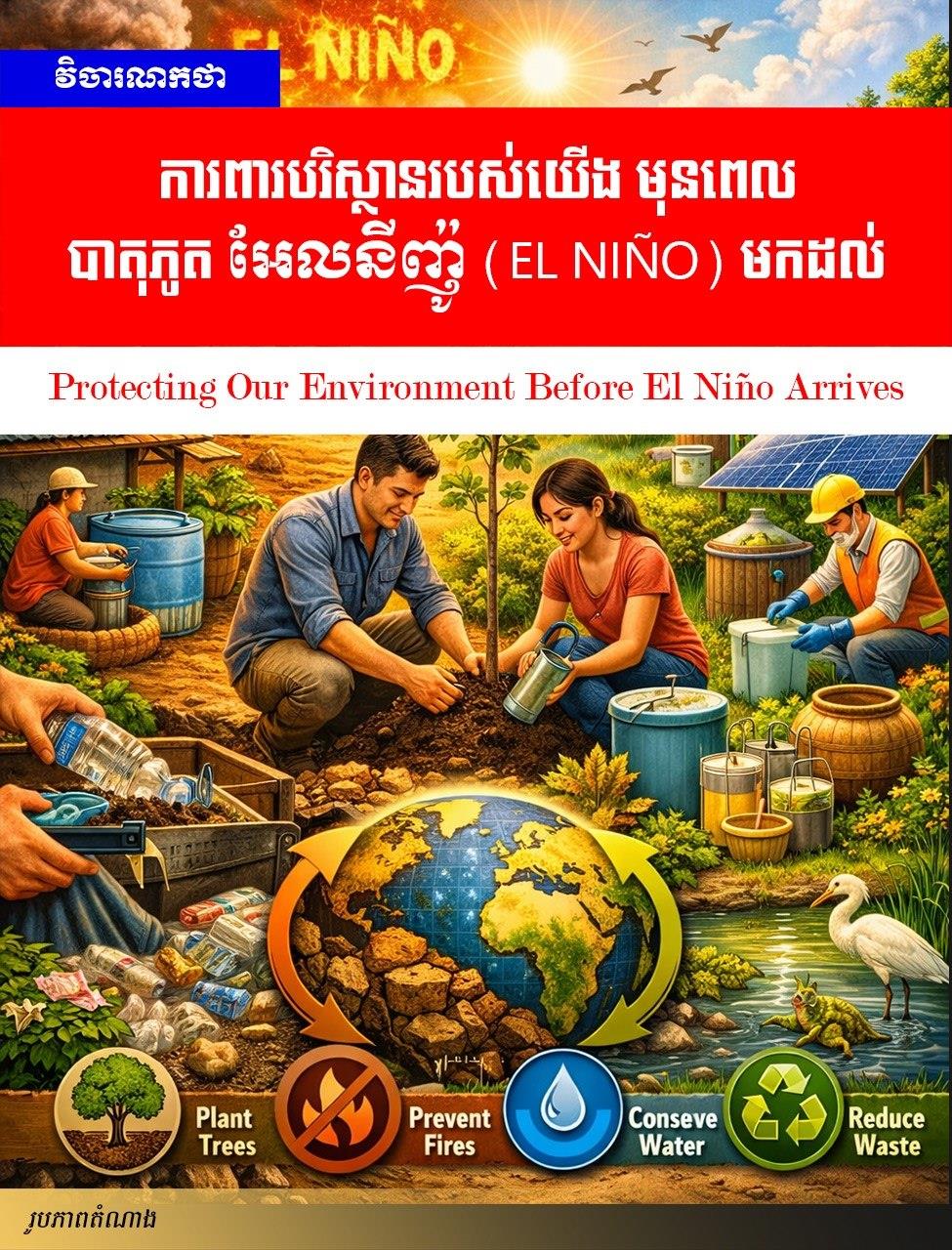

(Phnom Penh): Nature has always provided us with everything we need—clean air to breathe, water to drink, fertile land to grow our food, and forests that shelter wildlife and regulate our climate. Today, however, nature is asking something in return: our care and our responsibility.
Scientists are forecasting the return of El Niño, a climate phenomenon that often brings higher temperatures, prolonged dry spells, water shortages, and an increased risk of forest fires. While El Niño is a natural event, its impacts are becoming more severe because of climate change and environmental degradation.
The good news is that the damage is not inevitable. The choices we make today will determine how well our communities, our forests, and our country withstand the months ahead.
The first measure is to protect every tree. Trees cool the air, retain moisture in the soil, protect water sources, and reduce the risk of drought. Cutting trees during the dry season weakens nature’s ability to cope with extreme heat. Instead, we should plant more trees and care for those already growing.
The second measure is to prevent all forms of fire. During El Niño, dry leaves and grasses become fuel waiting for a spark. Burning agricultural residues, household waste, or clearing land with fire can quickly turn into devastating wildfires. Every citizen should help prevent fires and immediately report any smoke or fire to local authorities. One careless act can destroy forests that have taken decades to grow.
Water conservation is equally important. Rivers, lakes, ponds, and wetlands should be protected from pollution and overuse. Households should avoid wasting water, repair leaking pipes, reuse water where appropriate, and harvest rainwater whenever possible. Every litre saved today may become essential tomorrow.
Communities should also keep the environment clean. Plastic waste blocks drainage systems, pollutes rivers, and damages ecosystems. By refusing unnecessary plastic bags, properly sorting waste, recycling, and participating in community clean-up activities, we reduce pollution while protecting our environment during a season when natural ecosystems are already under stress.
Farmers can prepare by using water-efficient irrigation, conserving soil moisture through mulching, selecting crops suited to dry conditions, and avoiding the burning of crop residues. Healthy soils retain more water and remain productive even during periods of limited rainfall.
Industries and businesses also have an important responsibility. Factories should ensure that wastewater is properly treated, emissions are controlled, and water is used efficiently. Responsible environmental management not only protects nature but also strengthens business resilience during periods of climate stress.
Families should prepare for hotter weather by planting shade trees around homes, reducing energy waste, staying hydrated, and caring for children, older adults, and vulnerable members of the community during heat waves.
Most importantly, protecting the environment is not the responsibility of government alone. It belongs to every citizen. Every tree we protect, every plastic bag we refuse, every drop of water we conserve, every fire we prevent, and every piece of litter we pick up contributes to a safer and healthier future.
El Niño will test our preparedness, but it will also test our unity.
If each of us does our part, our forests will remain green, our rivers will continue to flow, our wildlife will survive, and our communities will become stronger.
The environment protects us every day. As El Niño approaches, it is our turn to protect the environment.
Together, we can transform preparation into resilience and responsibility into a lasting legacy for future generations.
=FRESH NEWS