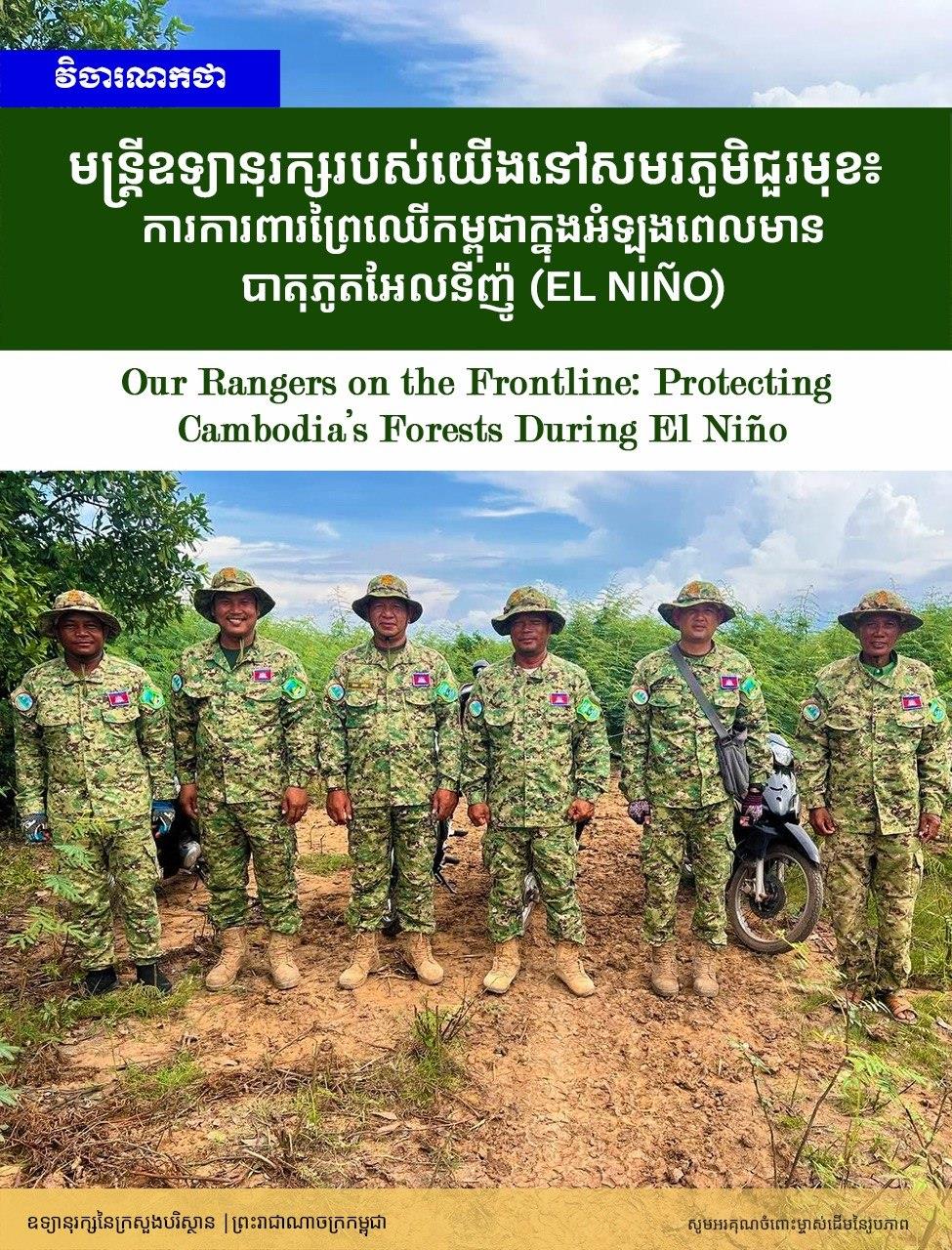

(Phnom Penh): As Cambodia prepares for the arrival of El Niño, our forests face one of their greatest annual challenges. Hotter temperatures, prolonged drought, dry vegetation, and strong winds significantly increase the risk of forest fires. A single spark can destroy forests that have taken generations to grow.
In this critical season, one group of men and women will stand on the frontlines every day—our environmental rangers.
Many people see rangers as law enforcement officers who patrol protected areas. In reality, they are much more. They are guardians of our forests, protectors of wildlife, caretakers of our watersheds, and the first responders when nature is threatened. During El Niño, their responsibility becomes even greater.
The first duty of every ranger is prevention. Preventing a forest fire is far more effective than fighting one. Rangers should increase patrols in fire-prone areas, particularly around forest edges, community forests, ecotourism sites, and places where agricultural land meets protected forests. Visible patrols not only detect danger early but also discourage illegal activities that increase fire risk.
Rangers should strengthen surveillance using every available tool. Satellite imagery, drones, GPS, weather forecasts, fire-risk maps, and community reporting systems can help identify potential danger before it becomes an emergency. Daily monitoring should become routine throughout the dry season.
Equally important is working closely with local communities. Rangers should regularly meet with village leaders, community protected-area members, farmers, monks, teachers, and youth groups to explain fire risks and promote safe practices. Awareness is one of the most effective forms of prevention. When communities understand the danger, they become partners in protecting the forest.
Rangers should also help establish community fire-prevention teams in villages located near protected areas. These volunteer groups can monitor local conditions, maintain firebreaks, report smoke immediately, and support initial firefighting efforts until professional teams arrive. A well-prepared community can often stop a fire before it spreads.
Law enforcement remains essential. Rangers should strictly prevent illegal logging, charcoal production, land encroachment, and unauthorized burning inside protected areas. During drought, these activities greatly increase the likelihood of catastrophic fires. Fair, firm, and consistent enforcement protects not only forests but also nearby communities.
Preparedness is equally important. Rangers should inspect firefighting equipment, ensure communication systems are functioning, identify water sources for emergency response, maintain access roads, and coordinate closely with local authorities, firefighters, military units, police, and community organizations. Every minute saved during an emergency can prevent hundreds of hectares of forest from burning.
Rangers must also protect the forest’s wildlife. During drought, many animals leave shrinking water sources in search of food and water. Rangers should monitor wildlife movement, protect critical habitats, safeguard remaining waterholes where possible, and help reduce conflicts between wildlife and nearby communities through practical, non-lethal solutions.
Perhaps the most important quality of a ranger is leadership. During difficult times, people look for guidance. Rangers should inspire confidence, remain vigilant, and serve with professionalism, integrity, and compassion. Their presence reassures communities that someone is watching over the nation’s natural heritage.
The public also has a responsibility. Citizens should cooperate with rangers, follow fire restrictions, avoid burning waste or crop residues, report smoke or suspicious activities immediately, and respect protected areas. Forest conservation cannot succeed through government action alone. It requires a partnership between rangers and the people they serve.
Cambodia’s forests are more than trees. They are the source of our rivers, the home of our wildlife, the foundation of our biodiversity, and a vital shield against climate change. Every forest protected today strengthens our water security, our agriculture, our tourism, and the well-being of future generations.
This El Niño season, let us stand behind our environmental rangers. Let us support their work, respect their dedication, and work alongside them in protecting the forests that sustain us all.
Because every patrol they make, every fire they prevent, and every forest they save is an investment in Cambodia’s future.
Together, we can ensure that even in the hottest and driest months, our forests remain green, resilient, and alive for generations to come.
=FRESH NEWS