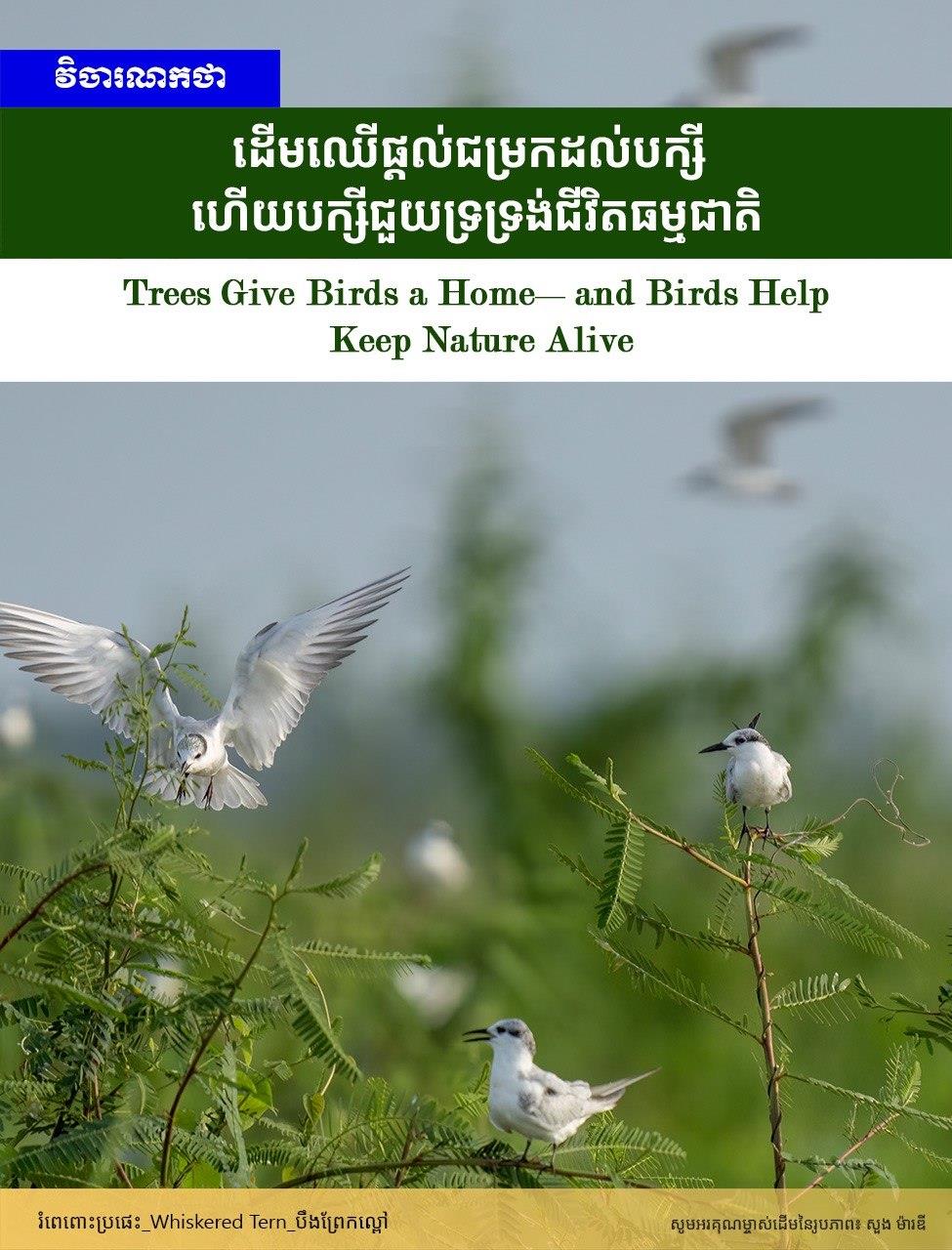

(Phnom Penh): One of the most beautiful sounds in nature is the song of a bird greeting the morning.
It is a sound that brings peace to our hearts and reminds us that nature is healthy and alive.
Yet behind every birdsong is something we often overlook.
A tree.
Without trees, there are no nests. Without forests, there is little shelter. Without healthy habitats, many birds cannot survive. The future of birds and the future of trees are inseparable.
Trees are far more than places where birds rest. They are homes where birds raise their young, sources of food through fruits, seeds, flowers, and insects, safe refuges from predators, and resting places during long migrations. A single mature tree may support dozens of bird species throughout the year.
But the relationship is not one-sided.
Birds also help trees thrive.
Many birds disperse seeds across forests, fields, and mountains, allowing new trees to grow naturally in places people may never reach. Fruit-eating birds carry seeds over long distances, helping forests regenerate after storms, fires, or other natural disturbances.
Other birds act as nature’s pest controllers. They feed on insects that damage crops and forests, helping farmers reduce crop losses and maintaining healthier ecosystems. Some birds also pollinate flowering plants, supporting the reproduction of countless species.
Together, trees and birds form one of nature’s oldest partnerships.
When forests are healthy, bird populations flourish.
When bird populations flourish, forests become healthier.
This partnership benefits all of humanity.
Birds contribute to agriculture by controlling pests and supporting pollination. They help maintain balanced ecosystems that produce clean water, fertile soil, and healthy forests. Bird-rich forests also attract nature lovers and ecotourists, creating opportunities for sustainable livelihoods in rural communities.
Perhaps just as importantly, birds enrich our lives in ways that cannot be measured economically. Their songs bring tranquility. Their presence reminds us that nature remains vibrant. For many people, hearing birds each morning is one of life’s simplest but greatest joys.
Unfortunately, birds face growing challenges. Deforestation, forest fires, habitat loss, illegal hunting, pollution, and climate change are reducing bird populations in many parts of the world. When forests disappear, birds lose their homes. When birds disappear, forests gradually lose some of their natural ability to regenerate and remain healthy.
Protecting birds therefore begins with protecting trees.
Every tree planted creates future habitat.
Every forest protected safeguards countless nests.
Every riverbank restored becomes a corridor for wildlife.
Every mangrove conserved provides feeding and breeding grounds for coastal birds.
Every community forest preserved strengthens Cambodia’s extraordinary natural heritage.
Each of us can contribute.
Plant native trees.
Protect mature trees.
Prevent forest fires.
Avoid disturbing nesting birds.
Discourage illegal hunting and wildlife trade.
Teach children to appreciate birds not as possessions, but as living treasures that belong in nature.
Cambodia is blessed with remarkable bird diversity. From the forests of the Cardamom Mountains to the wetlands around the Tonle Sap and the mangrove forests along the coast, birds are part of our national heritage. Their survival reflects the health of our forests, our rivers, and our environment.
When we hear birds singing, we should recognize that they are telling us something important.
They are telling us that the forest is alive.
They are telling us that the ecosystem is functioning.
They are telling us that nature is still caring for us.
As we plant more trees across Cambodia, we are planting more than forests.
We are creating homes for birds.
We are restoring balance to nature.
We are strengthening biodiversity.
And we are leaving future generations a country where children will continue to wake each morning to the songs of birds beneath green canopies.
For when trees grow, birds return.
When birds return, forests flourish.
And when forests flourish, life itself becomes richer, healthier, and more beautiful for us all.
=FRESH NEWS