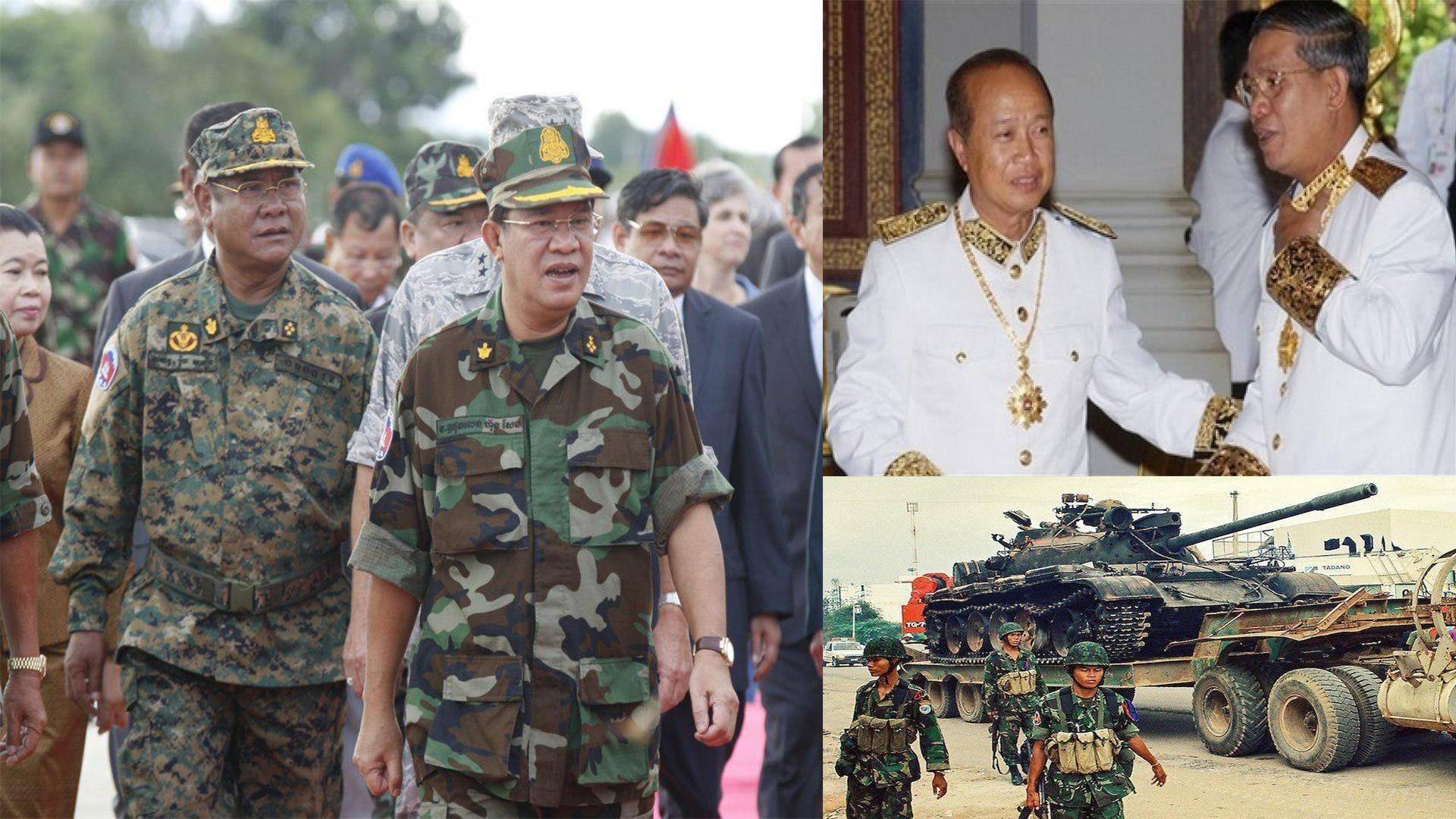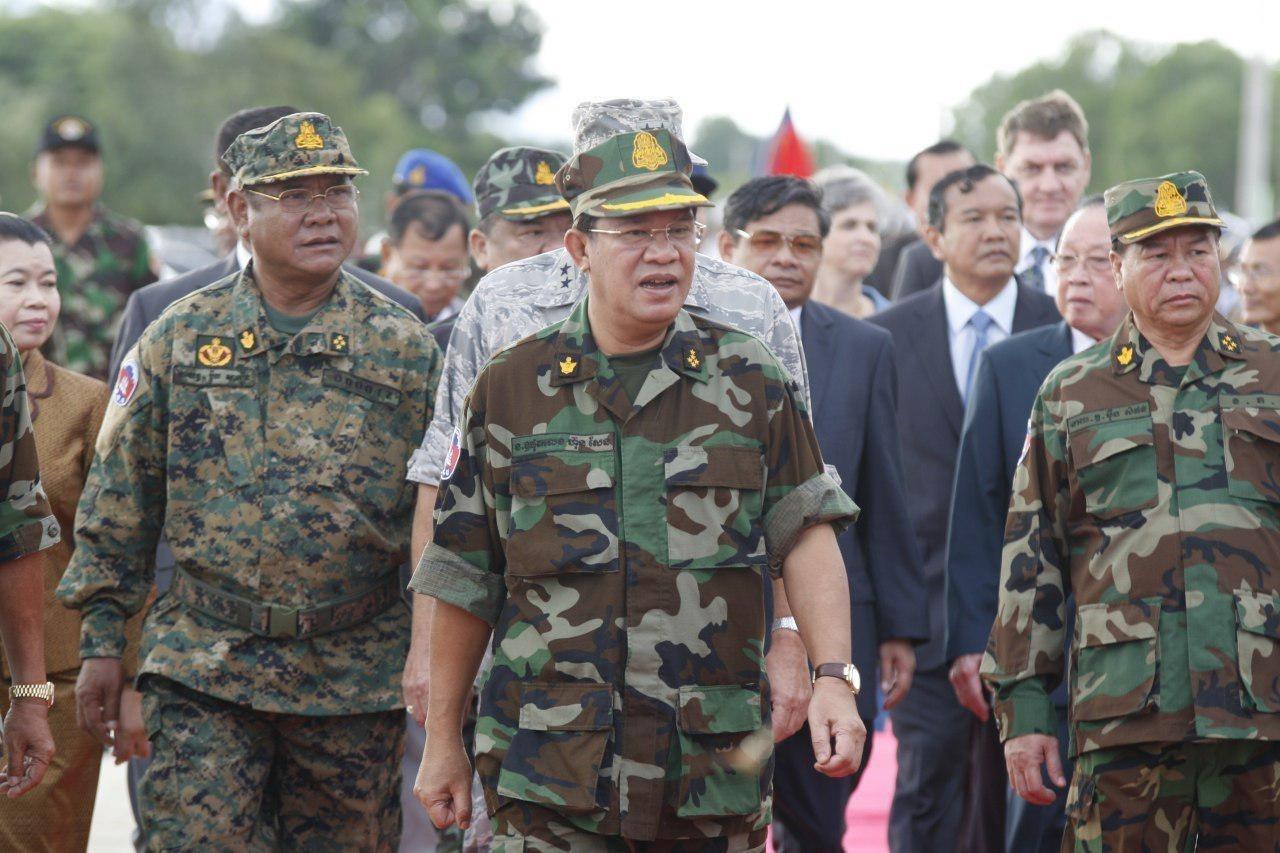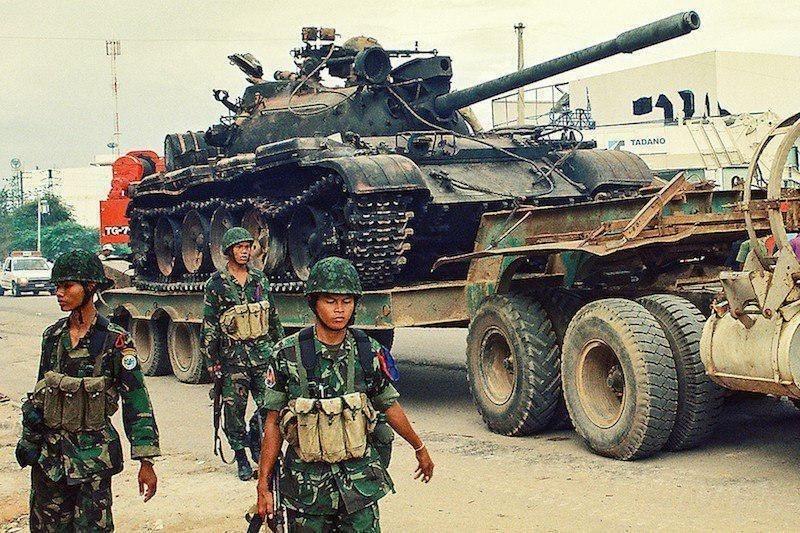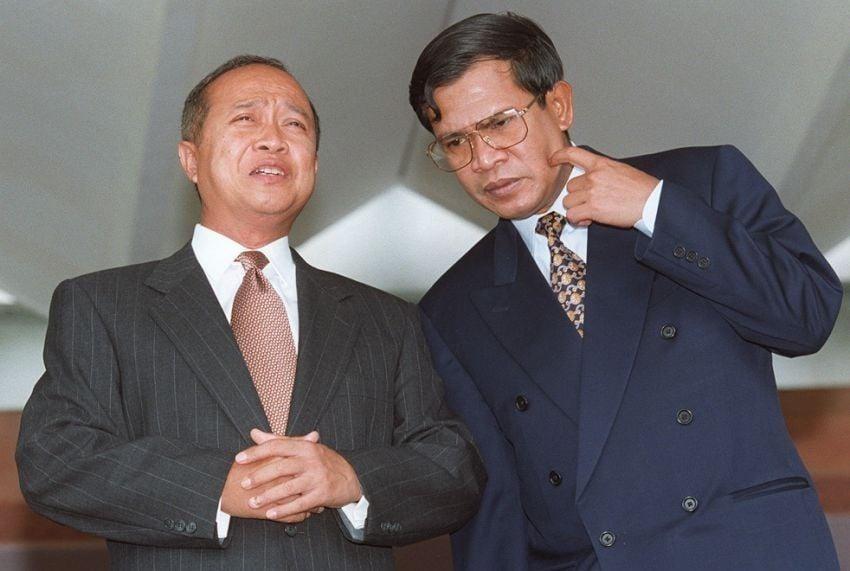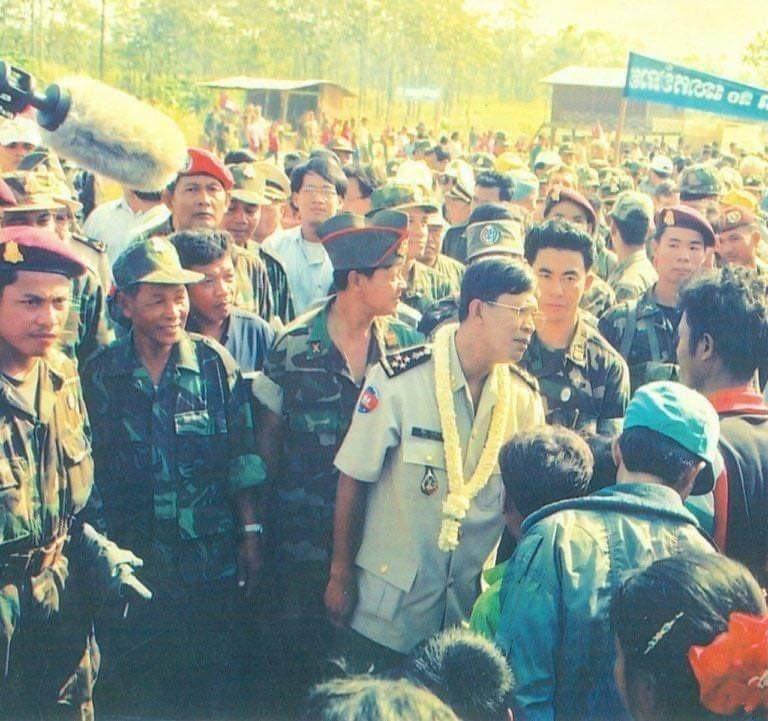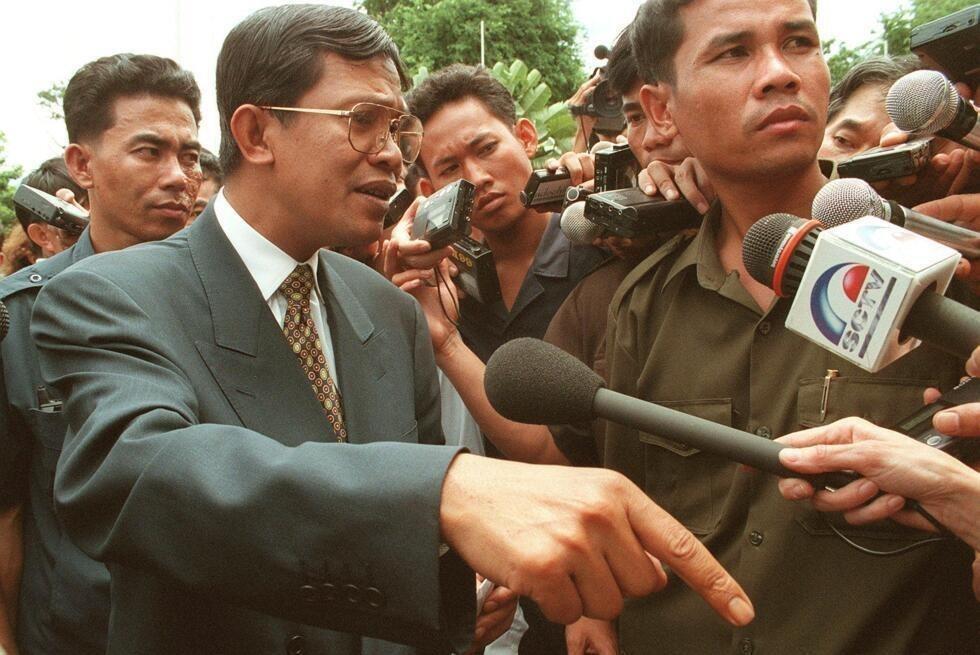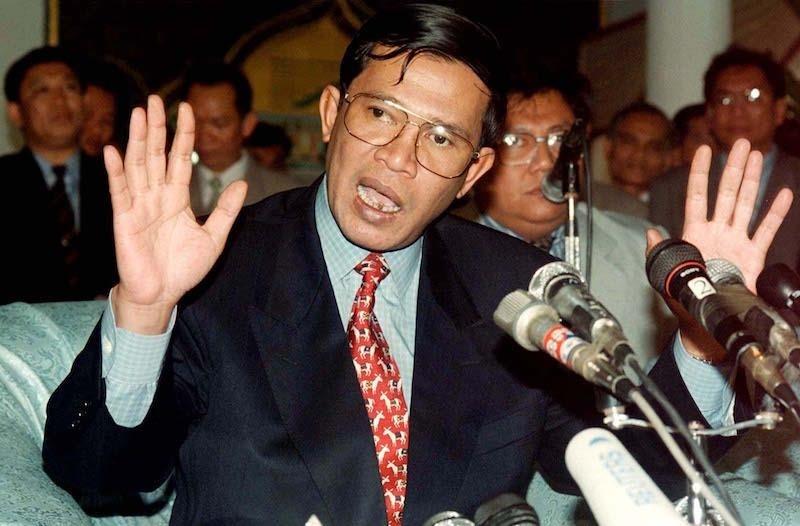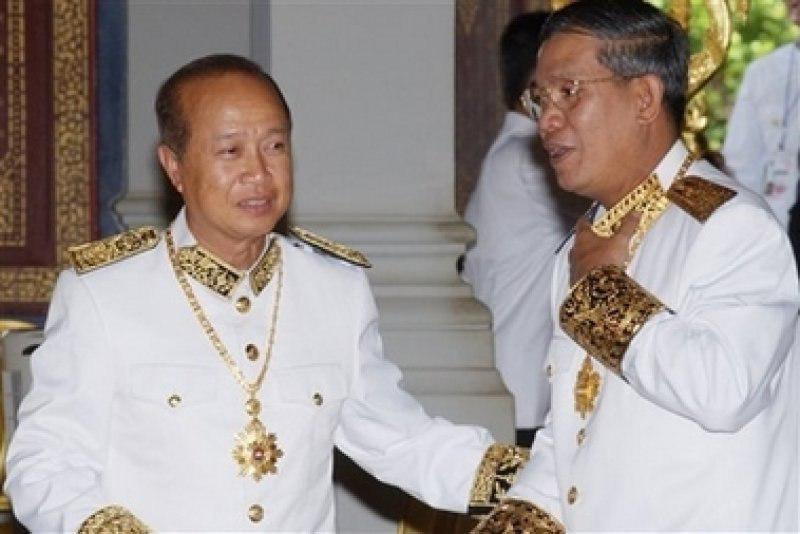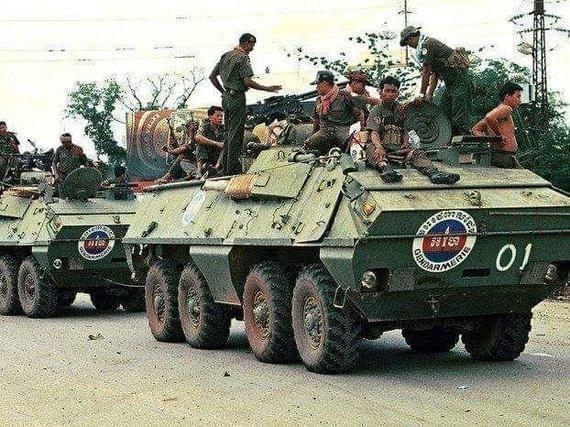

(Phnom Penh): Twenty-nine years ago this month, Cambodia experienced one of the most consequential political and military confrontations in its modern history.
Official accounts presented by the Royal Government describe the events of July 5–6, 1997 as a decisive operation to thwart what authorities have consistently maintained was an alleged assassination plot targeting Samdech Akka Moha Sena Padei Techo Hun Sen.
Hun Sen has stated that the incident marked the third time he survived an alleged attempt on his life and one of at least seven alleged assassination plots directed against him during his political career.
He has further argued that, had decisive action not been taken at the time, Cambodia might never have brought its decades-long civil war to an end or achieved the peace, national reunification, and economic development that followed.
This article offers a historical retrospective based on official accounts and historical records. Its purpose is to revisit one of Cambodia's defining political crises and to preserve its historical significance for future generations.
The Road to Confrontation
Official accounts presented by the Royal Government state that the armed clashes of July 5–6, 1997 did not erupt spontaneously. Rather, authorities have maintained that they were preceded by months of escalating political tension, military preparations, and intelligence reports warning of an impending confrontation.
According to those accounts, between July 5 and 6, 1997, former FUNCINPEC forces allegedly mobilized approximately 10,000 troops, including Khmer Rouge fighters, from Cambodia's border regions as part of a plan to isolate Phnom Penh.
Government accounts further maintain that the operation was intended to assassinate Hun Sen. The principal force, according to official records, was reportedly commanded by General Nhek Bun Chhay, then one of Prince Norodom Ranariddh's senior military commanders within FUNCINPEC.
Authorities also alleged that several hundred armed Khmer Rouge fighters, operating under the cover of former FUNCINPEC resistance forces, were quietly transported into Phnom Penh by truck in the weeks leading up to the confrontation.
According to government accounts, these personnel were deployed to a number of strategic locations across the capital, including former FUNCINPEC offices, Prince Ranariddh's residence, and military installations responsible for the security of the Royal Palace.
A Defector's Testimony
One of the most significant pieces of evidence cited by the government came from Phun Pheap, a former Khmer Rouge fighter who broke ranks before the outbreak of the fighting.
In interviews with both Cambodian and international journalists, Phun Pheap alleged that he had served in a Khmer Rouge special unit that entered Phnom Penh in April 1997 under the protection of FUNCINPEC forces.
He claimed that hundreds of Khmer Rouge personnel had already been stationed at various locations throughout the capital, while thousands more remained positioned outside Phnom Penh, awaiting further orders.
According to his account, substantial quantities of military hardware—including mortars, rocket launchers, and other heavy weapons—had also been transported to military positions controlled by FUNCINPEC commanders.
Government officials at the time cited his testimony as evidence that preparations for a coordinated military operation had been underway well before the July confrontation.
Opposition figures, however, disputed these allegations, reflecting the sharply different interpretations that continue to surround the events of July 1997.
Toward Armed Confrontation
Official accounts maintain that political and military tensions continued to escalate throughout the weeks leading up to July 1997.
One of the incidents frequently cited by government officials occurred on June 17, 1997, when armed personnel assigned to the Royal Palace security force under the command of Ho Sok, then commander of Prince Norodom Ranariddh's bodyguard unit, allegedly attacked the residence of General Hok Lundy, Cambodia's National Police Commissioner at the time.
According to official accounts, the attack was preceded by increasingly confrontational public rhetoric.
Government records cite remarks by General Serei Kosal, then a senior FUNCINPEC commander, who publicly warned that his forces possessed sufficient firepower to destroy Hok Lundy's residence "within the blink of an eye."
Shortly afterward, gunfire erupted outside the commissioner's residence. Although the exchange reportedly lasted approximately fifteen minutes, neither Hok Lundy nor members of his family were injured.
Speaking to reporters after the incident, Hok Lundy said investigators had recovered spent ammunition outside his residence, which he described as evidence that the attack had been deliberate.
He further alleged that the incident formed part of a broader plan to eliminate senior leaders of the Cambodian People's Party, including Hun Sen, Sar Kheng, and himself.
Whether viewed as an isolated confrontation or as part of a larger strategy, the incident significantly heightened political tensions in Phnom Penh and deepened concerns that an armed conflict was becoming increasingly difficult to avoid.
July 5, 1997: Fighting Erupts in Phnom Penh
According to official accounts, the confrontation that government authorities had anticipated began on July 5, 1997.
Government officials alleged that Khmer Rouge fighters operating alongside FUNCINPEC forces launched coordinated military operations at several strategic locations across Phnom Penh.
One of the principal formations, estimated by government sources at approximately 1,000 personnel, reportedly operated under the command of General Lay Virak, then a senior FUNCINPEC military commander.
Official accounts state that government forces loyal to Hun Sen eventually surrounded these units before they were able to consolidate their positions.
Meanwhile, another force under General Nhek Bun Chhay, stationed near the Tang Krasang military area on the outskirts of Phnom Penh, reportedly attempted to move into the capital to reinforce the units already engaged in combat.
Government accounts maintain that these reinforcements were intercepted before reaching the city, preventing the two forces from joining together.
Officials have since described the interception as one of the decisive moments that shaped the outcome of the confrontation.
Rumors, Uncertainty, and a Televised Address
Prince Norodom Ranariddh, then First Prime Minister and leader of FUNCINPEC, departed Cambodia on July 4, 1997, one day before the fighting began.
Hun Sen, meanwhile, was officially reported to have been on leave between July 1 and July 6.
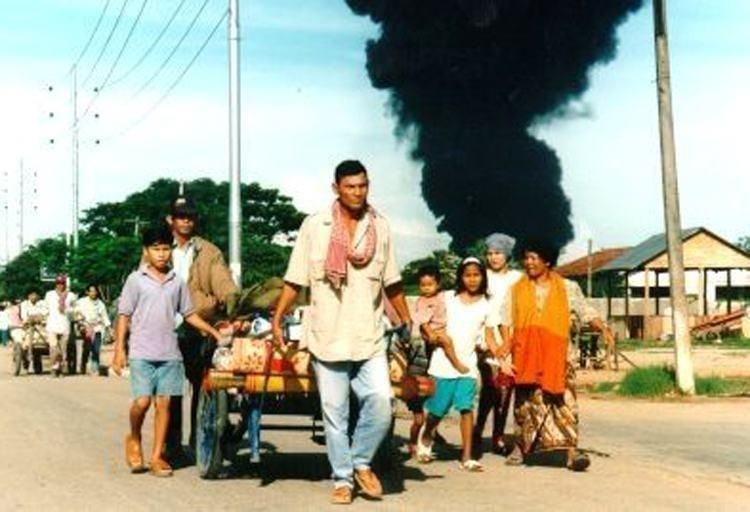
Heavy gunfire echoed across central Phnom Penh beginning on the evening of July 5, as residents sought shelter amid growing uncertainty.
Government accounts state that Prince Ranariddh's residence served as one of the principal command centers for FUNCINPEC forces, where armored vehicles, heavy machine guns, mortars, and other military equipment had reportedly been deployed.
As the fighting intensified, rumors spread rapidly throughout the capital claiming that Hun Sen had been killed.
At the time, Cambodia's communications infrastructure remained limited, with radio and television serving as the country's primary sources of news.
Government officials have argued that the rumors were intended to undermine the morale of government forces and create confusion among the public.
Hun Sen responded by appearing on national television to reassure the nation that he was alive and remained in Cambodia to direct the government's response to the crisis.
His televised address quickly became one of the defining public moments of the July 1997 confrontation.
The 1998 Election and Its Political Aftermath
Cambodia's general election of July 27, 1998 marked another pivotal moment in the country's political transition.
The Cambodian People's Party (CPP) won 64 seats in the National Assembly, followed by FUNCINPEC with 43 seats, and the Sam Rainsy Party with 15 seats.
According to official government accounts, the announcement of the election results was followed by demonstrations and political unrest led by opposition groups. Government officials argued that the protests were intended to challenge the election outcome and have characterized them as employing tactics similar to those associated with so-called "color revolutions."
Official accounts further maintain that the political tensions that followed the election gave rise to additional alleged plots targeting Hun Sen.
Further Alleged Assassination Plots
According to government records, between July 1997 and September 1998, Hun Sen was the target of three alleged assassination attempts.
Following the armed clashes of July 5–6, 1997, authorities reported that two hand grenades were thrown into the compound of Hun Sen's residence near Phnom Penh's Independence Monument on September 7, 1998.
Government accounts also describe another alleged assassination plot in Siem Reap Province on September 24, 1998. According to those accounts, four B-40 rocket-propelled grenades were positioned along Hun Sen's expected route.
Officials stated that only one of the projectiles detonated, while the remaining devices reportedly failed to explode because of persistent heavy rainfall that continued throughout the night and into the morning of September 24.
Government officials have cited these incidents as evidence that the political crisis had not fully subsided even after the July 1997 confrontation.
The Win-Win Policy and the End of Armed Conflict
Later in 1998, Hun Sen introduced what became known as the Win-Win Policy, a strategy aimed at ending Cambodia's decades-long civil conflict through negotiation, reintegration, and national reconciliation rather than continued military confrontation.
According to official accounts, the policy encouraged the remaining Khmer Rouge forces based in Anlong Veng—the movement's last major stronghold—to abandon armed resistance and reintegrate into Cambodian society.
On December 29, 1998, former Khmer Rouge leaders Nuon Chea, Khieu Samphan, and Ieng Sary traveled from Anlong Veng to meet Hun Sen. According to government records, they formally declared their surrender and agreed to join the Royal Government.
Official Cambodian accounts regard this event as the symbolic conclusion of decades of armed conflict and the completion of Cambodia's territorial reunification.
Conclusion
The events of July 5–6, 1997 remain among the most consequential and debated episodes in Cambodia's contemporary history. They continue to be interpreted differently by various political actors, historians, and observers.
From the perspective presented in official Cambodian accounts, the confrontation represented a decisive turning point that prevented a broader armed conflict, paved the way for the 1998 political transition, and ultimately led to the implementation of the Win-Win Policy, which brought the country's long civil war to an end.
Regardless of differing interpretations, the events of 1997 occupy a significant place in Cambodia's historical memory. Understanding that period provides important context for the country's subsequent journey toward peace, political stability, national reunification, and economic development.
Nearly three decades later, the legacy of those events continues to shape discussions of Cambodia's modern political history, reminding future generations of both the costs of conflict and the enduring importance of preserving peace.