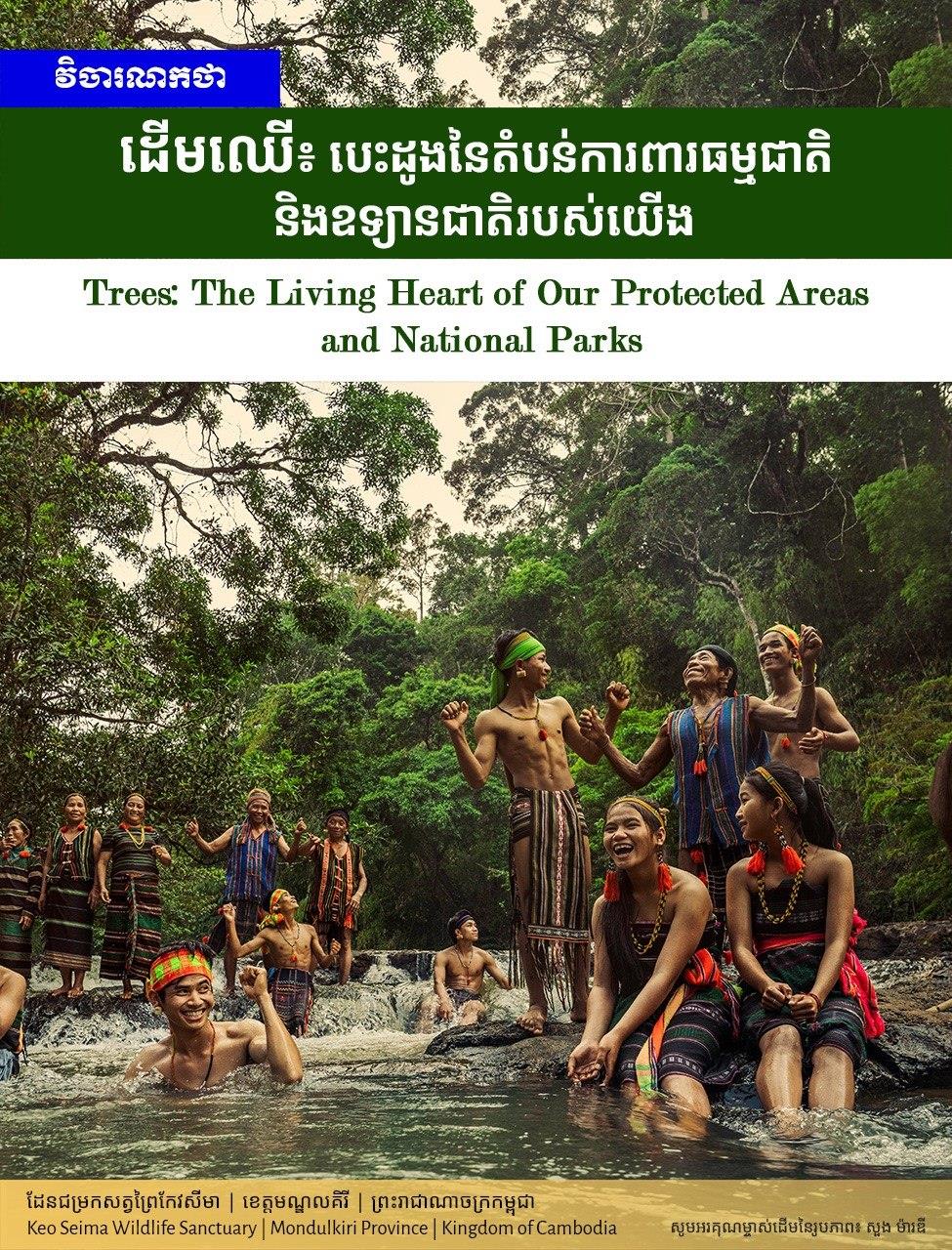

(Phnom Penh): When people visit a national park or a protected area, they often admire its majestic mountains, peaceful rivers, waterfalls, wildlife, and fresh air. They leave refreshed by the beauty of nature.
Yet behind every breathtaking landscape stands one quiet hero.
The tree.
Trees are not simply one part of a protected area; they are its living foundation. Without healthy trees, there can be no healthy forests. Without healthy forests, there can be no healthy protected areas. And without healthy protected areas, the many benefits that nature provides to people begin to disappear.
Protected areas and national parks are often described as the lungs of a nation. They produce clean air, store carbon, regulate the climate, protect watersheds, conserve biodiversity, and provide sanctuary for countless species of plants and animals. At the center of all these functions are trees.
Trees hold the landscape together. Their roots stabilize mountain slopes, reducing soil erosion and landslides. Their canopies soften the impact of heavy rain, allowing water to seep gradually into the ground instead of rushing downstream.
This replenishes groundwater, keeps rivers flowing during the dry season, and reduces flooding during the rainy season.
Healthy forests are therefore the natural water towers of a nation.
Trees also create the conditions that allow wildlife to survive. They provide food, shelter, nesting sites, and breeding habitats for birds, mammals, reptiles, insects, and countless other species. Every tree is part of a living community, supporting life both above and below the ground.
The health of a protected area can often be measured by the health of its trees.
When forests remain intact, wildlife flourishes, rivers remain clear, biodiversity thrives, and ecosystems become more resilient to climate change.
When trees disappear, the opposite occurs.
Wildlife loses its habitat. Streams become muddy. Soils become degraded. Forest fires spread more easily. Invasive species gain ground. Ecosystems become weaker and less capable of recovering from droughts, floods, and rising temperatures.
The decline of a protected area does not remain inside its boundaries. It affects everyone. Farmers lose reliable water supplies. Communities become more vulnerable to disasters. Tourism declines. Fisheries suffer. Future generations inherit a poorer natural heritage.
That is why protecting trees inside national parks and protected areas is not only about conserving nature. It is about protecting the nation’s water security, food security, climate resilience, public health, and sustainable economic development.
Protected areas also create opportunities for people. Well-managed forests attract ecotourism, generate local employment, support community livelihoods, and inspire environmental education. Visitors come to experience forests alive with birdsong, clear streams, and thriving wildlife, not landscapes damaged by illegal logging, fire, or pollution.
Every citizen has a role in protecting these national treasures.
Respect park regulations.
Do not cut trees.
Do not light fires.
Leave no waste behind.
Protect wildlife.
Support community conservation.
Plant native trees around protected areas and ecological corridors to strengthen connections between forests.
Our environmental rangers dedicate their lives to safeguarding these landscapes, but lasting conservation cannot depend on rangers alone. It requires the partnership of every Cambodian. When communities, visitors, schools, businesses, and government work together, protected areas become stronger and more resilient.
Cambodia is blessed with magnificent national parks, wildlife sanctuaries, protected landscapes, and community-protected areas. They are part of our national identity and among our greatest gifts to future generations.
Every tree growing inside these protected areas performs countless services every day without asking for anything in return.
It purifies our air, stores carbon, protects our rivers, shelters wildlife, enriches the soil, and inspires everyone who walks beneath its branches.
As we continue planting trees across our country, let us also remember to protect the forests that already stand. A young tree planted today builds tomorrow’s forest. A mature tree protected today continues serving the nation immediately.
The strength of our protected areas begins with the strength of their trees.
The strength of our nation depends on the health of its protected areas.
And by protecting both, we leave our children a Cambodia that remains fresh, green, resilient, and filled with life.
For when the trees of our national parks stand tall, so too does the future of our nation.
=FRESH NEWS