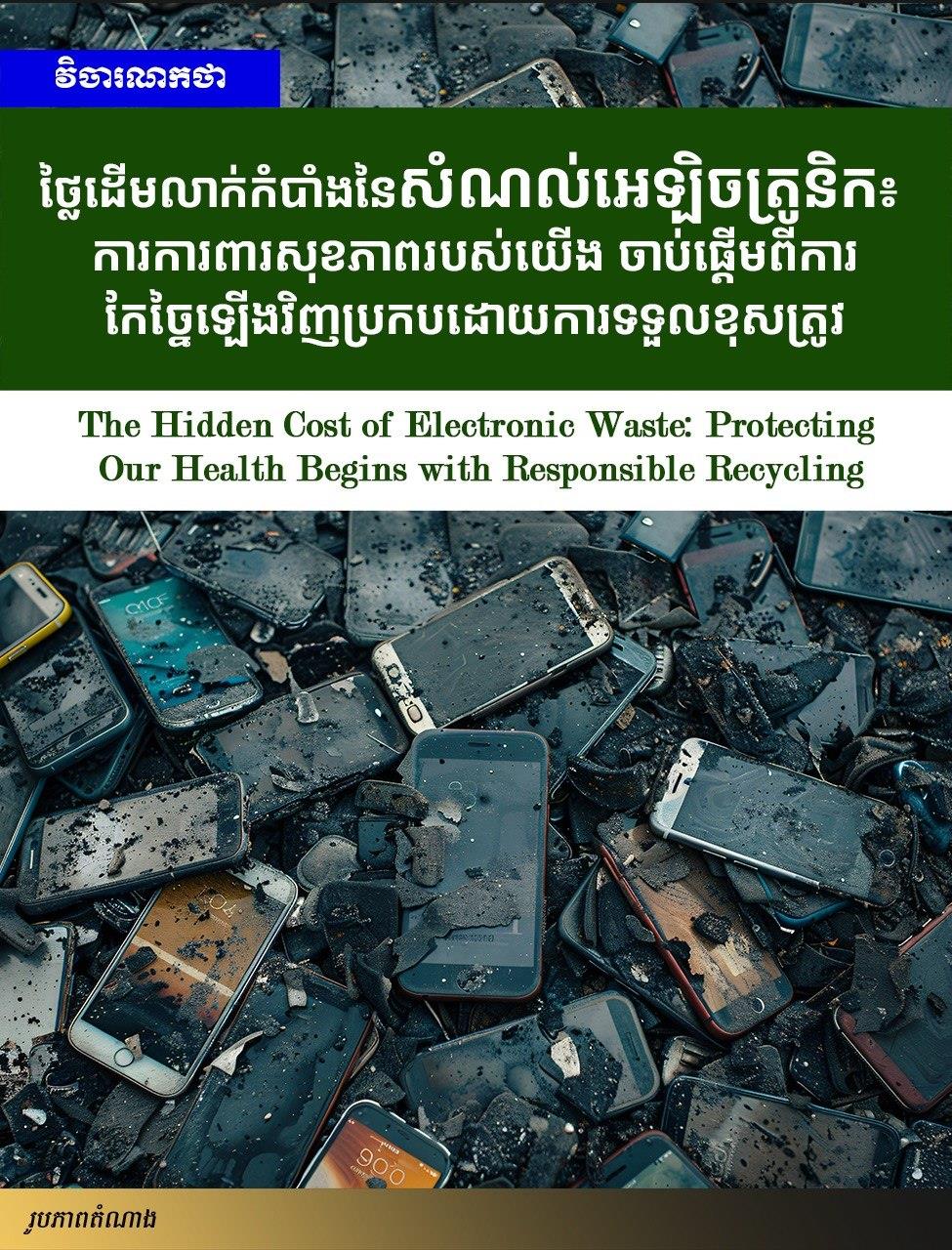

(Phnom Penh): Every year, millions of mobile phones, computers, televisions, batteries, cables, and household appliances reach the end of their useful lives.
These discarded products, known as electronic waste or e-waste, are among the fastest-growing waste streams in the world.
While technology has improved our lives in countless ways, the way we dispose of electronic waste has created a new and often invisible threat to human health.
Electronic waste is not ordinary garbage. Inside every electronic device are valuable materials such as copper, aluminum, silver, gold, and rare earth elements.
But alongside these valuable resources are hazardous substances, including lead, mercury, cadmium, chromium, arsenic, brominated flame retardants, and other toxic chemicals.
When electronic waste is recycled properly in certified facilities, these materials can be safely recovered and reused.
However, when recycling is carried out improperly, the consequences can be severe.
In many places, discarded electronics are dismantled by hand without protective equipment. Plastic insulation is burned to recover copper. Circuit boards are heated over open fires. Batteries are broken apart carelessly.
Acids are sometimes used to extract precious metals without proper containment. These unsafe practices release toxic substances into the air, contaminate rivers and groundwater, and pollute the surrounding soil.
The health impacts can be devastating.
People living or working near informal e-waste recycling sites often inhale toxic smoke and contaminated dust every day.
Fine particles and hazardous chemicals can enter the lungs and bloodstream, increasing the risk of chronic respiratory diseases, heart disease, neurological disorders, kidney damage, liver damage, and certain cancers.
Many of these toxic substances accumulate in the body over time, meaning the effects may not become apparent until years later.
Children are especially vulnerable. Their bodies are still developing, and they absorb toxic substances more readily than adults.
Exposure to lead and mercury can interfere with brain development, reduce learning ability, impair memory and attention, and affect behavior. Even low levels of exposure during pregnancy or early childhood can have lifelong consequences.
Pregnant women also face heightened risks. Some chemicals found in electronic waste can cross the placenta and affect the developing fetus, increasing the risk of developmental problems and adverse birth outcomes.
Protecting mothers from toxic exposure also protects the next generation.
Improper electronic waste recycling also threatens our food and water. Toxic metals can seep into the soil and contaminate crops. Pollutants can wash into rivers and lakes, affecting fish and other aquatic life. Once these contaminants enter the food chain, they eventually find their way onto our dining tables.
The danger extends beyond individual health. Contaminated land becomes less productive. Polluted waterways become more expensive to clean. Communities bear higher healthcare costs.
Future generations inherit environmental damage that may take decades to restore. In this way, improper e-waste recycling is not only an environmental problem, it is an economic and public health challenge.
The good news is that this problem is preventable.
Governments should strengthen regulations on electronic waste collection, transportation, and recycling while ensuring that recycling facilities meet strict environmental and occupational safety standards.
Illegal dumping, open burning, and unsafe recycling practices must be eliminated through effective enforcement.
Manufacturers also have an important responsibility. Electronic products should be designed to last longer, be easier to repair, and be simpler to recycle safely.
Producers should help establish collection systems that allow consumers to return unwanted electronics for proper treatment.
Communities and citizens also play a vital role. Never burn electronic waste. Never dispose of batteries or electronic devices with ordinary household waste when safe collection programs are available.
Instead, bring unwanted electronics to authorized collection centers where they can be managed responsibly.
Before buying a new electronic device, ask yourself whether the old one can still be repaired or upgraded. Extending the life of electronic products is one of the simplest and most effective ways to reduce electronic waste.
Every mobile phone reused, every computer repaired, and every battery recycled safely helps reduce pollution and protects public health.
The future of technology should not come at the expense of human health. Progress should improve our lives, not endanger them. Responsible electronic waste management allows us to recover valuable resources while protecting the air we breathe, the water we drink, the food we eat, and the health of our families.
A clean environment is the foundation of a healthy society. By managing electronic waste responsibly, we are not simply disposing of old devices, we are safeguarding the well-being of present and future generations.
The message is clear: Electronic waste contains valuable resources, but when handled carelessly, it also contains hidden dangers. Let us recycle electronic waste safely, protect our environment, and preserve the health of our people.
=FRESH NEWS