
(Phnom Penh): Throughout the history of warfare, the most important question has never been simply, "Who won the battlefield?" Rather, it is "Who ultimately gained the strategic advantage?" Military forces may achieve tactical victories on the battlefield, yet still fail to translate those successes into lasting political, diplomatic, or strategic gains.
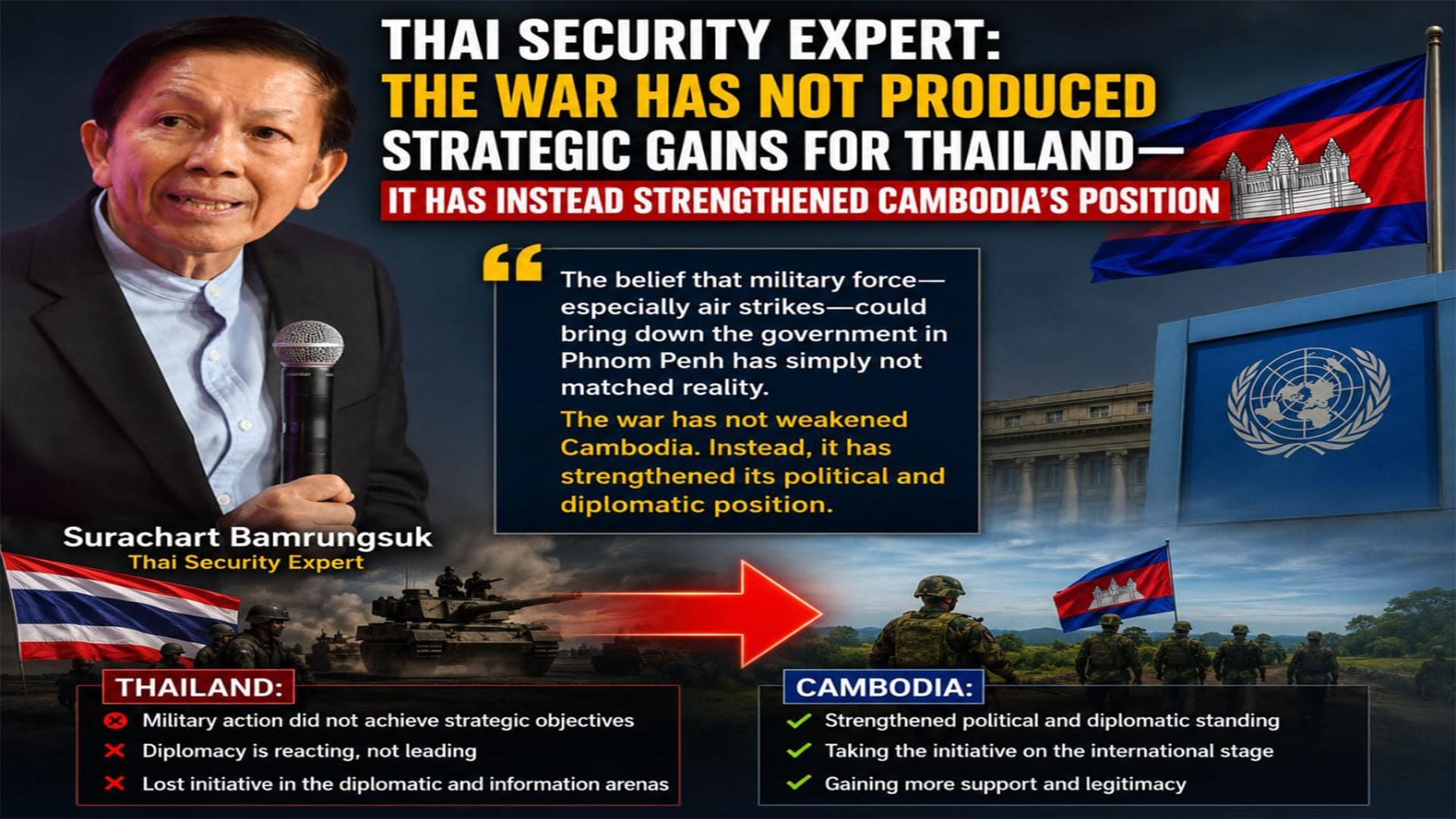
This is the lesson highlighted by Surachart Bamrungsuk, one of Thailand's leading scholars of international relations and security affairs. After previously warning his own government against allowing the Cambodia–Thailand border dispute to return to the International Court of Justice (ICJ) for a third time, and after criticizing attempts to challenge internationally recognized legal maps with military maps, Surachart has now advanced a more consequential strategic assessment.
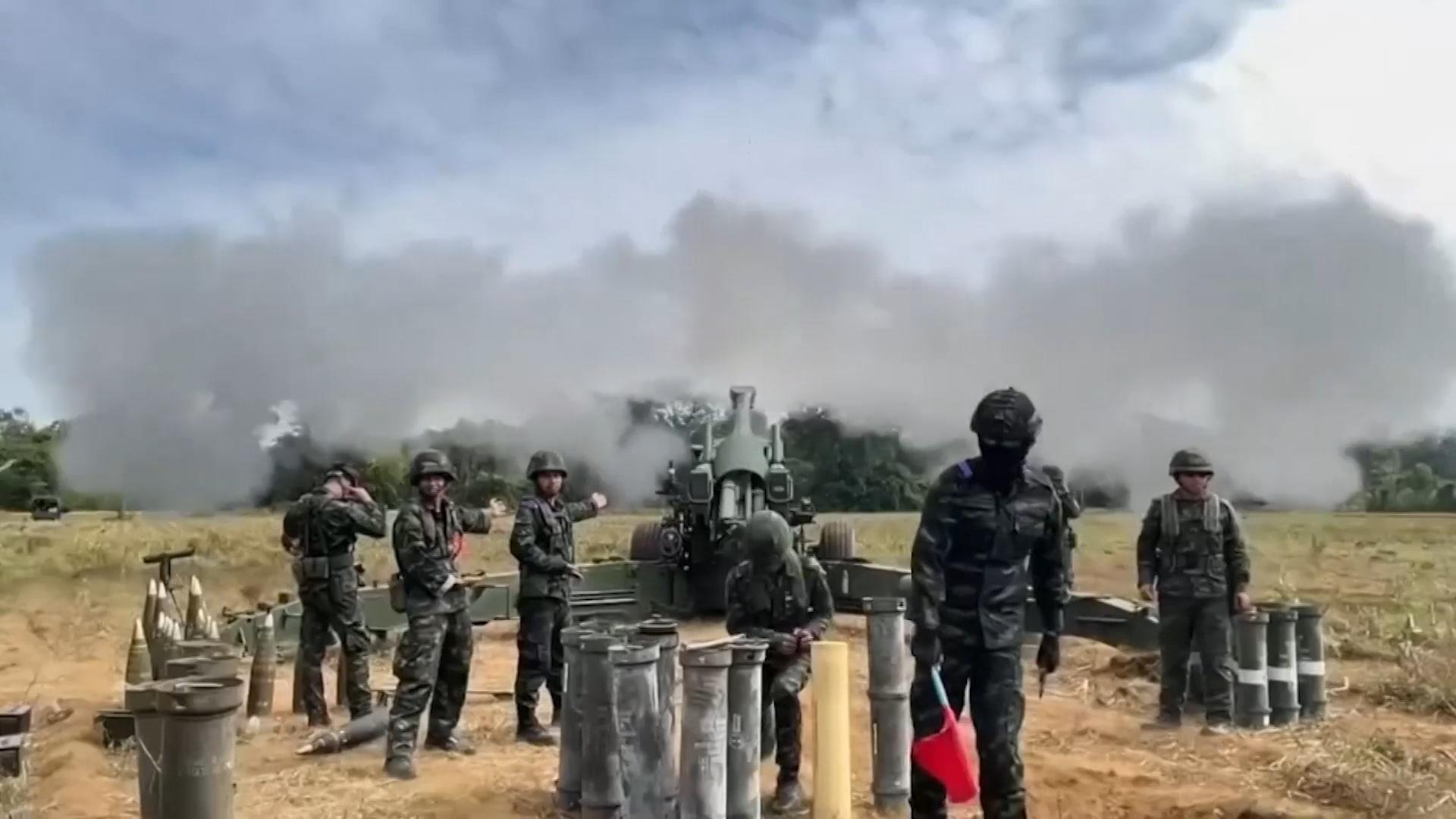
His latest analysis no longer focuses on questions such as "Which side fired more artillery?" or "Which side controlled more territory?" Instead, he raises a much broader question: Has the border war actually delivered the strategic benefits that Thailand's advocates of military pressure expected?
His answer is unequivocal: No.
According to Surachart Bamrungsuk, the border conflict has not weakened Cambodia's government. On the contrary, it has strengthened Cambodia's political and diplomatic position, while failing to produce the strategic gains that many supporters of military solutions in Thailand had anticipated.
For Surachart, this is not merely a military issue. It is fundamentally a question of state strategy. He argues that the belief that military operations—particularly air strikes—could force the government in Phnom Penh to collapse has proven inconsistent with reality. Instead of producing the desired political outcome, the war has generated consequences that are largely the opposite of what its proponents expected.
His assessment therefore goes far beyond a simple criticism of the Thai government. It represents a strategic conclusion about the overall outcome of the conflict. In essence, Surachart is urging Thai society to re-examine the assumption that military power alone can resolve complex strategic and political disputes.
The War Did Not Weaken Cambodia
The central argument of Surachart's latest article is his rejection of the belief that military confrontation could destabilize or overthrow Cambodia's government.
To support his argument, he draws comparisons with recent international conflicts. He notes that the war in Ukraine has not brought down Ukraine's government, while the confrontation involving Israel and Iran has likewise failed to topple the Islamic Republic. Applying the same logic, he concludes that the Cambodia–Thailand border conflict has similarly failed to weaken Cambodia's leadership as some in Thailand had expected.
This assessment closely reflects what political scientists describe as the "Rally Around the Flag Effect." The theory suggests that when a country faces an external military threat, citizens often become more united behind their government. Rather than triggering political fragmentation or regime collapse, external conflict frequently reinforces national unity and strengthens the government's domestic legitimacy.
From this perspective, Surachart argues that those who expected military pressure to undermine Cambodia's political leadership fundamentally misread the dynamics of wartime politics. Instead of producing internal instability, the conflict has arguably consolidated Cambodia's political cohesion and strengthened the government's position both domestically and internationally.
Why Thailand Failed to Achieve Strategic Gains
For Surachart Bamrungsuk, the problem is not that Thailand lacks military capability. Rather, it is that the use of military force has failed to achieve the strategic objectives its advocates expected.
He warns that measuring success solely through military performance can lead governments toward flawed strategic decisions. In today's world, military victory does not necessarily translate into strategic victory. A state may gain advantages on the battlefield while simultaneously losing ground in diplomacy, international legitimacy, or the information domain.
This, he argues, is precisely why the border conflict has not produced the strategic benefits anticipated by those who believed military force could resolve the dispute.
Cambodia Is Taking the Strategic Initiative
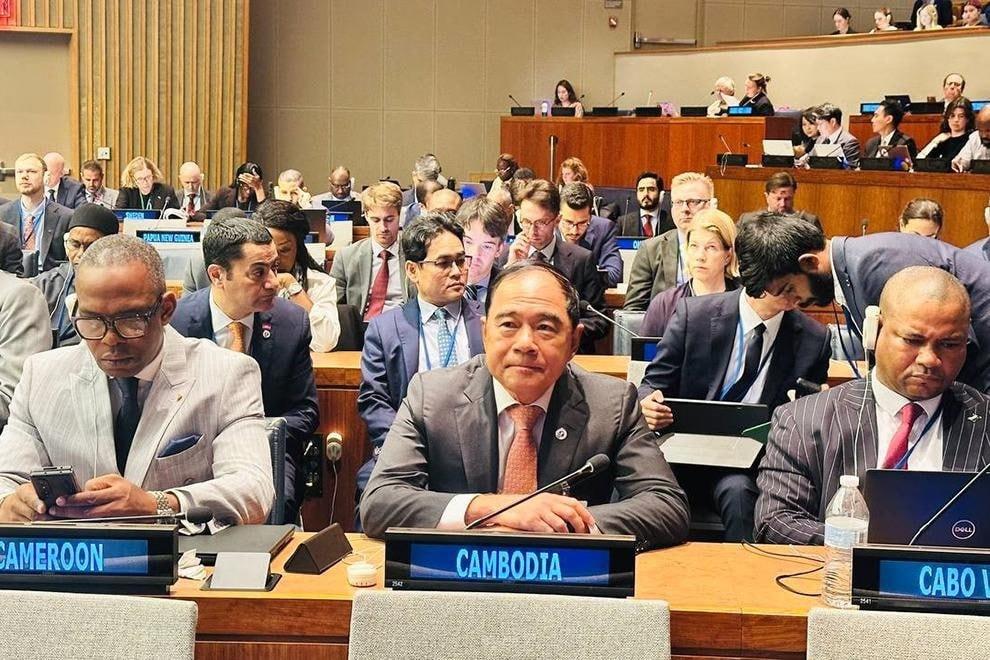
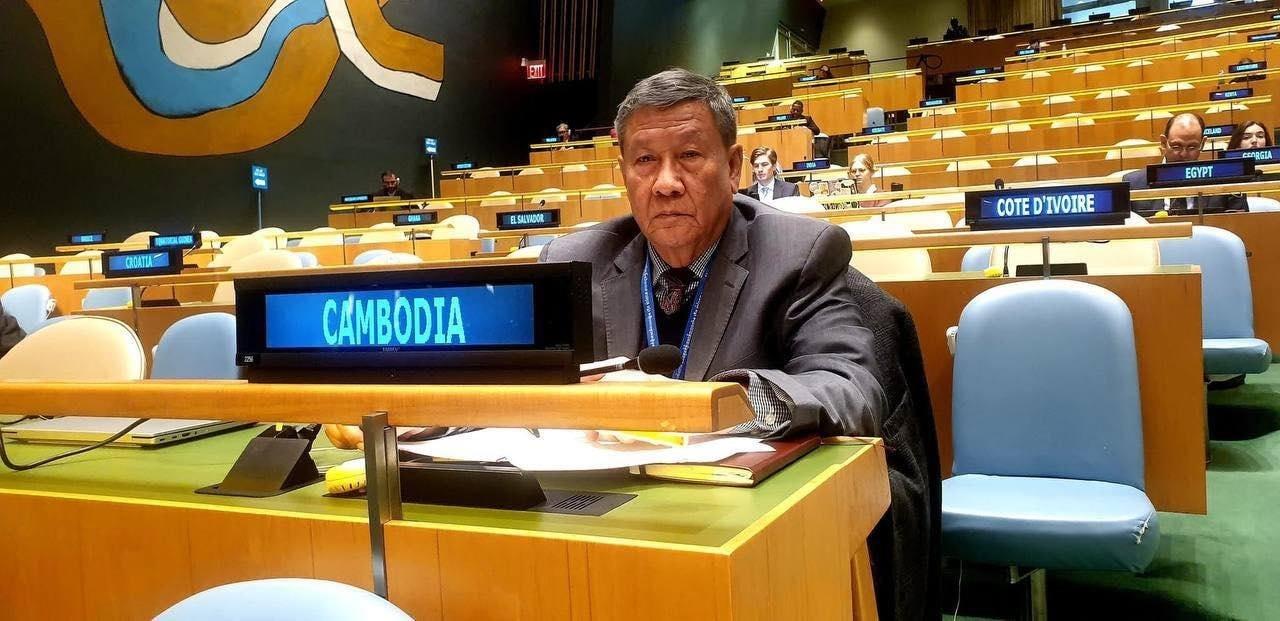
Perhaps the most significant aspect of Surachart's latest article is his acknowledgment that Cambodia today possesses greater capacity to operate on the international stage than Thailand had previously assumed.
He argues that Cambodia has demonstrated an ability to launch diplomatic initiatives and sustain international campaigns, while Thailand's diplomacy increasingly appears to be reacting to Cambodia's strategic moves. In his words, Thailand seems to be following Cambodia's strategy and "playing a game whose rules Cambodia has largely set."
Surachart emphasizes that this observation should not be interpreted as praise for Cambodia. Rather, it is intended as a warning to Thai society that underestimating an opponent's capabilities can itself become a serious strategic mistake. When policymakers misjudge the political, diplomatic, or international capacity of their counterpart, they risk making decisions based on assumptions rather than reality.
His assessment therefore extends beyond the battlefield. It challenges Thailand to recognize that strategic competition today is fought not only through military power but also through diplomacy, international engagement, and the ability to shape narratives.
Time for Thailand to Reassess Its Strategy
For these reasons, Surachart calls on Thailand to move beyond an overreliance on military instruments and instead strengthen its diplomatic capacity and long-term strategic thinking.
His message is neither an appeal for Thailand to surrender nor to abandon its national interests. Rather, it is a call for Thai policymakers to evaluate the conflict according to its actual strategic outcomes instead of expectations driven by emotion or nationalist sentiment.
In his view, sustainable national interests cannot be secured by military power alone. They require realistic strategic assessments, effective diplomacy, and a clear understanding of how modern conflicts unfold across political, legal, diplomatic, and informational domains.
Conclusion
Taken together, Surachart Bamrungsuk's three recent articles reveal a clear evolution in his strategic thinking.
His first article warned Thailand against allowing the Cambodia–Thailand border dispute to return to the International Court of Justice for a third time. His second cautioned that military pressure and the rejection of internationally recognized legal foundations could push Thailand into a legal trap reminiscent of past ICJ rulings. In his latest analysis, however, he advances an even broader conclusion: the conflict has failed to generate strategic gains for Thailand while simultaneously strengthening Cambodia's political and diplomatic position.
Whether readers ultimately agree or disagree with his assessment, Surachart's analysis adds an important voice from within Thailand itself. It encourages a broader reconsideration of the relationship between military power, diplomacy, international law, and strategic outcomes.
Ultimately, his message to his own country is clear: in modern conflicts, strategic success cannot be measured solely by battlefield performance. Lasting advantages are secured through sound strategy, effective diplomacy, and a realistic understanding of political realities—not by military force alone.