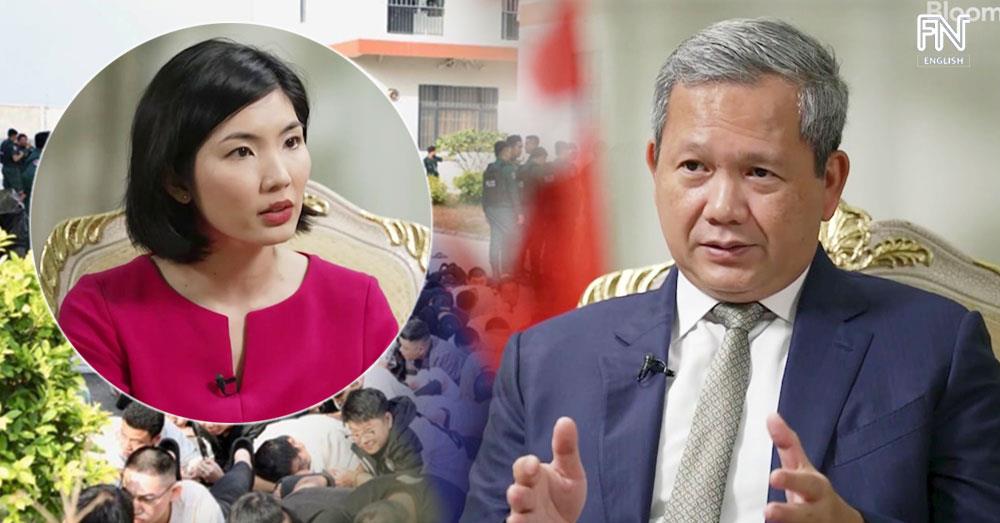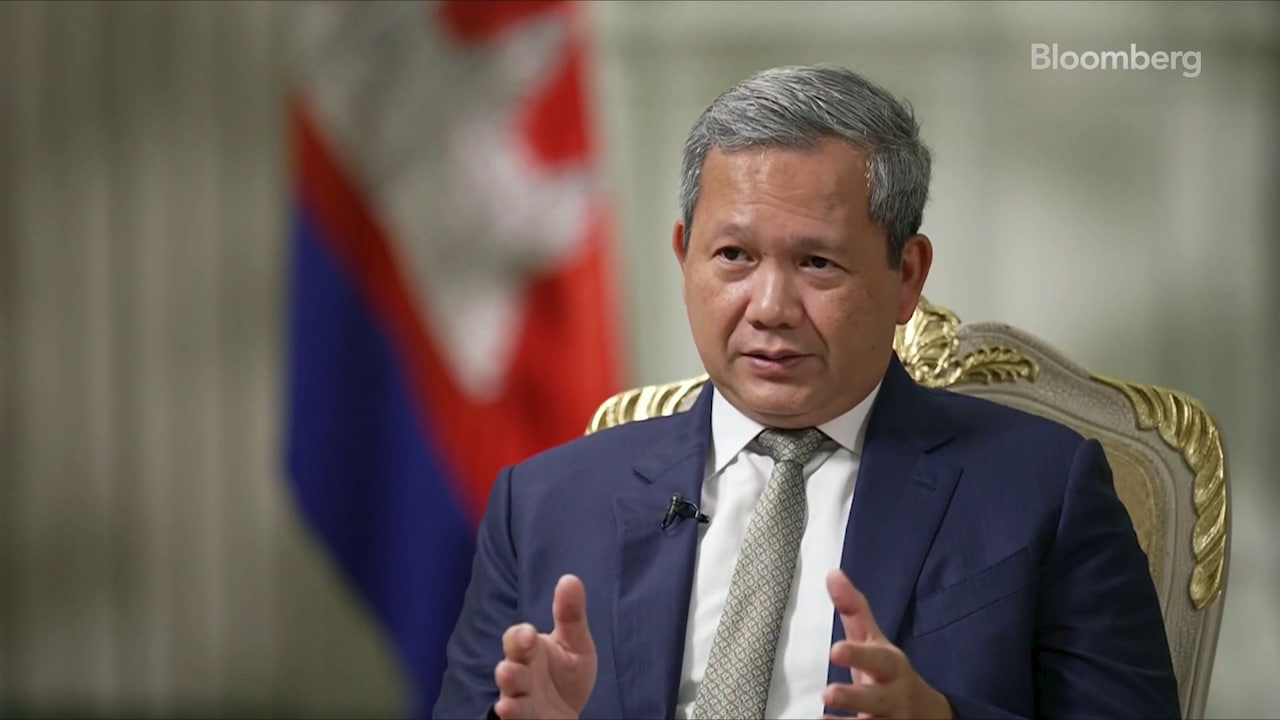

(Phnom Penh): Cambodian Prime Minister Hun Manet pledged to intensify the country's nationwide crackdown on transnational online scam networks, stressing that Cambodia will continue to strengthen law enforcement, expand international cooperation, and ensure that no special economic zone (SEZ) is used to facilitate criminal activities.
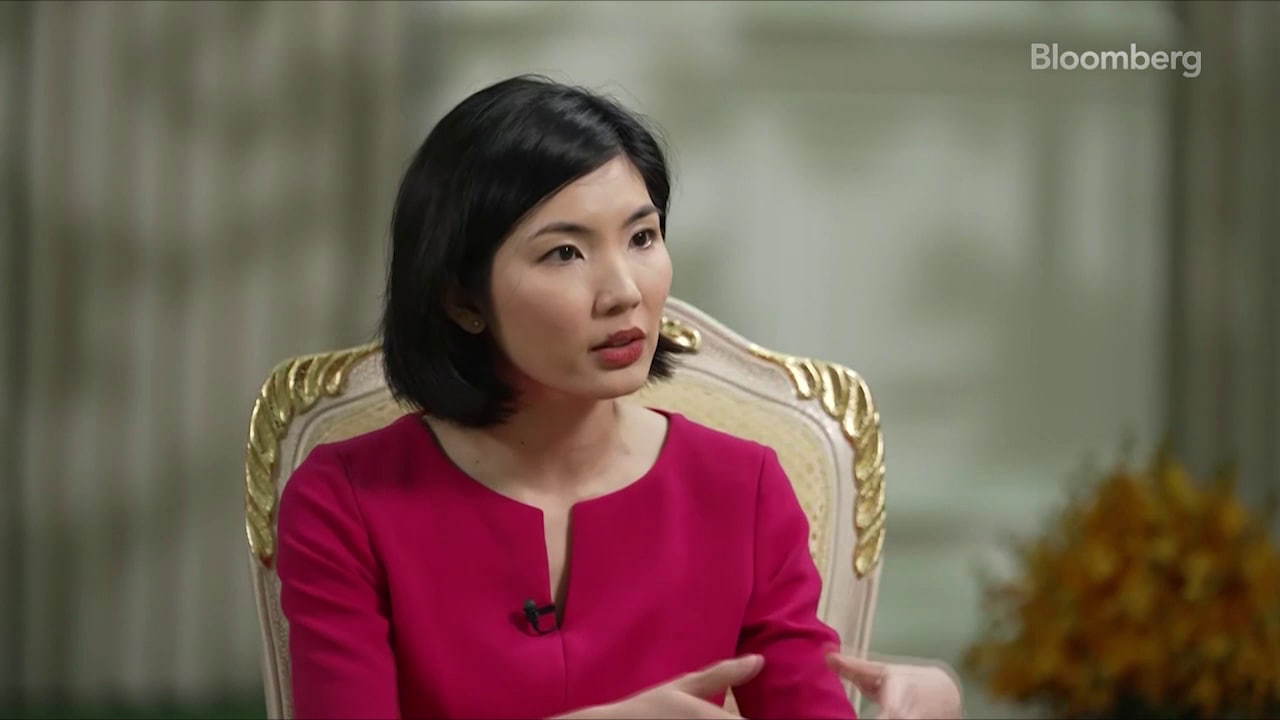
In an exclusive interview with Bloomberg's Avril Hong, Prime Minister Hun Manet said online scams have become a global challenge that requires multinational cooperation beyond geopolitical differences.
He said Cambodia is working closely with both the United States and China and believes efforts to combat online scams should rise above geopolitical differences.
"Cambodia will host the International Conference on Combating Online Scams, with participation from both China and the United States," Prime Minister Hun Manet said, adding that he had invited the FBI to attend and that FBI Director Kash Patel had agreed to send a senior delegation.
Addressing concerns that criminal syndicates have used SEZs across Southeast Asia as operational hubs, the prime minister said Cambodia has instructed security agencies, local authorities, and SEZ management to ensure no zone is exploited for criminal purposes.
"If any SEZ is found to be covering for criminal scam activities, it will be held accountable under the law just like any other entity," he said, noting that authorities have so far found no evidence linking Cambodian SEZs to such activities.
He emphasized that Cambodia remains committed to protecting the integrity of its SEZs, which play a vital role in attracting foreign direct investment and supporting economic growth.
He said the government's ongoing crackdown has already produced results and reaffirmed its determination to make Cambodia an increasingly difficult environment for online scam operations.
On the occasion, the prime minister also defended Cambodia's decision to initiate compulsory conciliation under the United Nations Convention on the Law of the Sea (UNCLOS) over its maritime dispute with Thailand, rejecting claims that the move had undermined bilateral land boundary negotiations.
He argued that Cambodia sought international conciliation only after Thailand unilaterally terminated the 2001 Memorandum of Understanding on maritime cooperation, which had long served as the main bilateral framework for negotiations.
He maintained that Cambodia's decision did not close the door to continued discussions on the land boundary, describing suggestions to the contrary as "inaccurate" and "unfair."
Regarding the ongoing UNCLOS conciliation process, he said both countries are currently focused on appointing the five-member conciliation commission, with each side having nominated two conciliators while discussions continue over selecting the chairperson.
Responding to questions about US sanctions imposed on Cambodian senators Ly Yong Phat and Kok An, Prime Minister Hun Manet said the matter was a personal legal issue. He noted that both men had retained legal counsel to contest the allegations and clear their names.
He also underscored the government's willingness to take action against officials implicated in online scam activities, revealing that authorities had dismissed several senior military officers, governors, and provincial police commissioners after evidence linked them to such crimes or showed they had failed to act.
"Investigations are continuing, and we will keep taking action wherever the evidence leads," he said.
He declined to comment on whether the US sanctions were justified, saying the matter should ultimately be resolved through legal proceedings.
=FRESH NEWS