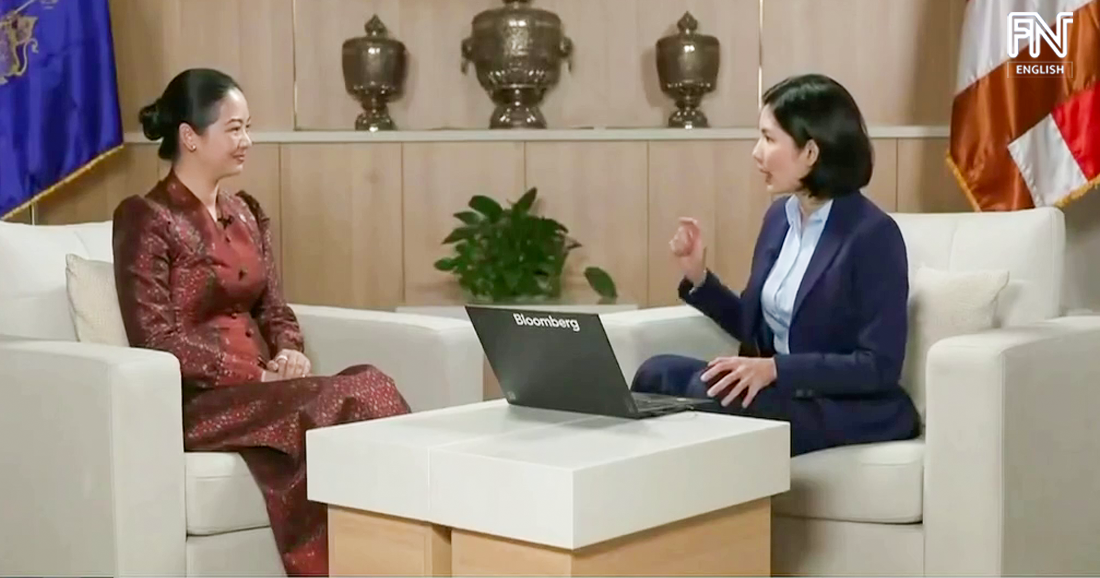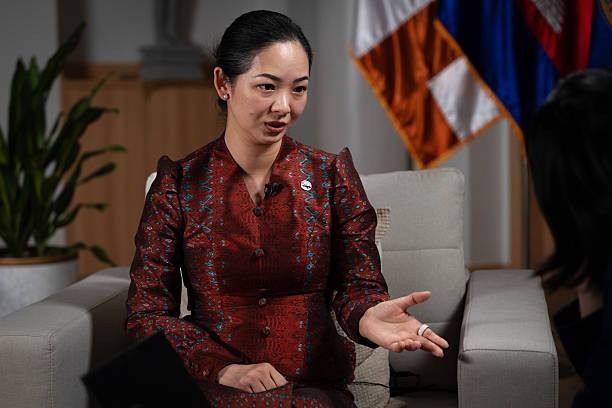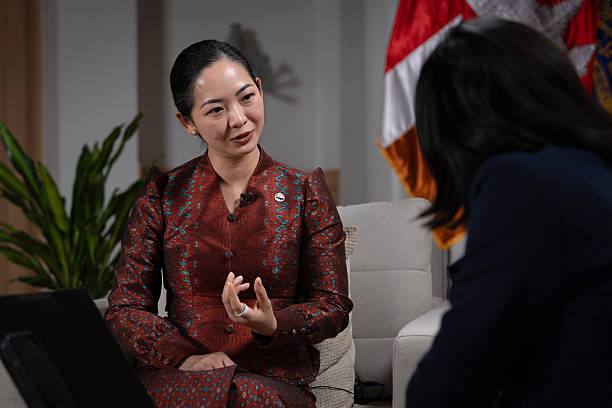

(Phnom Penh): Cambodian Minister of Commerce Cham Nimul said Cambodia is discussing trade facilitation and customs procedures with the United States as the kingdom prepares to graduate from least developed country (LDC) status in 2029.
In an exclusive interview with Bloomberg, Cham Nimul said the discussions include electronic communication, customs modernization, standardization, licensing and manufacturing processes, as Cambodia seeks to modernize its trade system and strengthen competitiveness.
"We're looking at electronic communication. We're looking at modernising the system so that our customs differences can be taken into consideration and how we are actually facilitating a lot of other understandings like standardizations, licencing and many of the processing of manufacturing itself," she said.
Cham Nimul said Cambodia's LDC graduation "is not a finish line, it's actually a milestone," adding that the next phase of growth will focus on domestic enhancement and competition to further integrate the country into the global economy.
On ongoing tariff discussions with the United States, she said Cambodia has taken additional steps with three ministries to strengthen enforcement against forced labour and demonstrate its commitment to preventing forced labour in imported goods.
She said Cambodia believes it has the possibility of maintaining a tariff rate below 19 per cent, while also negotiating a quota system with the United States and other trading partners, including Bangladesh, Indonesia and Malaysia, to source garment raw materials from the US for processing in Cambodia and re-importation into the US quota-free and duty-free.
Cham Nimul said the arrangement would support Cambodia's garment manufacturing and supply chains, noting that the country's vertical integration allows manufacturers to access higher-quality raw materials, improve product quality and reduce production costs.
Regarding Cambodia's economic relations with China and the United States, Cham Nimul said the two markets are complementary and reaffirmed that Cambodia remains "an open and reliable trading partner."
She confirmed that the recent MOU with China concerning the interests of third-party trade agreements was initiated by China with Cambodia's participation.
Cham Nimul said the arrangement reflects Cambodia's openness and transparency and its commitment to taking into consideration the sovereignty and economic interests of all its trading partners through proper consultation.
"In fact, if you look specifically just at China and the United States as Cambodia's largest trading import and exporting market, it's actually a complementarity of each other," she said.
She added that Cambodia serves as a platform for processing and mobilizing economic activities, particularly in the garment, footwear and textile sectors, allowing supply chains linked to China and the United States to complement one another.
Addressing disruptions to trade through Cambodia's land border with Thailand, Cham Nimul said Cambodian manufacturers have adjusted by relying on seaports and airports while developing alternative trade corridors through Vietnam and Laos.
"Therefore, the trade routes is actually reconfigured itself and we're also diversifying our importing some markets as well," she said.
While acknowledging Thailand's importance as a source of raw materials due to its proximity and lower sourcing and logistics costs, Cham Nimul said Cambodia is diversifying its import markets and increasing domestic sourcing.
"What's important, we are sourcing from domestic right now," she said, adding that Cambodia is pursuing deeper domestic integration and vertical integration to strengthen the resilience of its manufacturing sector.
On challenges facing SMEs and Cambodia's longer-term economic reforms, Cham Nimul said businesses may face short-term shocks but stressed that the government is implementing responsive policies to help them remain agile and competitive.
She said Cambodia is also undertaking reforms in trade processing and trade facilitation to modernize the system and support businesses as the country moves toward LDC graduation.
"A lot of the trade processing, a lot of the trade facilitation are undergoing right now in order to modernise and facilitate them and be able to stay on path," Cham Nimul said.
"So that small thing, small shock here and there will not destroy our resilience," she added.
=FRESH NEWS