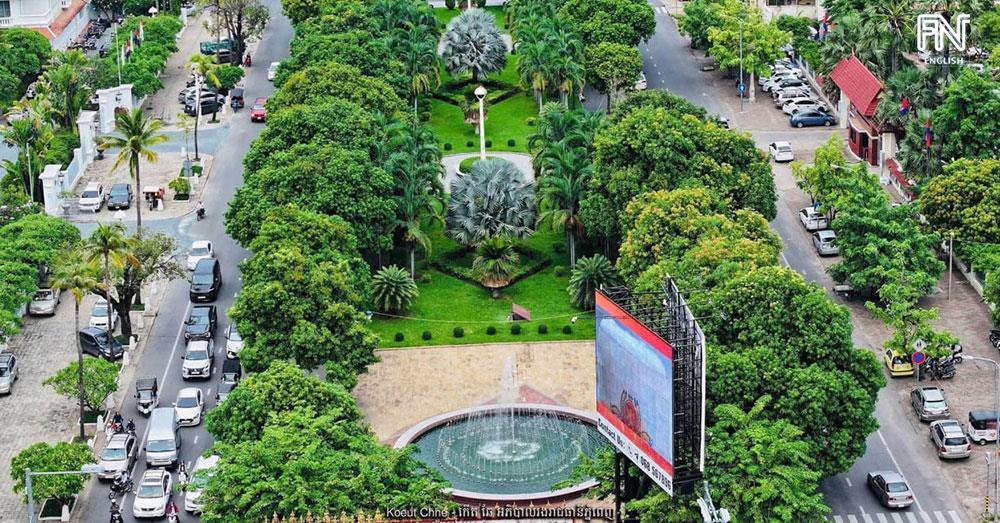

(Phnom Penh): When people think about economic growth, they often think of factories, businesses, trade, or investment. Rarely do they think about clean roads, litter-free parks, or well-maintained public spaces. Yet these simple elements are among the strongest foundations of a thriving economy.
A clean environment is not merely an environmental achievement—it is an economic asset.
Every clean road, every well-maintained park, every tidy marketplace, and every attractive public space sends a powerful message. It tells residents, visitors, tourists, and investors that this is a community that values order, responsibility, safety, and quality of life. These qualities inspire confidence, and confidence is one of the most valuable currencies in any economy.
Tourism is one of the first sectors to benefit.
Visitors travel to places that are beautiful, clean, and welcoming. They want to walk through litter-free streets, relax in clean parks, enjoy rivers free from pollution, and experience communities that take pride in their surroundings. When visitors enjoy their experience, they stay longer, spend more, and recommend the destination to others. Hotels, restaurants, transportation providers, local markets, artisans, and tour operators all benefit.
A clean environment creates jobs—not only in tourism but across many sectors.
Landscaping, park maintenance, waste collection, recycling, environmental services, hospitality, construction, and urban development all grow as communities invest in maintaining attractive public spaces. At the same time, clean surroundings encourage entrepreneurs to open cafés, shops, cultural venues, and recreational businesses that bring life and opportunity to neighborhoods.
Investors also pay close attention to cleanliness.
Businesses seeking new locations consider more than taxes and infrastructure. They look at the quality of public services, environmental conditions, community pride, and the overall appearance of a city or town. Clean roads and public spaces demonstrate effective management and civic responsibility. They give investors confidence that the community is stable, well-organized, and prepared for long-term growth.
Property values also increase.
Homes and commercial buildings located in clean, attractive neighborhoods are generally more desirable. Families want to live in communities where children can play safely, where parks are inviting, and where public areas are respected. As demand increases, property values strengthen, creating wealth for homeowners and encouraging further investment.
A clean environment also reduces costs.
Litter-free streets keep drainage systems clear, lowering the risk of flooding and reducing expensive infrastructure repairs. Proper waste management prevents pollution that can damage ecosystems and require costly clean-up efforts. Cleaner air and cleaner surroundings contribute to better public health, reducing healthcare expenses and increasing productivity because healthier people miss fewer days of work and school.
Healthy workers are productive workers.
Healthy children become successful students.
Healthy communities become competitive economies.
Environmental cleanliness also strengthens agriculture and fisheries. Clean rivers provide safer water for irrigation and aquatic life. Well-managed public spaces reduce pollution that can damage crops and contaminate food supplies. Protecting the environment therefore supports food security, rural livelihoods, and national economic resilience.
Perhaps most importantly, cleanliness builds a nation’s reputation.
In today’s interconnected world, a country’s image matters. A nation known for clean cities, attractive public spaces, healthy ecosystems, and responsible environmental management earns respect from tourists, investors, international partners, and businesses. Reputation is an invisible asset, but it produces very real economic returns.
However, no government can create a clean environment alone.
Governments can build roads, provide waste collection, establish parks, and enforce environmental laws. Businesses can operate responsibly and keep their premises clean. Schools can educate future generations. But the greatest economic value emerges when every citizen participates.
Every piece of litter placed in a bin saves future cleaning costs.
Every tree planted increases the beauty and value of a neighborhood.
Every clean marketplace attracts more customers.
Every clean street encourages more visitors.
Every responsible action contributes to economic growth.
The economy is not built only in boardrooms or financial institutions. It is also built on sidewalks, in parks, along rivers, in villages, and in every public space where people live, work, shop, and gather.
A clean environment encourages people to invest.
Investment creates businesses.
Businesses create jobs.
Jobs improve livelihoods.
Improved livelihoods strengthen families.
Strong families build a prosperous nation.
The connection is simple, yet powerful.
When we keep our roads and public spaces clean, we are not merely beautifying our communities—we are strengthening our economy, attracting opportunity, reducing public costs, improving public health, and creating a brighter future for everyone.
Cleanliness is not an expense; it is an investment. Every clean road is a pathway to opportunity. Every beautiful public space is a magnet for prosperity. Together, by protecting our shared environment, we build not only a cleaner nation but also a stronger and more resilient economy for generations to come.
=FRESH NEWS