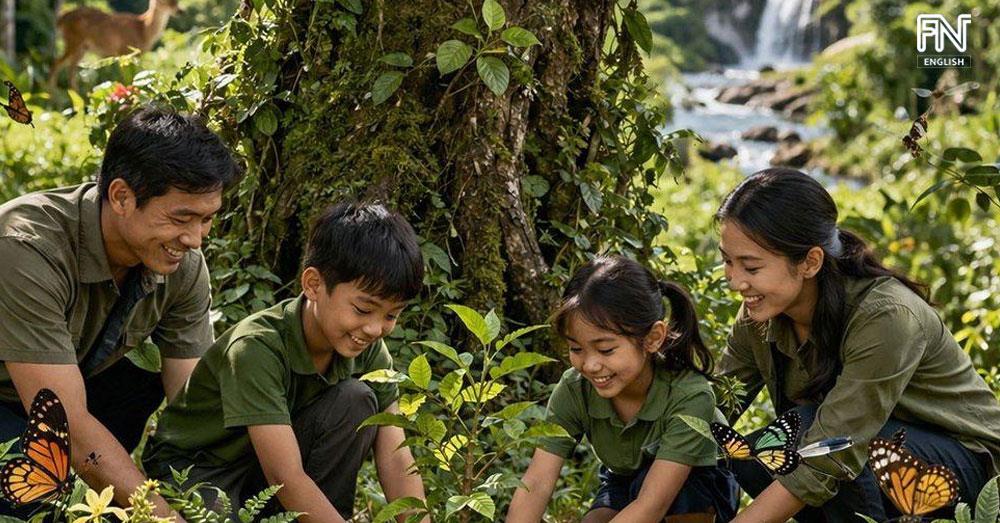

(Phnom Penh): A tree is much more than wood, leaves, and branches. It is a living home, a source of food, and a place of refuge for countless forms of life. Every tree supports biodiversity, the rich variety of plants, animals, insects, fungi, and microorganisms that together keep nature healthy and balanced.
From the tallest forest giants to the smallest village trees, each one provides shelter to many species.
Birds build their nests among the branches, squirrels and monkeys find food and protection in the canopy, insects pollinate flowers, bees produce honey, butterflies complete their life cycles, and countless microorganisms thrive in the soil around the roots.
Even a single mature tree can support hundreds of different species throughout its lifetime.
Healthy forests are thriving communities where every species plays an important role. Birds help control insect populations. Bees and butterflies pollinate crops and wild plants. Earthworms and fungi enrich the soil.
Predators maintain the balance of ecosystems by preventing any one species from becoming too dominant.
Together, these interactions create resilient ecosystems that support agriculture, fisheries, tourism, and human well-being.
When trees are lost, wildlife loses its home. Animals are forced to search for new habitats, food becomes scarce, breeding grounds disappear, and many species face decline or extinction.
The loss of biodiversity weakens ecosystems, making them more vulnerable to disease, climate change, drought, and natural disasters.
Ultimately, the loss of wildlife also affects people, because healthy ecosystems provide clean water, fertile soils, fresh air, and stable climates.
Protecting trees is therefore one of the most effective ways to conserve biodiversity. Conserving natural forests, restoring degraded landscapes, planting native tree species, and creating green corridors between habitats allow wildlife to move safely and maintain healthy populations.
Even trees planted in cities, schools, parks, temples, and homes become valuable sanctuaries for birds, butterflies, and beneficial insects.
Every citizen can make a difference. Plant a native tree. Protect old trees whenever possible. Avoid disturbing nests and wildlife habitats.
Teach children to appreciate nature and understand that every living creature has a place in the web of life.
Small actions, multiplied across communities, can create landscapes where both people and wildlife flourish together.
A tree is not just a plant, it is a neighbourhood for nature. It provides food, shelter, safety, and hope for generations of living creatures.
By planting and protecting trees, we are not only growing forests; we are building homes for biodiversity and preserving the natural heritage that sustains all life on Earth.
When we care for trees, we care for every living being that depends on them, including ourselves. A future rich in biodiversity begins with every tree we choose to protect today.
=FRESH NEWS