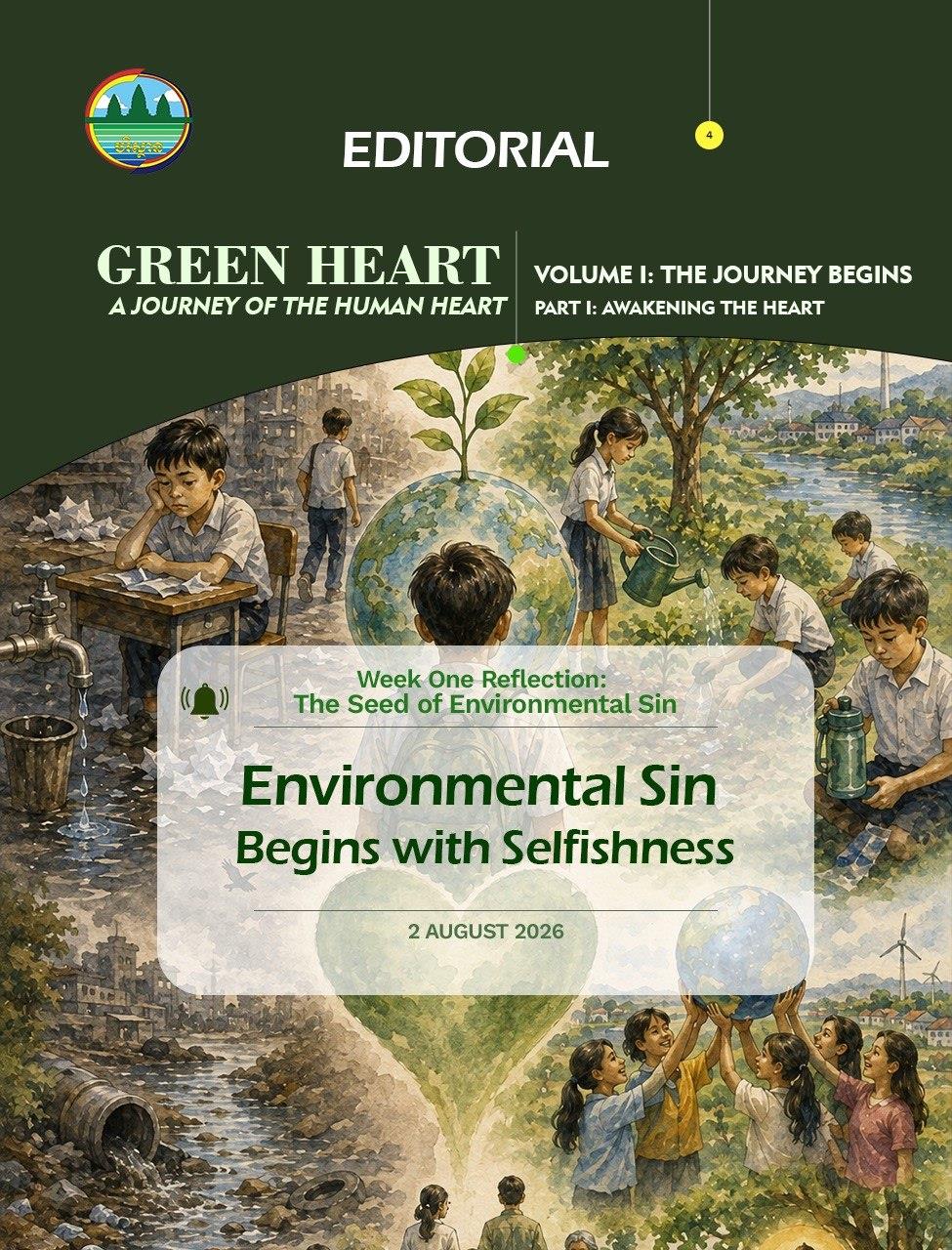

(Phnom Penh): Imagine a classroom after the final bell. One student leaves scraps of paper under a desk and thinks, “Someone else will clean them.” Another walks past a dripping tap and thinks, “It is not my water bill.” A third protects only the small area beside their own chair. Each person sees a private space, but the classroom is shared by everyone.
Selfishness narrows our view. It asks only, “What is convenient for me now?” It forgets the people who will use the place later, the workers who must clean it, and the living systems that provide the materials and water we consume. When this narrow view spreads across a neighborhood or nation, shared resources can suffer.
Clean air cannot belong to only one household. A river does not stop at the boundary of one village. Wildlife does not understand property lines. The environment constantly teaches us that life is shared. Even our private choices enter a larger world.
Self-care is not selfishness. We should protect our health, pursue education, and provide for our families. The problem appears when our comfort depends on passing harm to others. If we throw waste beyond our fence, the yard may look clean, but the community has not become cleaner. We have only moved the burden.
A green heart widens the circle of concern. It remembers the child who will walk along this road tomorrow, the neighbor who depends on the same well, the bird searching for a safe place to feed, and the person not yet born who will inherit the results of today’s choices.
This wider view does not make life heavier. It gives ordinary actions meaning. Turning off an unused light becomes respect for shared energy. Carrying a reusable container becomes a way of reducing a common burden. Caring for a public tree becomes a gift to strangers who may one day rest beneath its shade.
No person can live well alone. Our food, safety, knowledge, and happiness all depend on others. Responsibility is therefore not a loss of freedom. It is how we honor the network that supports us.
The word ours is one of the greenest words we can learn. Our school. Our water. Our air. Our future. When the heart expands from “only me” to “all of us,” caring becomes natural—and the world feels less like a place we use and more like a home we share.
Buddhist Reflection
Loving-kindness, or metta, widens goodwill beyond the self. It does not ask us to neglect our own needs; it teaches us to include the well-being of others. As our circle of care expands to people, animals, and future generations, our choices become gentler and more responsible.
Today’s Reflection
Who else may be affected by one environmental choice I make every day?
Today’s Action
Do one helpful act in a shared space without being asked—tidy a safe area, turn off something unused, or care for a common plant.
Today’s Pledge
Today I will treat shared places and resources as treasures entrusted to all of us.
When we protect nature, we protect all beings—including ourselvesrselves.
=FRESH NEWS