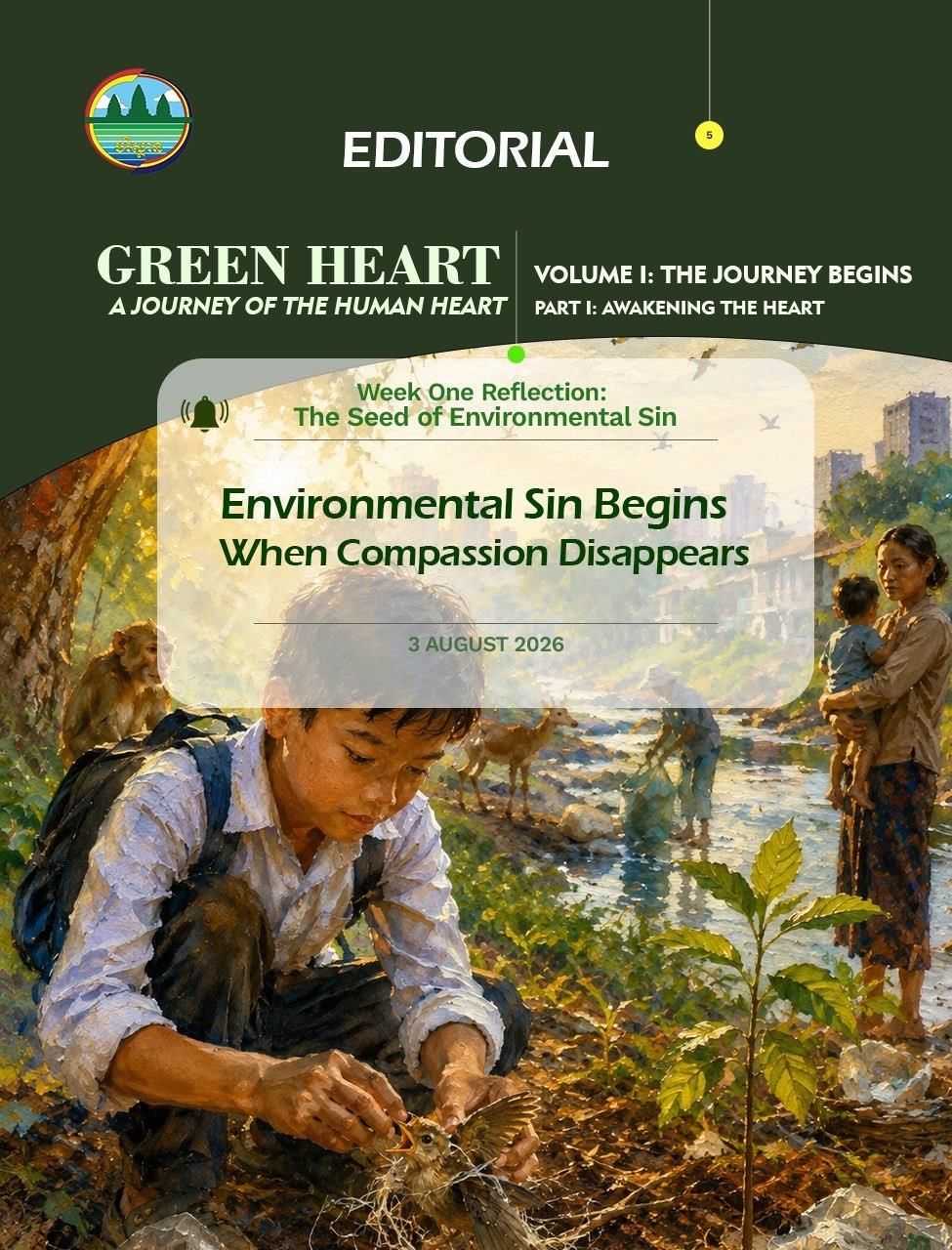

(Phnom Penh): One morning, a student notices a small bird struggling near a piece of plastic string. The student is late and could continue walking. Yet for one moment, the bird’s fear becomes more important than the clock. The student asks an adult for safe help, and the bird is freed.
Compassion is the ability to recognize suffering and wish to reduce it. It begins with attention. If we never notice the bird, the tree, the farmer, or the child affected by a damaged environment, their difficulties remain distant from our hearts.
Environmental harm becomes easier when living beings are reduced to numbers or objects. A forest may be described only as timber. A river may be treated only as water to take or a place to send waste. An animal may be seen only for its usefulness. When we forget that life can experience hunger, fear, pain, shelter, and dependence, careless choices begin to feel acceptable.
Compassion restores what was forgotten. It asks us to imagine the fish in water with less oxygen, the family breathing smoke, the animal losing a nesting place, or the future student searching for shade where a tree once stood. This imagination is not weakness. It is moral vision.
We cannot prevent every form of suffering. Nature itself includes storms, illness, aging, and death. Compassion does not promise that we can control everything. It asks us not to add avoidable harm and to offer help where help is possible.
Sometimes people fear that caring deeply will make them sad. It can be painful to see damage. But true compassion is not despair. It joins tenderness with wise action. It says, “This matters, and there is something good I can do.” Even a small response—a safe bowl of water for animals during heat, protection for a young plant, or respectful treatment of a living creature—trains the heart.
Compassion also includes people. Environmental protection should not ignore families who need livelihoods, students who need opportunities, or communities seeking safety and development. A green solution looks for ways to reduce harm while respecting human dignity. It listens before it judges.
The world changes when life is no longer invisible. A compassionate heart does not ask whether a being is important enough to deserve care. It begins from a simpler understanding: this life wishes to continue, just as I do.
When compassion is present, protection stops feeling like a rule imposed from outside. It becomes a response from within. We care because another life has become real to us—and that recognition can guide our hands toward kindness.
Buddhist Reflection
Compassion, or karuna, is the wish that beings be free from suffering. Buddhist practice joins compassion with wisdom so that our help is thoughtful and does not create further harm. By observing carefully and responding gently, we strengthen a heart that protects life.
Today’s Reflection
Which living being in my surroundings have I rarely paused to notice?
Today’s Action
Spend five quiet minutes observing a plant or animal without disturbing it. Notice what it needs to live and one way people can avoid harming it.
Today’s Pledge
Today I will notice life, respect its needs, and let compassion guide my choices.
When we protect nature, we protect all beings—including ourselves.
=FRESH NEWS