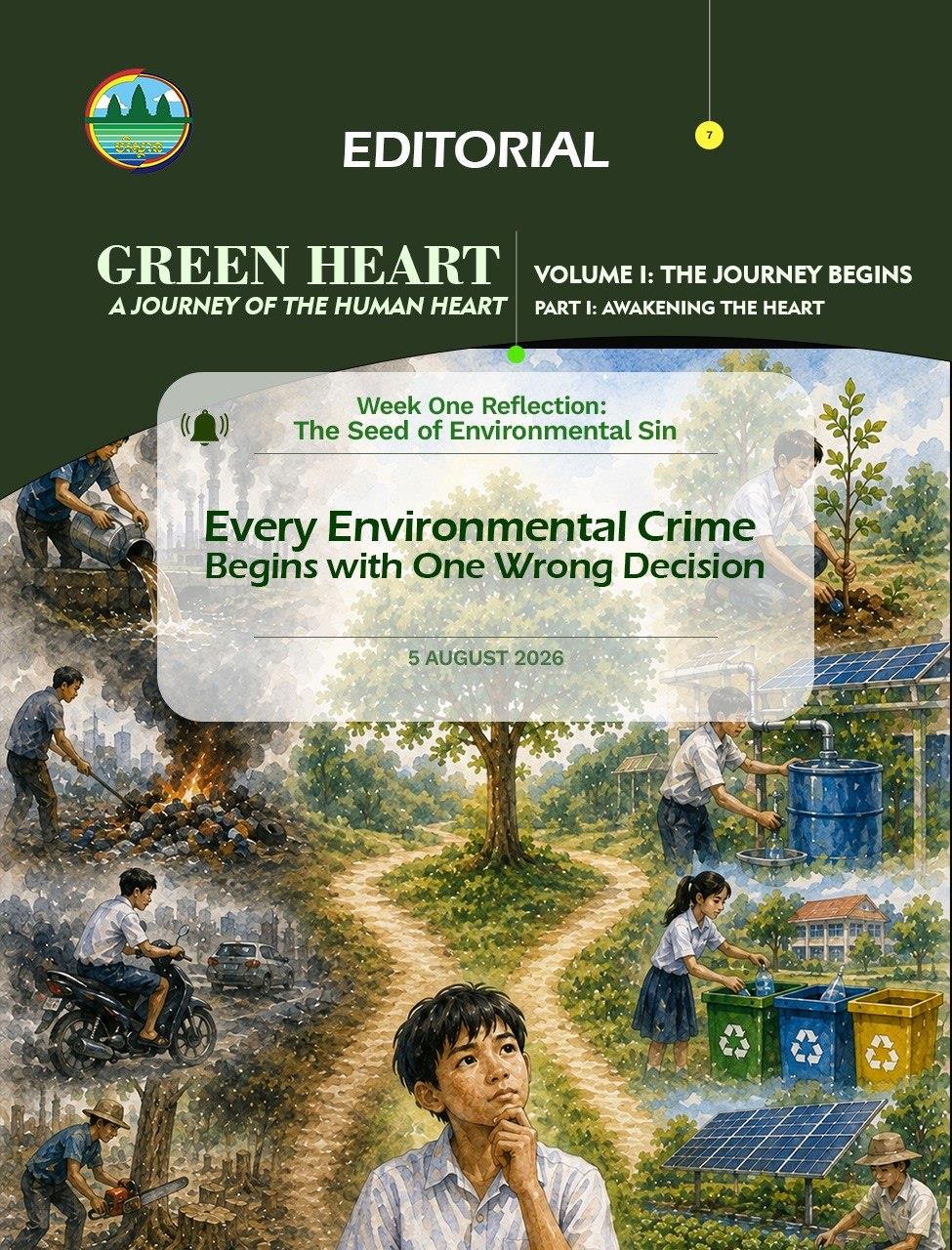

(Phnom Penh): Large environmental damage can appear far removed from daily life. We may imagine that it begins with machines, trucks, fires, or piles of waste. Yet before any of these appears, a person or group makes a decision.
“A better future often waits inside one moment of pause.”
The decision may be dramatic, but often it is ordinary: to ignore a rule, to save time by taking a harmful shortcut, to hide a problem, to use more than necessary, or to assume that no one will notice. One choice leads to another. What was once difficult becomes easier through repetition, and a pattern is formed.
This does not mean that every environmental problem has a simple cause. Real situations involve needs, systems, limited choices, incomplete knowledge, and many people.
A farmer, business owner, family, or community may face difficult decisions. Understanding those conditions is necessary if we want fair and lasting solutions.
Still, personal choice matters. Systems are created and changed through human decisions. Rules are followed because people choose integrity.
Safer methods are developed because someone refuses to accept unnecessary harm. A student who practices honest responsibility today may become tomorrow’s teacher, engineer, farmer, entrepreneur, monk, parent, or public servant.
The most important skill in a difficult moment is the pause. Before acting, we can ask: Is this necessary? Who or what may be affected? Is there a less harmful way? Would I be comfortable if others followed my example? These questions create space between an impulse and its consequence.
Sometimes we will still choose poorly. Then another decision appears: Will I hide the mistake or correct it? Responsibility does not end when an error is made. Admitting, repairing, and learning are also choices. They can prevent a small mistake from becoming a larger one.
Good decisions grow stronger when communities support them. A student may find it easier to avoid single-use items when safe refill options exist.
A family may sort waste more consistently when collection systems are clear. Responsibility belongs both to individuals and to the shared arrangements that help wise choices become practical.
Week One has asked us to look at the inner seeds of harm: greed, ignorance, selfishness, loss of compassion, and indifference. Today we arrive at the gate between thought and action. A decision opens that gate.
This is where our power lives. We cannot change yesterday’s choices, but the next choice is approaching. If we meet it with awareness, courage, and care, one right decision can interrupt a harmful pattern and begin a new one. The future is built in such moments.
Buddhist Reflection
Buddhist ethics emphasizes intentional action and its consequences. Wise effort means preventing unwholesome states, letting go of those that arise, cultivating wholesome states, and sustaining them. A mindful pause gives us the freedom to act from wisdom rather than impulse.
Today’s Reflection
What question could help me pause before making a choice that affects nature?
Today’s Action
Write this question where you will see it: “Is there a kinder, less wasteful choice?” Use it before one decision today.
Today’s Pledge
Today I will pause with courage and choose the path of wisdom, honesty, and care.
When we protect nature, we protect all beings, including ourselves.
Today’s Action
Choose one small, safe condition you usually overlook and improve it today. If it requires adult help, respectfully bring it to a teacher or family member.
Today’s Pledge
Today I will keep my heart awake and give steady care to what is within my reach.
When we protect nature, we protect all beings, including ourselves.
=FRESH NEWS