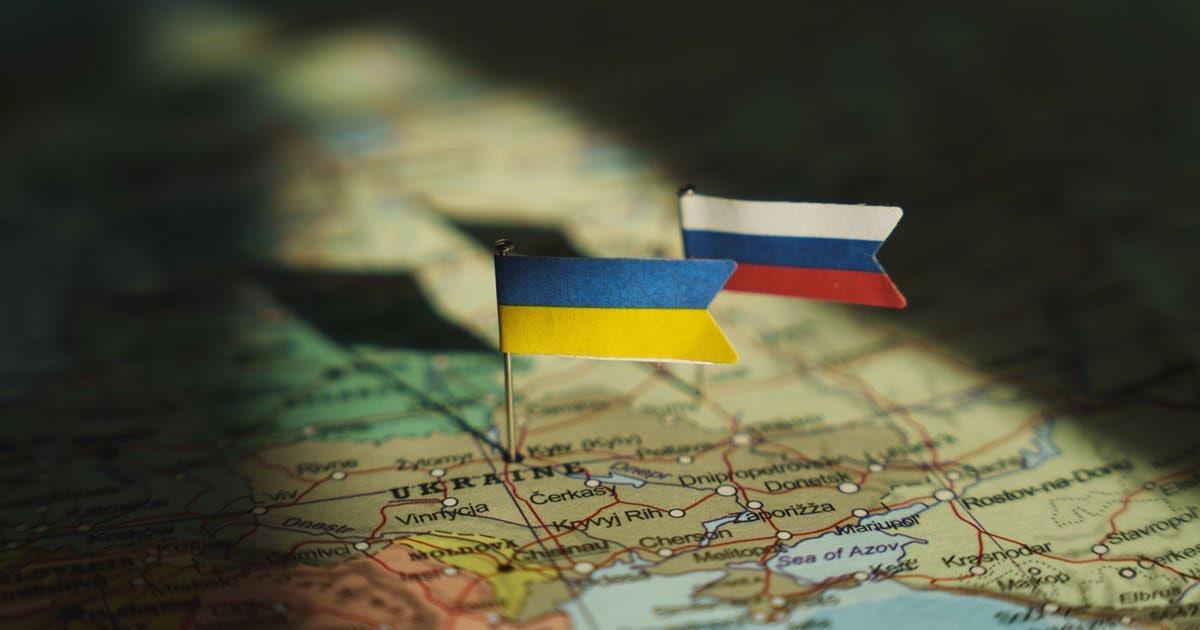

(Phnom Penh): On February 24, 2022, Russian forces launched a full-scale invasion of Ukraine. At the time, many predicted that Kyiv could fall within days or, at most, a few weeks.
More than four years later, however, Ukraine’s government remains in place, its armed forces continue to fight, and Russia has yet to achieve its initial political objectives of forcing Ukraine to surrender or replacing its leadership.
At the same time, Ukraine has also failed to accomplish its goal of driving Russian forces out of all occupied territories. Russia continues to control most of the Luhansk region, large parts of Donetsk and Zaporizhzhia, as well as Crimea, which Moscow annexed in 2014.
A war that some once expected to end quickly has instead become a prolonged conflict in which neither side has been able to achieve a decisive victory.
This situation raises a critical strategic question:
After more than four years of fighting, why has Russia—with its larger territory, population, military resources, and industrial capacity—failed to defeat Ukraine? And why has Ukraine, despite receiving extensive support from the West, also failed to drive Russian forces out of its territory?
The answer lies not in a single battle or weapon, but in the changing nature of modern warfare. Strong defensive lines, drones, mines, artillery, surveillance technology, manpower shortages, industrial production, and support from foreign allies have all contributed to a battlefield in which both sides can continue fighting, but neither can easily break through.
Russia Is More Powerful, but It Has Failed to Break Ukraine’s Defenses
Russia has a larger population, economy, military, and weapons industry than Ukraine. Yet being larger does not automatically guarantee an easy victory.
After failing to capture Kyiv during the initial phase of the invasion, Russia changed its strategy and shifted its focus toward eastern and southern Ukraine. Russian forces have continued to advance, but their gains have mostly been slow and costly in terms of both personnel and military equipment.
An analysis by the Centre for Eastern Studies (OSW) found that during the fourth year of the war, Russia continued to hold the battlefield initiative and captured additional territory. However, it was unable to transform tactical advances into an operational breakthrough or cause the collapse of Ukraine’s defensive lines.
According to the institute’s estimate, Russia captured approximately 4,300 to 4,800 square kilometres of Ukrainian territory over one year—equivalent to roughly 0.7 percent of Ukraine’s total territory.
In early June 2026, an assessment by the Institute for the Study of War also indicated that Russia’s advances had slowed, while Ukraine achieved several tactical successes. The organisation assessed that during April and May 2026, Ukrainian forces recaptured more territory than Russian forces seized over the same period.
This evidence suggests that Russia has not lost its ability to conduct offensive operations. However, it has been unable to use its superiority in manpower and resources to trigger a rapid collapse of Ukraine’s defenses.
One major reason is that attacking has become more difficult than defending in modern warfare.
Reconnaissance drones, satellites, mines, artillery systems, and advanced sensors allow troop and armoured-vehicle movements to be detected quickly. Forces leaving fortified defensive positions to launch an assault often become exposed and vulnerable to immediate attack.
Russia may therefore be able to capture individual villages or tactical positions. But breaking through defensive lines extending for hundreds of kilometres and advancing deep into Ukrainian territory requires enormous quantities of manpower, ammunition, equipment, and logistical support.
Russia’s central problem is not that it lacks the power to advance. Rather, it has been unable to convert gradual territorial gains into a decisive military and political victory.
Ukraine Can Hold the Line, but It Lacks the Strength to Liberate All Occupied Territory
Ukraine’s ability to avoid collapse does not mean that it possesses sufficient military strength to launch a successful counteroffensive and recapture all occupied territory.
Defending territory and retaking it are fundamentally different military tasks. Defenders can use trenches, minefields, drones, and concealed positions to slow the enemy. Attackers, however, require large numbers of troops, armoured vehicles, artillery, air defense, and a stable supply of ammunition and equipment.
Ukraine faces three major problems: shortages of manpower, ammunition, and heavy dependence on foreign military assistance.
On August 5, 2026, a large-scale Russian attack on the Kyiv region killed at least 17 people and wounded many others. According to reports, Ukraine failed to intercept any of the ballistic missiles used in the attack because it lacked sufficient interceptor missiles for its Patriot air-defense systems.
The incident demonstrated that even the most advanced defensive systems lose their effectiveness when ammunition supplies run low.
Ukraine also faces heavily fortified Russian positions when attempting to retake territory. These defenses include multiple layers of trenches, extensive minefields, artillery systems, and thousands of drones.
Ukraine’s 2023 counteroffensive showed that advanced Western weapons alone could not guarantee victory without air superiority and sufficient quantities of ammunition.
Ukraine can therefore impose heavy costs on Russia and prevent Moscow from achieving a decisive victory. However, it still lacks the overwhelming military advantage required to break through Russian defenses and drive Russian forces out of all occupied territory.
Drones Have Transformed the War, but They Cannot Replace Ground Forces
The Russia–Ukraine war has become one of the world’s largest testing grounds for modern drone warfare.
Drones costing hundreds or thousands of dollars can destroy tanks, ammunition depots, radar systems, and military bases worth millions. They have made the battlefield far more transparent because troop and vehicle movements can now be detected and attacked almost immediately.
Ukraine has used drones to compensate for shortages of artillery and missiles. It has also launched long-range drone attacks deep inside Russia against oil depots, military bases, industrial facilities, and transport networks.
Russia, meanwhile, has expanded its own drone production and deployed large numbers of unmanned aircraft against Ukrainian cities, energy infrastructure, and military positions.
In August 2026, reports indicated that Russian President Vladimir Putin had reshuffled senior military commanders and created a new military branch dedicated to drone warfare, as Russian advances in eastern Ukraine slowed.
However, drones still have clear limitations.
They can destroy targets, disrupt logistics, and restrict enemy movements. But they cannot seize cities, hold territory, or govern populations. Physical control of territory still requires infantry and other ground forces.
For that reason, drones have made offensive operations more difficult for both sides, but they have not given either side the means to end the war.
Rather than breaking the battlefield stalemate, drone warfare has largely reinforced it.
The War Has Become a Contest Between Industrial Capacity and Alliances
In a prolonged war, victory does not necessarily go to the side possessing the most advanced weapons at the beginning. It may instead go to the side capable of producing, repairing, and supplying military equipment for the longest period.
Russia has reorganized parts of its economy to support wartime production and has increased its output of artillery shells, missiles, and drones. Moscow has also received assistance from partner countries.
On August 5, 2026, Reuters reported, citing Ukrainian military intelligence, that a North Korean missile unit was being deployed inside Russia. North Korea had also reportedly supplied Russia with a number of ballistic missiles.
Ukraine, by contrast, remains heavily dependent on the United States, Europe, and other allies.
This assistance has allowed Ukraine to continue fighting, but it has also created a major vulnerability. Delays in budget approval, slow weapons production, or political changes in donor countries can have an immediate impact on Ukraine’s battlefield capabilities.
Europe, however, has been attempting to expand its role.
By July 2026, the European Union and its member states had mobilized approximately €81.9 billion in military and defense assistance for Ukraine. The EU had also increased its industrial ammunition-production capacity by around 40 percent and trained approximately 95,000 Ukrainian troops.
In addition, the European Union created a €90 billion support package for 2026–2027, with approximately €60 billion planned for military assistance. For 2026 alone, support of up to €28.3 billion was directed toward strengthening Ukraine’s defense-industrial capacity.
This evidence shows that the war is no longer simply a military contest between Moscow and Kyiv.
It is also a competition between supply networks, defense industries, economic endurance, and the alliances supporting each side.
Russia’s advantage lies in its larger domestic industrial base and its ability to sustain military production under wartime conditions. Ukraine’s strength lies in access to Western technology, funding, training, and weapons.
But Ukraine’s dependence on external assistance also means that its ability to continue fighting is partly determined by political decisions made far beyond the battlefield.
Why Have Negotiations Failed to End the War?
In theory, a prolonged war in which neither side can achieve a decisive victory should push both parties toward negotiations.
The problem, however, is that Russia and Ukraine still hold fundamentally different views of what “peace” would mean.
Russia wants Ukraine to accept the territorial situation created by the war and limit its security relationship with the West. Ukraine, by contrast, believes that recognizing territory seized by force would create a dangerous precedent and could allow Russia to launch another attack in the future.
On June 7, 2026, the leaders of the United Kingdom, France, and Germany, together with Ukrainian President Volodymyr Zelenskyy, supported a comprehensive ceasefire. However, they stressed that the existing front line should serve only as the starting point for negotiations—not as formal recognition of new borders.
They also called for legally binding security guarantees for Ukraine.
The greatest obstacle, therefore, is not the absence of a negotiating table. It is the absence of terms that both sides are willing to accept.
Russia continues to believe that time may weaken Ukraine and exhaust Western political support. Ukraine, meanwhile, believes that continued resistance and sustained allied assistance can prevent Moscow from achieving its objectives.
As long as both sides believe that continuing the war may improve their future bargaining position, meaningful compromise will remain difficult.
Conclusion
After more than four years of war, neither side has been defeated—but neither has achieved a decisive victory.
Russia has not lost because it still occupies part of Ukraine and retains the capacity to continue the war. Yet Russia has not won because it has failed to break the Ukrainian state or force Kyiv to accept Moscow’s political objectives.
Ukraine has not lost because it has preserved its government, defended its state, and continued to resist Russian forces. Yet Ukraine has not won because it has been unable to liberate all the territory under Russian occupation.
Unless there is a major shift on the battlefield or in international politics, the war is unlikely to end with a clear and decisive victory for either side.
The central reality is this: Russia has failed to defeat Ukraine because Ukraine retains defensive strength and support from its allies. Ukraine has failed to drive Russia out because it lacks sufficient manpower, weapons, and air power.
The eventual outcome may therefore depend less on a single decisive offensive than on which side can sustain its troops, weapons production, economy, public support, and alliances for longer.
In this war, endurance may ultimately matter more than battlefield momentum.