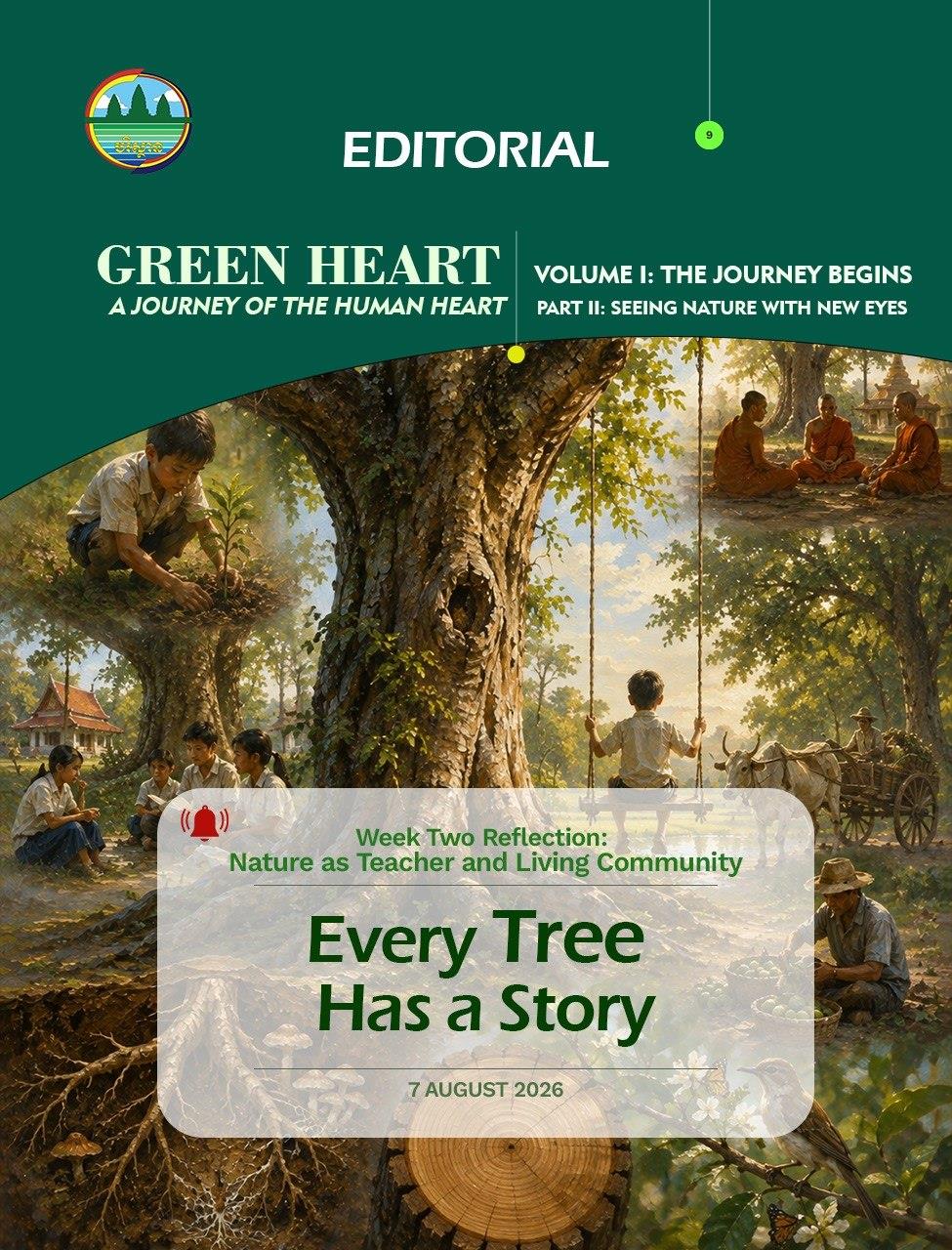

(Phnom Penh): Think of a tree you know well. Perhaps it stands beside your home, school, pagoda, farm, or road. You may have passed it hundreds of times. Yet long before you noticed it, its story had already begun.
“A tree is a history written in roots, rings, branches, and shade.”
Someone may have planted it, or a seed may have traveled there through wind, water, or an animal. Rain softened the soil. Roots found spaces between stones. New leaves opened toward the sun. Through dry days and heavy storms, the tree continued to grow.
Its story is not only its own. Birds may rest in its branches. Insects may feed, shelter, or reproduce around it. Fungi and tiny organisms interact with its roots and fallen leaves. People may gather beneath its shade, remember a conversation there, or use its fruit. One tree can become part of many lives.
Trees also record conditions. Their growth can reflect water, light, injury, and changing seasons.
Scientists study tree rings in suitable species to learn about age and past environments. A scar may show where a branch broke and the tree continued growing. Its form is a record of response.
When we call a tree only “wood,” we see the possible ending of its story and miss everything else. Wood can be useful and necessary, and trees can sometimes be harvested responsibly. But wise use begins by understanding that a living tree already performs many roles. It offers shade, stores carbon as it grows, supports soil and water processes, and provides habitat.
Learning a tree’s story changes our behavior. We become less likely to break a branch for amusement or damage bark without reason. We notice when a young tree needs protection. We understand that replacing a mature tree is not as immediate as planting a seedling; the seedling needs years of care to develop similar benefits.
Human stories and tree stories often meet. Humans and trees are not two separate stories, but a living history growing together in our shared home of nature. Families remember trees from childhood. Communities recognize certain trees as landmarks. Students who care for a sapling may return years later and find shade where their hands once held a watering container.
Today, choose one tree and begin to know it. You may not learn its whole history, but attention makes you part of its next chapter. Let that chapter be one of respect. When you begin to know and connect with a tree, choose to be part of a story that protects and values it, not one that destroys it
Buddhist Reflection
Gratitude grows when we recognize the many conditions supporting our lives. A tree’s existence depends on soil, water, sunlight, air, and other forms of life. Our comfort beneath it also depends on those conditions. Seeing this network helps the heart move from entitlement to appreciation.
Today’s Reflection
Which tree is part of my personal story, and what has it quietly given?
Today’s Action
Observe one tree without harming it. Sketch or photograph it, learn its local name if possible, and note one living being that uses it.
Today’s Pledge
Today I will honor the stories held by trees and add care to the story of one tree.
When we protect nature, we protect all beings, including ourselves.
=FRESH NEWS