

(Phnom Penh): A government may choose how it governs its country, but it cannot dictate how history will judge its actions. Nor can it compel history to erase its mistakes and recast them as acts of righteousness.
Today, the government of Prime Minister Anutin Charnvirakul may tell its own people that erecting barbed-wire fences and container barriers, closing border crossings, or deploying Thai military forces in villages inhabited by Cambodians along the western frontier are measures taken to defend Thai sovereignty and safeguard national security.
But when those actions draw strong criticism and condemnation from the international community — and even questions from Thai experts, intellectuals and journalists themselves — the Anutin government has responded by arguing that such criticism does not reflect the full picture.
Yet there is one question no government can escape: Ten, twenty or fifty years from now, how will Thai history remember the Anutin era? Will it be remembered as a period in which Thailand defended its sovereignty through law and diplomacy? Or will it be remembered as a period when excessive nationalism and the use of power pushed Thailand toward humanitarian crises, serious legal questions and an erosion of its moral standing on the international stage?
The Problem Anutin Is Creating Goes Beyond a Territorial Dispute
This question is becoming increasingly difficult to avoid because criticism of the Anutin government's border policy no longer comes from Cambodia alone.
Voices from the United Nations, international institutions, and even Thai experts, intellectuals and journalists are raising a broader question: In seeking to project strength over sovereignty, what price is the Thai government creating for Thailand to pay in the future?
History does not record only who controlled how many meters of land or whose soldiers stood at a particular position. It also records how power was exercised, how civilians were affected, whether the law was respected, and whether a country preserved its credibility in the eyes of the world.
Why Reject the Criticism When International Witnesses Are Raising Questions?
The Cambodia-Thailand border dispute is not merely about boundary markers, maps or military forces. Behind the border are people — and human lives affected by the conflict.
Families have been forced to leave their homes. Houses and property have been damaged. Communities have been separated. Tens of thousands of Cambodians have still not been able to return to places they once called home.
The issue received greater international attention when Thomas Andrews, the United Nations Special Rapporteur on the situation of human rights in Cambodia, moved the discussion beyond the narrow framework of a territorial dispute and placed the consequences for civilians within the broader context of human rights and humanitarian concerns.
Thailand's response, however, sought to shift the discussion back toward sovereignty, arguing that some Cambodians had been living in areas Thailand considers its territory since the period of refugee camps in the late 1970s.
This is where Thai journalist and researcher Suphalak Ganjanakhundee has highlighted an important distinction: sovereignty and humanitarian concerns are not the same question.
Every state has the right to defend its claims to sovereignty and territorial integrity. But such claims cannot make questions about the lives, safety and rights of people affected by war disappear from the discussion.
This leaves the Anutin government facing a difficult question: If Thailand says it is defending sovereignty, why should that defense require questions about people unable to return to their homes to be rejected or diverted?
Sovereignty may be an issue between states. Humanitarian protection is about people.
When Anutin's Explanations Become Questions for Thais Themselves
Perhaps what the Anutin government should consider most seriously is not criticism from Cambodia, but criticism and questions emerging from within Thailand itself.
Thai international relations and security scholar Surachart Bamrungsuk recently delivered a sharp critique of his own government's handling of the border dispute, using the metaphor of a “monkey untangling a net” to describe a situation in which attempts to solve a problem risk making it even more complicated.
Professor Akaraphong Khamkhun has also raised questions about historical understanding and perceptions of the border dispute within Thai society, warning of the danger of viewing such a complex issue through a one-sided nationalist lens.
More recently, Thai journalist and researcher Suphalak Ganjanakhundee directly questioned inconsistencies in explanations offered by Thailand's Ministry of Foreign Affairs — particularly the attempt to answer humanitarian questions with arguments about sovereignty and the use of information that, in his assessment, lacks sufficient supporting evidence.
When criticism comes from an opposing party, a government may dismiss it as propaganda or as an effort to advance the interests of the other side.
But when experts, intellectuals, journalists and citizens of its own country begin asking similar questions, simply labeling those questions “propaganda” or “the voice of the enemy” is no longer a sufficient answer.
Instead, these critical voices from within Thai society raise a question larger than the dispute with Cambodia itself: Is the Anutin government protecting Thailand's historical legacy, or is it creating a chapter that future generations of Thais will themselves return to question?
Military Power Can Control Ground, but It Cannot Write the Law
There is an important distinction between de facto control of a position and sovereignty grounded in law.
Military forces can erect barbed wire and container barriers. They can close roads, control access and maintain positions on the ground. But military power cannot, by itself, transform disputed territory into the lawful sovereign territory of one party.
That is why describing Cambodian residents as “intruders” on land whose border status remains subject to resolution requires legal foundations, verifiable facts and documentary evidence capable of withstanding scrutiny.
A unilateral declaration by one state cannot substitute for a boundary-demarcation process or agreed mechanisms for resolving territorial disputes.
History will not merely ask, “Whose soldiers were standing there in 2026?”
It will ask: On what basis were they there? Which maps were used? Which treaties defined the boundary? What agreements existed between the two countries? What did the bilateral boundary mechanisms establish? And, most importantly, which claims were supported by international law?
This is where military power encounters the power of documents, treaties and law.
Military forces may establish de facto control on the ground for a period of time. But de facto control does not automatically create lawful sovereignty.
Anutin Is Fighting a Battle That Guns Cannot Win
The challenge confronting the Anutin government is becoming larger because the dispute has moved beyond the physical border and into international institutions and international debate.
The displacement of civilians is now being discussed in the language of humanitarian protection and human rights.
Damage to cultural heritage has prompted renewed attention to obligations to protect cultural property during armed conflict.
The border dispute itself raises questions about maps, treaties, historical documents and legal mechanisms through which such disputes are supposed to be resolved.
At the same time, the Thai government's explanations are being scrutinized not only by Cambodia but also by international actors and by Thai experts, intellectuals and journalists themselves.
This is a battlefield where tanks, fighter jets, barbed wire and container barriers cannot guarantee victory.
Because this is no longer simply a battle over physical positions. It is a battle over facts, documentary evidence, law, the consistency of competing arguments, and accountability toward those whose lives have been affected by the conflict.
Ultimately, the Anutin government is confronting questions not only from Cambodia or the international community. Thai citizens themselves may also ask their government: What legacy does the Anutin administration intend to leave to Thailand and to future generations?
Will it be the legacy of a government that protected the national interest through law, diplomacy and wisdom? Or will it be the legacy of an era in which Thailand found itself facing serious questions over respect for law, humanitarian principles and international credibility — putting at risk a reputation that earlier generations of Thais spent decades building?
Conclusion: What Kind of History Is the Anutin Government Writing?
Every government wants history to remember it as a government that defended its nation.
But history is not written by government statements alone.
It is written through documents, maps, laws and witnesses. It is recorded in images of damaged homes, cultural heritage scarred by conflict, and the lives of people forced from their communities. It is also written through the voices of those willing to question their own government.
The question Bangkok should therefore consider is not simply: “How can Thailand prevail over Cambodia in this border dispute?”
The larger question is this: When future generations open the pages of history covering 2025 and 2026, will they see the Anutin government as one that defended Thailand's national interests through law and wisdom?
Or will they see a government that allowed excessive nationalism, territorial conflict and the exercise of power to leave another painful and deeply troubling scar on Thai history?
The Anutin government may shape the events of today.
But it is history that will ultimately judge the legacy those events leave behind.
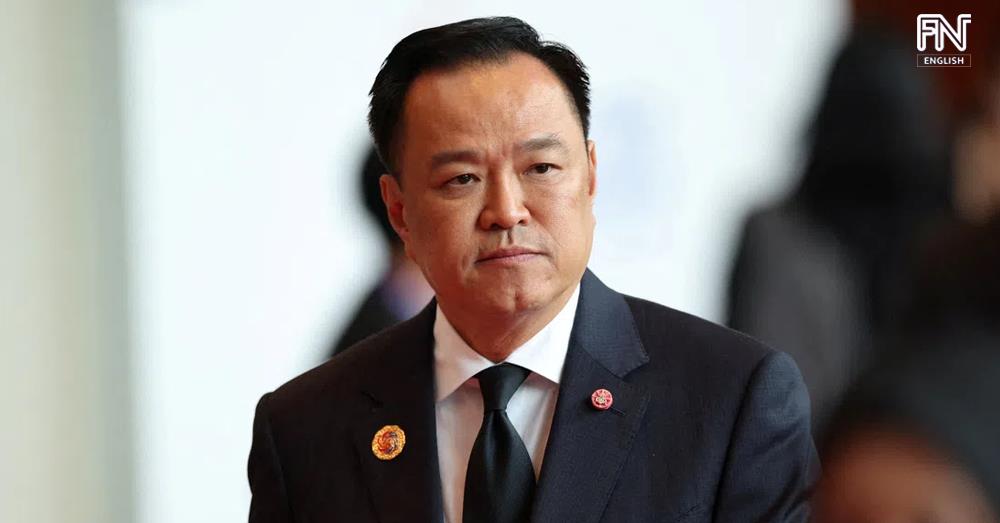
Photo from Reuters