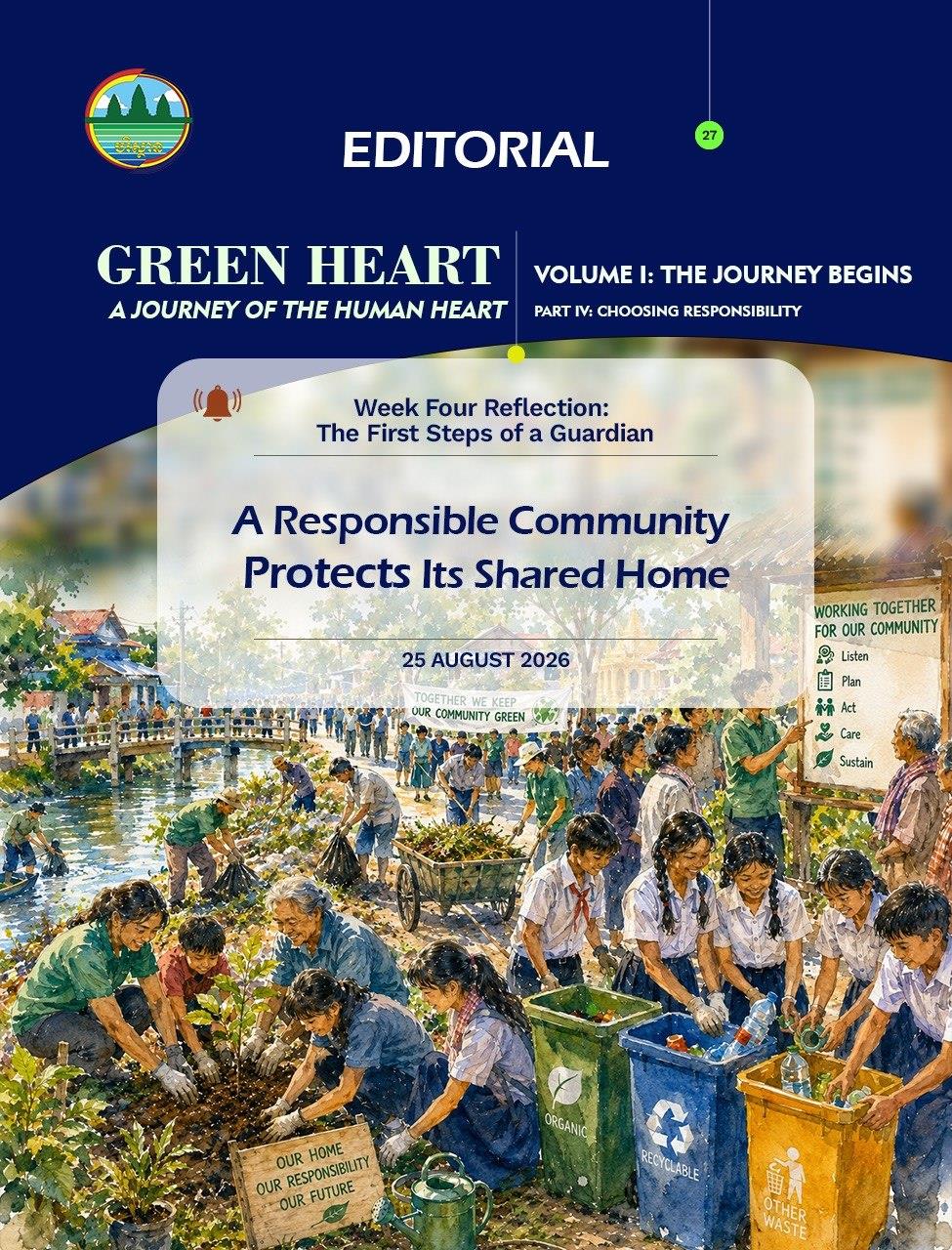

(Phnom Penh): A road, stream, park, market, or common well may be used by many people. Because no single household owns the whole place, everyone can be tempted to wait for someone else to protect it. Shared spaces then become neglected.
“Community begins when neighbors care for what none of them owns alone.”
A responsible community replaces “someone should” with “how can we work together?” It listens first.
Residents may understand local flooding, waste patterns, wildlife, water, or seasonal changes through years of experience.
Teachers, monks, young people, businesses, workers, and local authorities may each contribute different knowledge and resources.
Good action needs coordination. A cleanup without disposal planning may simply move waste. Tree planting without suitable species, permission, and long-term care may fail. Community projects become stronger when goals, safety, roles, and follow-up are clear.
Respect is essential. People may disagree about priorities or face pressures others do not see.
Accusation divides; patient conversation uncovers practical solutions.
The question is not “Who is a bad person?” but “What conditions create this problem, and what can help?”
Celebrating local success builds confidence. A maintained drain, protected water source, healthy garden, or cleaner gathering place shows that cooperation works.
Young people who participate learn citizenship through experience. Responsibility should be shared fairly.
Volunteers can begin change, but they should not be expected to replace necessary services or carry every burden. Lasting care often combines personal habits, community cooperation, and institutional support.
A community is more than houses near one another. It is a promise of mutual care. The air, water, soil, roads, shade, and beauty of a place form part of that promise.
You may be young, new, or quiet, yet you can still contribute: ask a thoughtful question, share an observation, join an approved activity, or thank those already serving.
Shared homes become stronger whenever another heart joins the work.
Communities also need memory. Record what was tried, which season mattered, and how the place responded.
Photographs, maps, simple notes, and stories can help future volunteers avoid old mistakes and build on success.
Care becomes culture when it is passed onward.
An elder’s knowledge, a worker’s experience, a child’s curiosity, and a teacher’s guidance can meet in one practical plan. Cooperation honors each contribution while keeping the shared purpose clear.
Buddhist Reflection
Harmony does not require identical opinions. It grows through right speech, listening, generosity, and concern for common well-being. Cooperative care turns compassion into a social practice.
Today’s Reflection
Which shared place in my community most needs cooperative care?
Today’s Action
Ask a trusted adult about one existing community effort and one safe way young people can support it.
Today’s Pledge
Today I will strengthen my community through respectful cooperation and care for our shared home.
When we protect nature, we protect all beings, including ourselves.
=FRESH NEWS