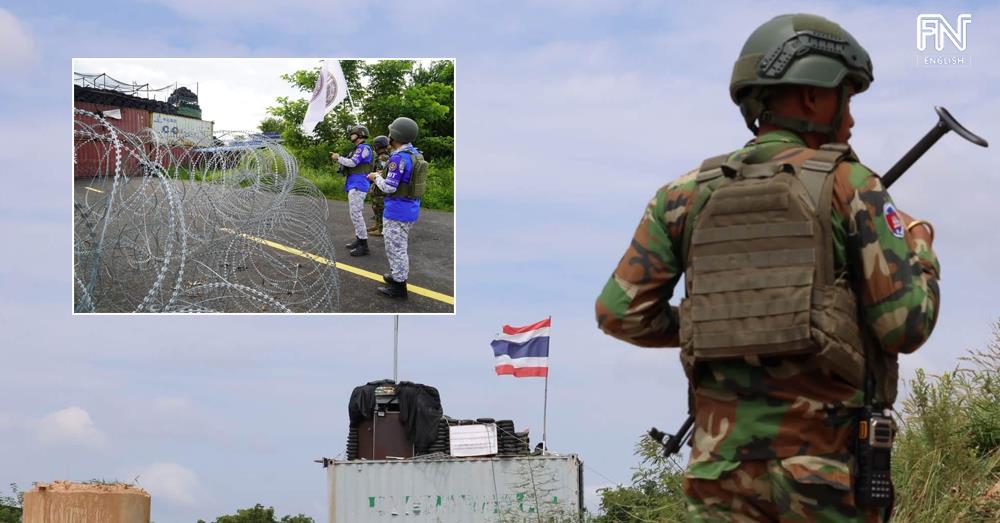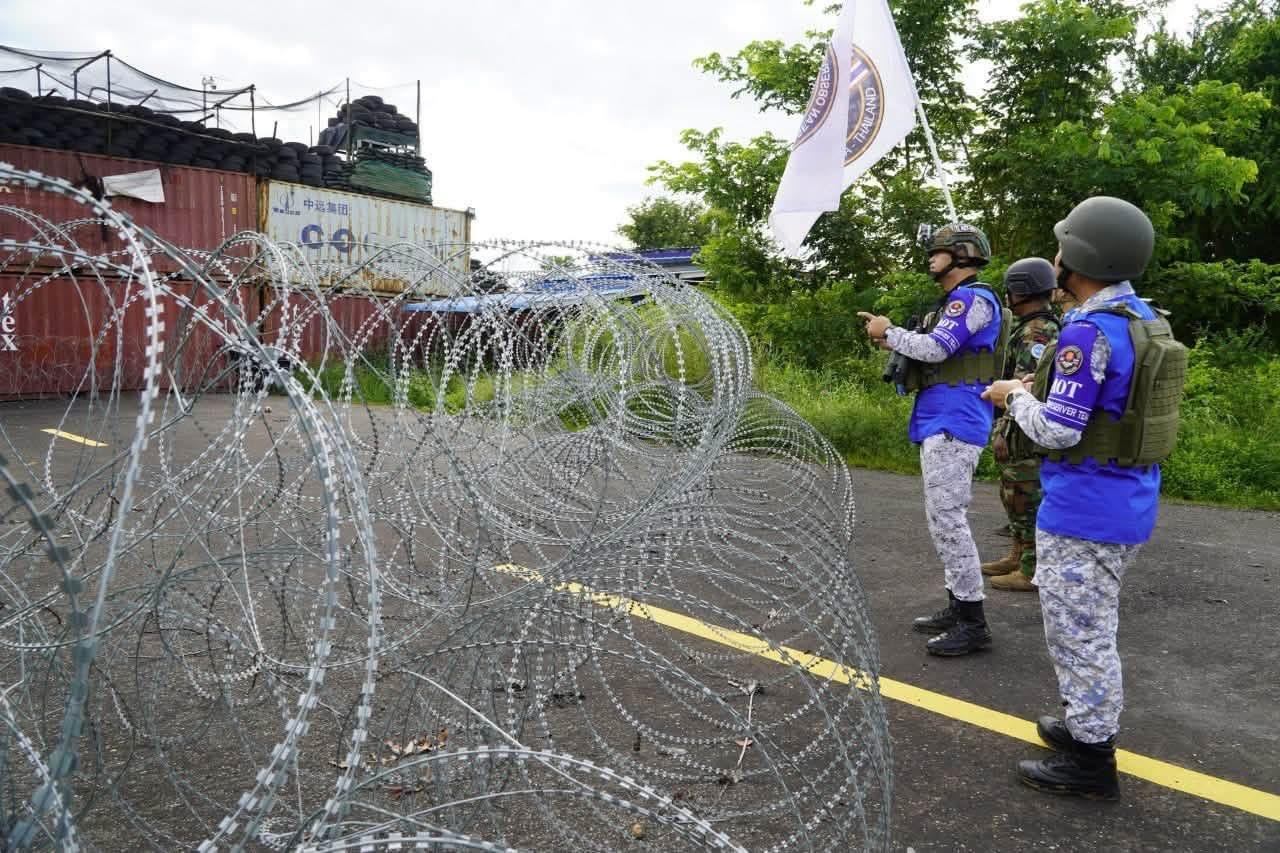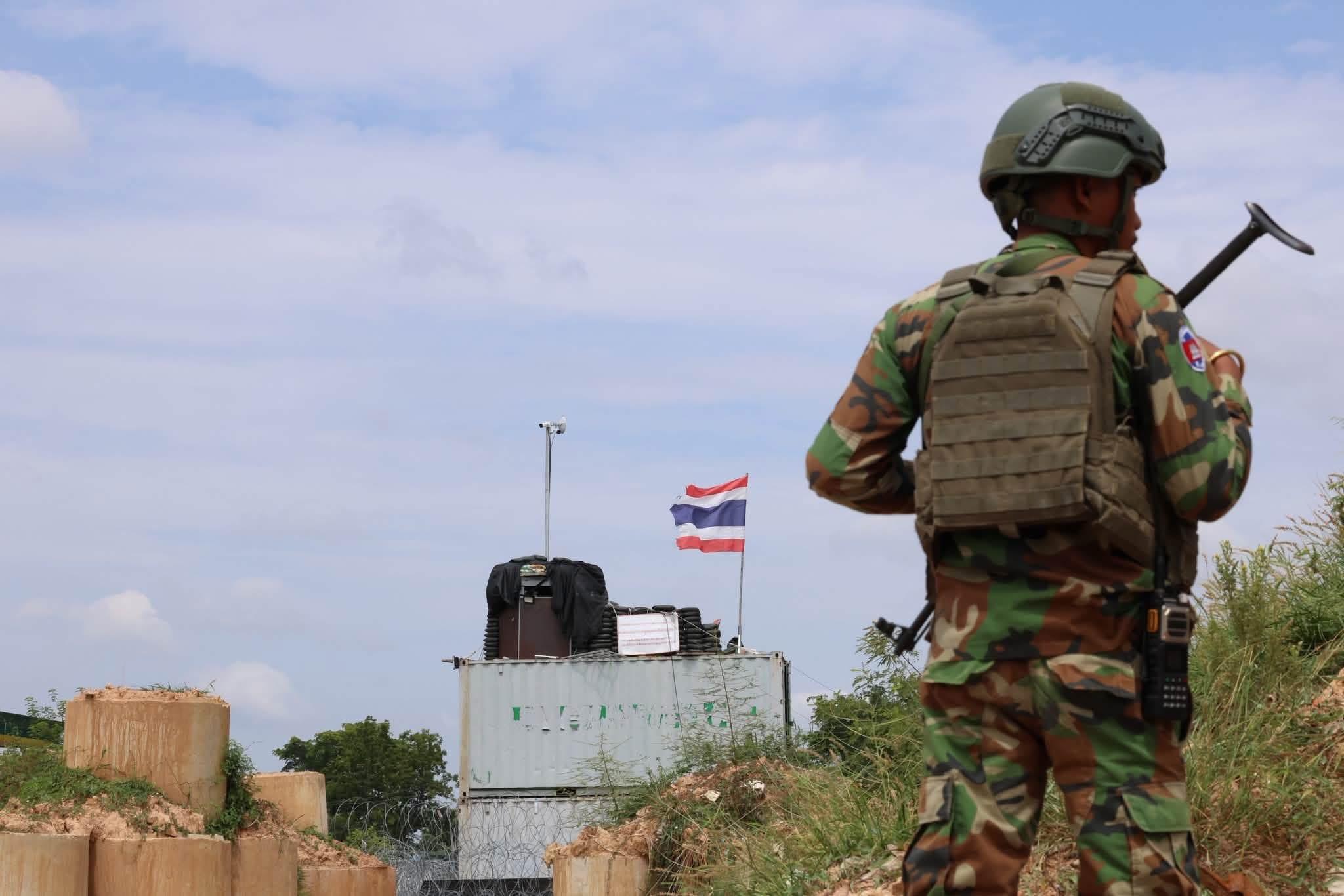

(Phnom Penh): As Cambodia and Thailand remain bound by the spirit of the ceasefire and agreements intended to ease tensions along their shared border, an increasingly important question is emerging: Why do actions that Cambodia considers violations of its sovereignty continue despite the existence of mechanisms designed to manage and resolve border disputes?
The question carries greater weight as the land-border dispute has begun to intersect politically with the maritime dispute, which Cambodia has brought into Compulsory Conciliation under the United Nations Convention on the Law of the Sea (UNCLOS).
Are these two developments simply unfolding at the same time? Or could actions on the ground be creating additional leverage and bargaining power in a broader political and diplomatic contest?
Thai Foreign Minister Sihasak Phuangketkeow previously indicated that Thailand might not continue land-border negotiations with Cambodia if Phnom Penh chose to pursue Compulsory Conciliation under UNCLOS.
Cambodia’s Ministry of Foreign Affairs responded that the maritime mechanism under UNCLOS and the land-border mechanism through the Joint Boundary Commission (JBC) are separate frameworks and should not be linked as conditions for continuing or suspending negotiations.
There is currently insufficient evidence to conclude that Thailand is preparing to “trade” land-border interests for maritime concessions. Yet the continuing developments along the land border, coupled with the political linkage of land and maritime issues, raise a legitimate question: Could the creation of new facts on the ground strengthen Thailand’s bargaining position when these disputes reach the negotiating table?
From Military Presence to Infrastructure and Administration
According to statements issued by Cambodia’s Ministry of Foreign Affairs, between July 26 and August 17, 2026, Thai armed forces cleared forest to construct a new road running from north of Border Pillar 14 toward Ta Thong Mountain, also known as Hill 278, in Oddar Meanchey province.
Cambodia said the road construction continued on August 20, when Thai forces also built additional military trenches. On the same day, Cambodian authorities reported that Thai forces constructed new trenches north of Keo Sikha Kiri Svara Pagoda in Preah Vihear province.
Another development, however, was particularly significant because it went beyond direct military activity.
Cambodia’s Foreign Ministry said that on August 13, Thai authorities again allocated land to Thai citizens in Chouk Chey village, O’Bei Choan commune, O’Chrov district, Banteay Meanchey province, in an area between Border Pillars 45 and 47 that Cambodia maintains is Cambodian territory.
Viewed together, these developments present a picture extending beyond a military presence to include infrastructure construction, reinforcement of military positions and administrative activity involving land.
That raises a larger question: Could these continuing actions be creating new “facts on the ground” that alter the practical status quo along the border?
Effective Control Is Not the Same as Legal Title
In territorial disputes, a state may cite activities carried out on the ground as part of its claim to sovereignty. International law uses the term effectivités to describe the actual exercise of state authority over a particular territory.
But effectivités do not mean that whichever side builds a road first, deploys troops first or administers an area first automatically becomes its lawful sovereign.
The International Court of Justice (ICJ) has recognized an important principle: where a clear legal title exists, acts of effective control that contradict that title cannot, by themselves, prevail over the underlying legal right.
Put simply: Physical control of territory does not automatically make that territory legally yours.
This distinction is important for Cambodia. If Cambodia’s position is supported by valid treaties, maps, boundary documents and bilateral agreements, unilateral acts by another party — including military deployment, infrastructure construction or administrative measures — cannot automatically transform effective control into lawful sovereignty.
Why Cambodia’s Protests Matter
Cambodia has continued to issue formal protests and public statements against actions it regards as violations of its sovereignty rather than responding with force.
Such restraint does not mean acceptance. Restraint and non-use of force are not equivalent to abandoning sovereign rights.
In territorial disputes, a prolonged failure to object to another state’s conduct may, under certain circumstances, be invoked as evidence of acquiescence, or tacit acceptance.
Continued formal protests are therefore important because they demonstrate that Cambodia does not consent to or recognize actions it considers prejudicial to its rights.
Those protests also establish an official record that Cambodia does not recognize unilaterally drawn boundary lines, does not accept unilateral administrative measures in disputed areas, and continues to maintain its legal position concerning sovereignty and territorial integrity.
In this sense, a diplomatic protest is more than a piece of paper. It forms part of the legal and evidentiary record demonstrating that Cambodia’s restraint cannot be interpreted as consent or abandonment of its claims.
Why Are the Land and Maritime Disputes Beginning to Intersect?
In May 2026, the Thai government terminated the 2001 Memorandum of Understanding, which had provided a bilateral framework for addressing overlapping maritime claims in the Gulf of Thailand.
On June 2, Cambodia initiated Compulsory Conciliation under UNCLOS, seeking to pursue a settlement of the maritime dispute through an international legal mechanism.
Thailand agreed to participate in the process. At the same time, however, its foreign minister warned that Thailand might not continue land-border negotiations if Cambodia proceeded with Compulsory Conciliation under UNCLOS.
That position began to link politically two disputes governed by different mechanisms.
The Thai government argued that Cambodia’s decision to pursue Compulsory Conciliation could affect efforts to restore mutual trust and discussions under other frameworks, including those concerning the land border. Thailand subsequently announced the suspension of some bilateral negotiations with Cambodia, including discussions concerning the land boundary.
This creates an important question: If the maritime dispute is moving into an international legal process while land-border negotiations are suspended, yet actions capable of altering conditions on the ground continue, could that imbalance increase the bargaining power of the party with greater military capability and effective control on the ground?
The issue deserves close attention.
If the land and maritime disputes are legally separate but politically linked, the question is no longer simply where a boundary should be drawn. It also becomes a question of whether one side is seeking to strengthen its negotiating position before an eventual settlement is reached.
Could Cambodia Lose Territory Through Effective Control?
The answer requires an important distinction.
In practical terms, prolonged effective control can create risks. Legally, however, physical occupation does not automatically transfer sovereignty.
If one party controls an area, original residents cannot return, new infrastructure is constructed and administrative activities are introduced, conditions on the ground can change substantially.
If such a situation persists, resolving the dispute may become increasingly difficult in political, diplomatic and practical terms.
But under international law, effective control is not the same as lawful sovereignty, particularly where the other state continues to protest, rejects the opposing claim and maintains a legal basis grounded in treaties, maps and existing agreements.
Cambodia therefore faces two tasks simultaneously: preventing a new situation on the ground from becoming normalized, while maintaining a strong legal and evidentiary record through formal protests, documentation of events, maps, treaties, JBC records and other relevant bilateral instruments.
A strong legal record cannot substitute for effective control on the ground. But it can be critically important in preventing another party’s physical control from being treated or interpreted as lawful sovereignty.
Lessons From 1941–1946
History offers a relevant, though not identical, lesson. Amid the Franco-Thai War and the turmoil of World War II, Thailand gained control in 1941 over parts of French Indochina, including Cambodian territories.
But after World War II ended, the international balance of power changed. In 1946, Thailand returned those territories under an agreement with France.
The circumstances of 1941 and 2026 are clearly different. The historical episode nevertheless illustrates a broader principle: during periods of international disorder, a more powerful state may be able to create realities on the ground, but the exercise of power or force does not, by itself, establish permanent and lawful sovereignty.
Conclusion
Are Thailand’s continuing actions along the land border, as the maritime dispute enters a new legal process, part of a strategy to build bargaining power or seek concessions from Cambodia?
For Cambodia, the answer is not to abandon restraint or turn to force. Instead, Cambodia must continue to respect the ceasefire while remaining “quiet, but not silent” — refraining from military escalation without abandoning formal protests; avoiding heightened tensions without accepting unilateral changes to the status quo; and continuing to preserve a strong legal and evidentiary record.
Ultimately, military power can create facts on the ground and effective control can generate pressure at the negotiating table, but neither can automatically transform those facts into lawful sovereignty.
International borders are not determined by which side is militarily stronger. They are determined by law, valid treaties and binding agreements.