
(Phnom Penh): At a time when the world is increasingly confronting the use of force and attempts to create new facts on the ground, a fundamental question is challenging the international order: Can a stronger state use its power to alter borders or create new sovereign rights?
The question carries particular weight for Cambodia as its border dispute with Thailand remains tense and Phnom Penh continues to protest actions it considers violations of its sovereignty and territorial integrity.
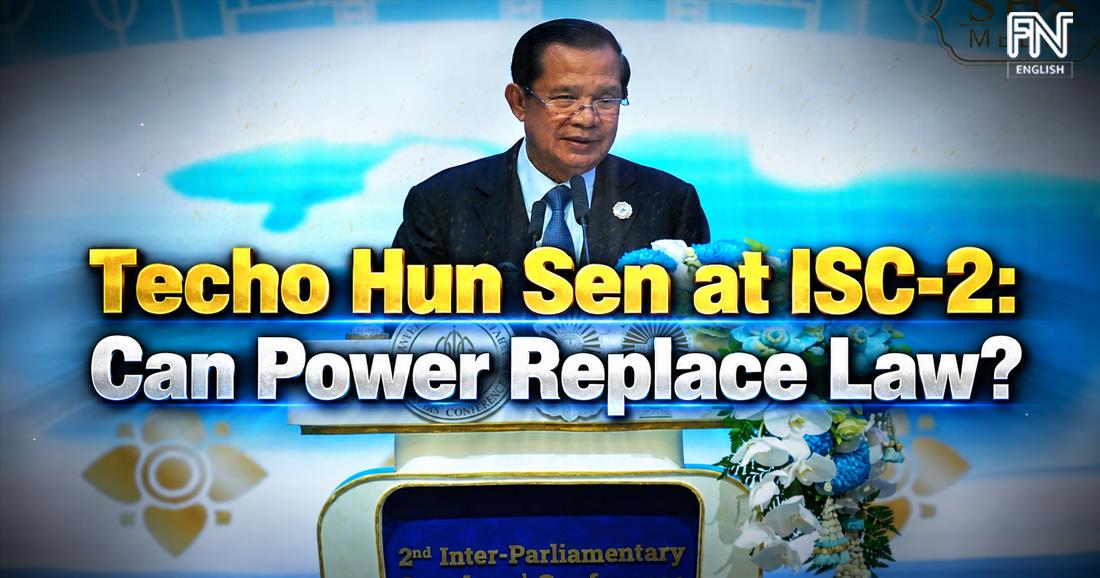
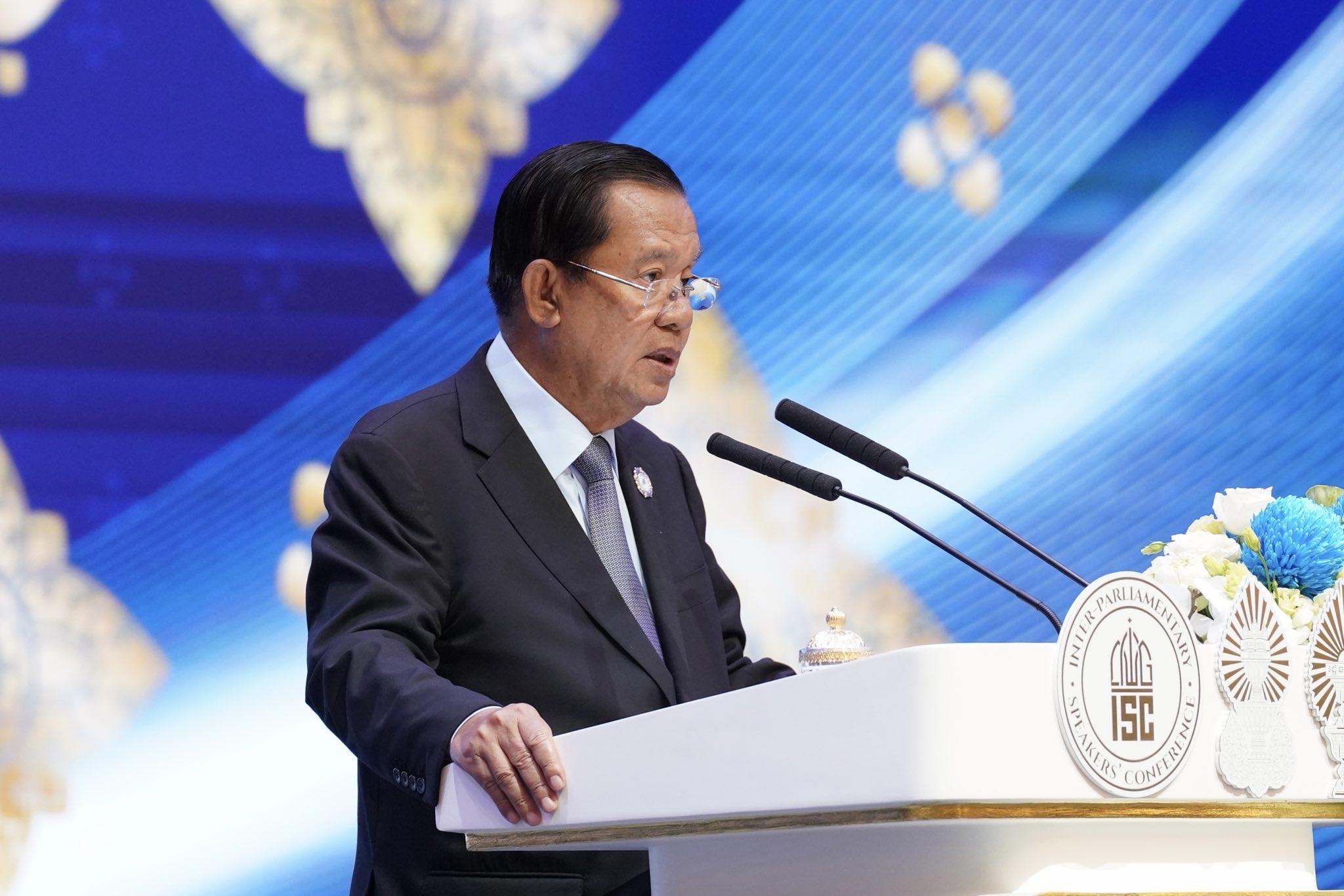
Against this backdrop, remarks by Samdech Techo Hun Sen, President of the Cambodian Senate, at the Second Inter-Parliamentary Speakers’ Conference on August 27, 2026, offered a notable framework for examining the changing nature of international conflict. His speech addressed concepts ranging from grey-zone tactics and “salami-slicing” strategies to irredentism, territorial integrity and legal mechanisms for resolving disputes.
Hun Sen did not explicitly state that these concepts were directed at Thailand. But the framework provides a useful lens through which to examine a broader question in territorial disputes: Power may create facts on the ground—but can those facts, by themselves, create legal rights?
From Open Warfare to Actions Below the Threshold of War
One of the first notable elements of Hun Sen’s speech was his warning about the increasingly blurred boundary between war and peace.
He said that in today’s world, states may employ grey-zone tactics—actions that remain below the threshold of full-scale armed conflict but cannot necessarily be described as genuine peace either.
The implication is that modern conflict does not always begin with a declaration of war or large-scale military confrontation. It may unfold through a series of smaller, incremental actions that appear limited individually but, taken together, can gradually alter conditions on the ground.
Hun Sen also invoked the concept of a “salami-slicing strategy”—the incremental accumulation of small gains—and linked it to irredentism, or claims to recover territory regarded as historically belonging to a state, as well as the principle of uti possidetis, which is associated with the stability of established boundaries.
The broader concern is that if a state cannot alter a border through outright war, it may seek to change conditions incrementally, keeping each individual action below the threshold likely to trigger a major response.
De Facto Control and Legal Sovereignty Are Not the Same
Another important message that can be drawn from the speech is the distinction between power on the ground and rights under law.
Military forces may control a location. A state may build roads, establish posts, erect barriers or carry out administrative activities. But such actions do not automatically alter an international boundary.
This corresponds with the agenda on “Territorial Integrity and Conflict Freezing,” under which Hun Sen called for the protection of state sovereignty and territorial integrity and for disputes to be resolved peacefully.
For smaller states, this distinction is particularly important. Where military capabilities are unequal, international law, treaties and agreements constitute an important line of protection for state sovereignty.
In that sense, power can create facts on the ground, but facts on the ground do not automatically become sovereign rights.
This is precisely why the question—“The strong may control territory, but can they defeat the law?”—becomes significant.
The answer is that power may create new realities on the ground, but realities created through power do not automatically translate into lawful sovereignty.
Why Is a Ceasefire Alone Not Enough?
Another element of the speech with clear relevance to border conflicts was the warning that a ceasefire may prove ineffective without credible monitoring and implementation mechanisms.
Hun Sen argued that a ceasefire agreement could amount to little more than “a piece of paper” if it fails to ensure peace, stability, confidence and the protection of people’s lives.
Put simply, a ceasefire means more than merely stopping the shooting.
If the guns fall silent while conditions on the ground continue to change—through the establishment of new positions, the consolidation of control or other actions that heighten tensions—then the resulting peace remains fragile.
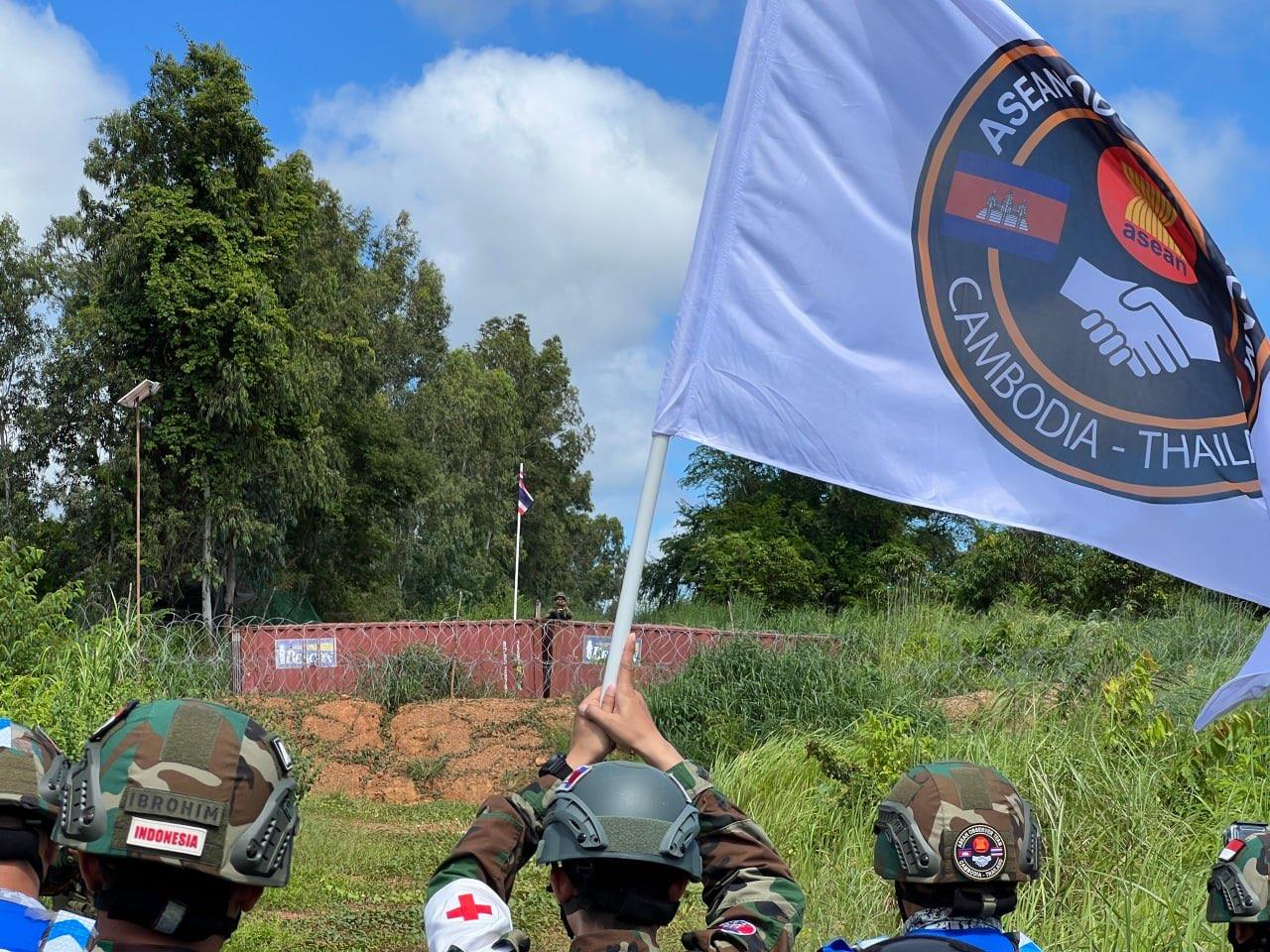
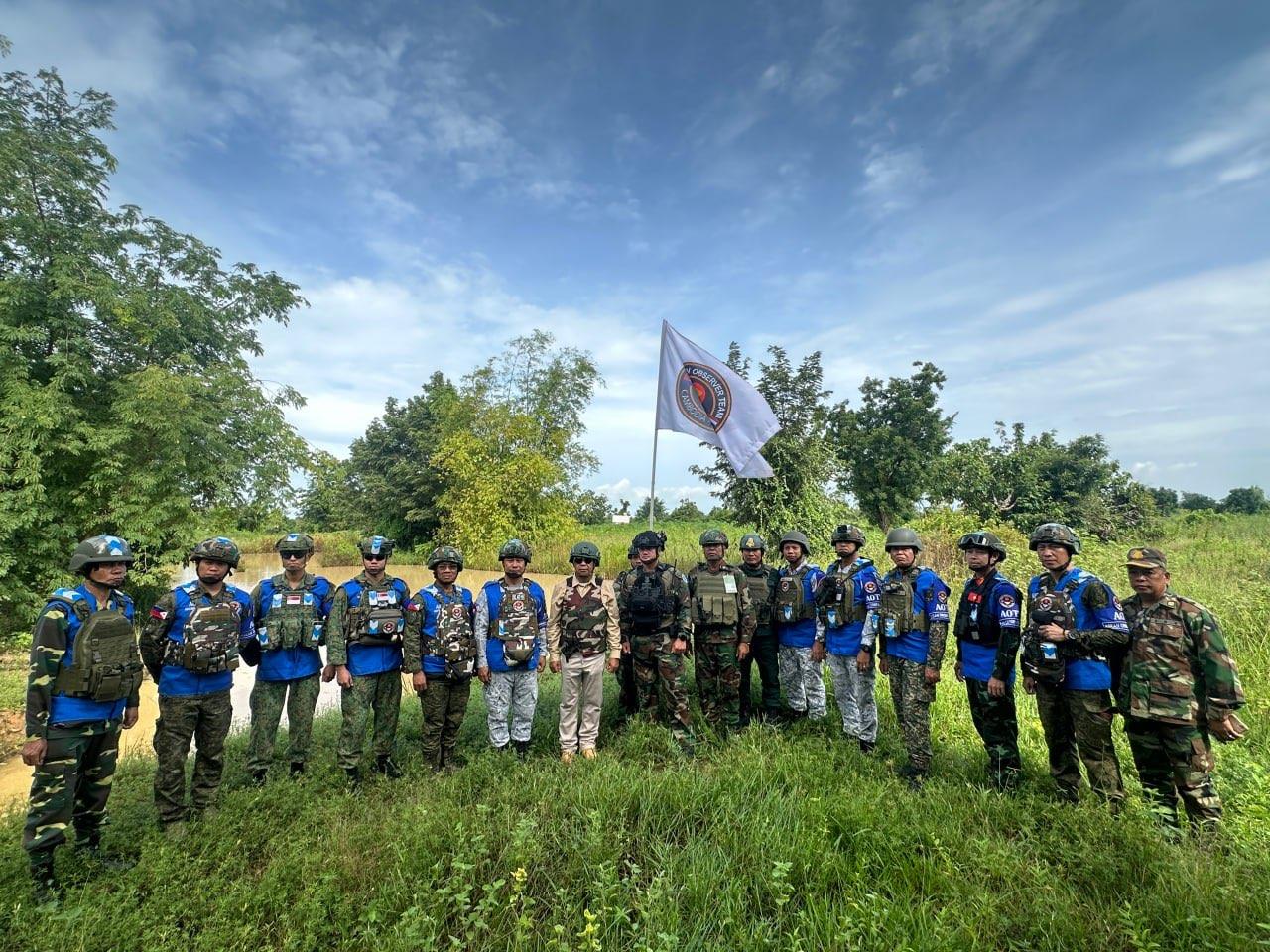
This was the context in which Hun Sen proposed consideration of a parliamentary ceasefire observation mechanism, linked with existing mechanisms, to strengthen monitoring and prevent smaller border incidents from escalating into larger conflicts.
The central message is clear: A ceasefire can stop the shooting, but sustaining peace requires monitoring, implementation and accountability. It cannot depend solely on promises written on a piece of paper.
From the Logic of “Might Makes Right” to the Legal Arena
One of the most consequential elements of Hun Sen’s speech concerned “Institutional Accountability and Legal Recourse.”
He called on law-abiding states to defend international law, diplomacy, dialogue and a rules-based international order, while using legal mechanisms to counter grey-zone tactics that may be employed to advance territorial claims or impose control over another state’s sovereignty.
This represents a rejection of the logic of “might makes right.”
Under such a logic, a militarily stronger state may seek to create new facts on the ground, while a state with greater economic or political power may exert pressure on a weaker party.
A rules-based order, however, asks different questions: What treaties apply? Which maps have a legal foundation? Through what mechanisms were boundaries established? What have the parties previously recognized, accepted or protested?
International law does not guarantee that a smaller state will prevail over a larger state in every dispute. But it changes the arena from the question “Who is stronger?” to “Whose legal claim rests on the stronger foundation?”
When “Law Enforcement” Becomes a Pretext
Another sensitive point in Hun Sen’s speech was his warning about the use of extraterritorial law enforcement against transnational crimes, such as online scams, as a pretext for unlawfully occupying or exercising authority over the territory of another state.
Hun Sen placed such conduct within the broader framework of grey-zone tactics.
The issue has significant implications for the regional order. Transnational crime undeniably requires cross-border cooperation. But combating crime cannot become a pretext for violating another state’s sovereignty.
If a state can invoke security, transnational crime or law enforcement to cross a border and exercise authority inside another state without a clear legal basis, the distinction between law enforcement and infringement of sovereignty becomes increasingly blurred.
And when that line becomes blurred, smaller states may face the greatest risk, because arguments framed in the language of “security” could be used by more powerful states to establish new facts on the ground.
Does This Message Relate to Thailand?
Hun Sen delivered his remarks within a broad international framework. It would therefore be inappropriate to assume automatically that his references to grey-zone tactics, salami slicing or irredentism were directed specifically at any one country.
For observers of the Cambodia-Thailand border dispute, however, the principles he outlined inevitably carry relevance.
They include territorial integrity, the prohibition on using force to alter borders, attempts to create new facts on the ground, ceasefires, grey-zone tactics and recourse to legal mechanisms—all concepts that can provide an analytical framework for examining the current Cambodia-Thailand border situation.
So if the question is: “Was Hun Sen specifically talking about Thailand?” the answer is that the speech, as presented here, did not explicitly identify Thailand as the target of those concepts.
But there is a more consequential analytical question:
If the principles laid out by Hun Sen are used as a lens, are the actions now taking place along the Cambodia-Thailand border consistent with those principles—or do they run contrary to them?
Conclusion
The central message from Hun Sen’s speech at the Second Inter-Parliamentary Speakers’ Conference was not that states do not need strength to defend themselves. On the contrary, the speech acknowledged an increasingly complex and dangerous world in which states must prepare for worst-case scenarios.
But the deeper message was this: Power must not replace law.
Military forces may control territory. Grey-zone tactics may create new facts on the ground, while salami-slicing strategies may gradually alter existing conditions. But facts created through power do not automatically become legal rights.
If a rules-based international order is to retain meaning, sovereignty and international boundaries cannot ultimately be determined simply by asking “Who is stronger?”
They must return to law, treaties, agreements and mechanisms for the peaceful settlement of disputes.
And perhaps this is the most important message emerging from the August 27 speech:
The strong may control territory, but control is not ownership—and force, by itself, is not a source of sovereignty.