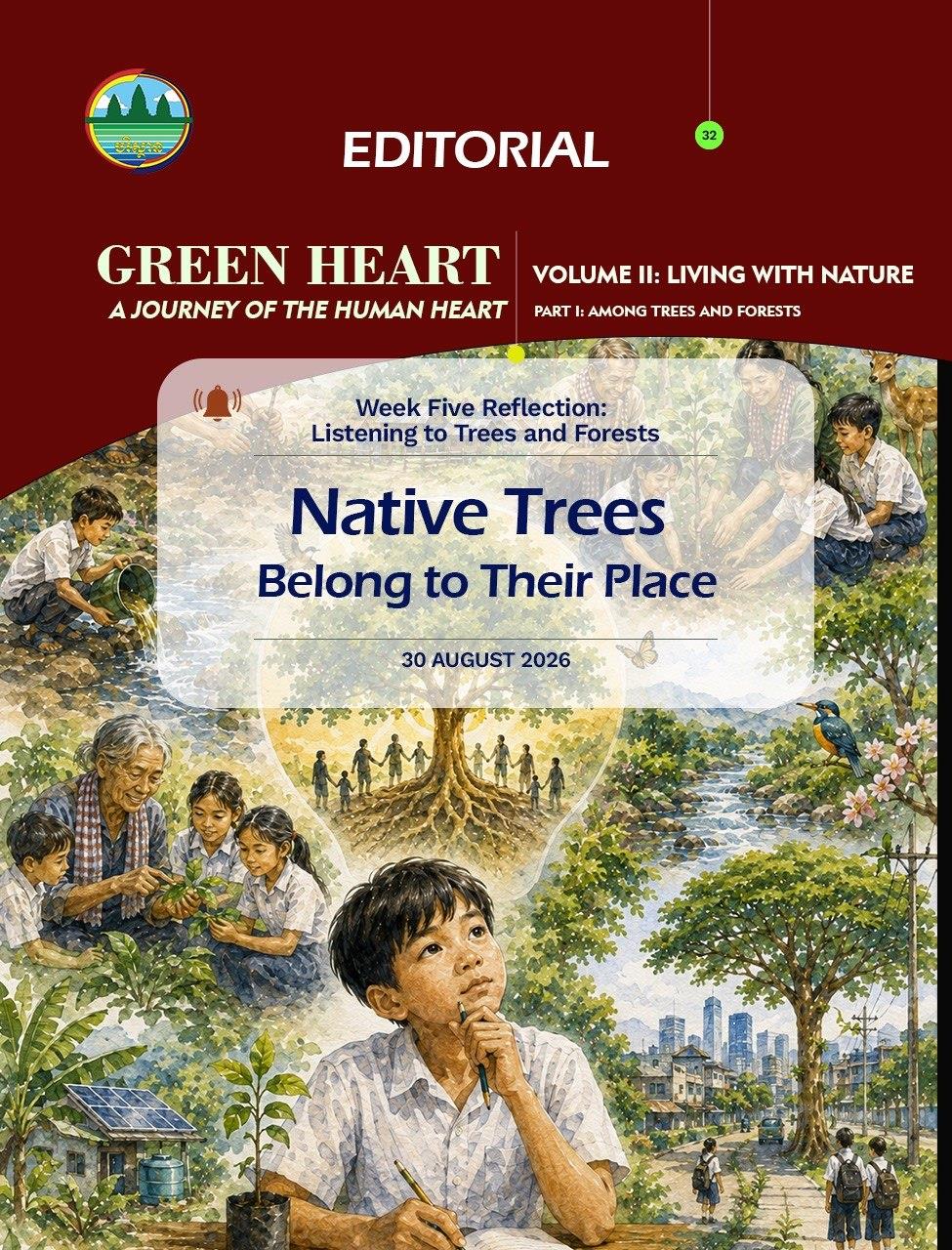

(Phnom Penh): Planting a tree is often treated as an action that is always good. The intention is generous, but wise planting begins with questions.
Which species is suitable? How large will it become? What soil and water does it need? Which animals may use it? Who will care for it after planting?
“The right tree in the right place can become a lasting neighbor.”
A native tree is a species that developed in a region through natural processes over long periods. Native plants often have relationships with local insects, birds, fungi, and other organisms. They may be well adapted to local seasons and soils, although changing conditions and disturbed sites can still make survival difficult.
Not every non-native tree is harmful. Many provide food, shade, beauty, or livelihoods. The concern arises when a species spreads aggressively outside cultivation and harms local ecosystems, agriculture, infrastructure, or health.
Such species may be described as invasive. Whether a plant is invasive depends on place and evidence, not simply on where it originated.
This is why local knowledge matters. Forestry staff, botanists, farmers, gardeners, community elders, and environmental organizations may help identify suitable species.
A tree appropriate for a forest restoration site may not be safe beside a building or power line. A fruit tree may need different care from a street tree.
Belonging is not only about origin. It is also about relationship and responsibility. A planted tree becomes a good neighbor when it has room to grow, does not create avoidable harm, and contributes to the surrounding community of life.
Students can help by learning names. A tree without a name may remain invisible; a named tree becomes easier to discuss, monitor, and remember. Local names and scientific names each have value, and asking elders can connect ecological learning with culture.
Planting day receives attention, but survival anniversaries deserve celebration too. Did the tree live through the dry season? Is it protected from damage? Has the support stake been removed at the right time? Long-term care turns a photograph into a forest.
Before placing a seedling in the ground, imagine its mature form. Imagine its shade, roots, fruit, flowers, visitors, and needs.
The goal is not to plant the greatest number in one day. The goal is to help the right trees become healthy members of their place.
This future-thinking protects resources as well as life. A carefully selected tree is more likely to survive, require appropriate care, and avoid costly conflict with buildings or infrastructure.
Thoughtfulness before planting is itself an environmental action.
Buddhist Reflection
Compassion without wisdom can produce unintended harm. Wise compassion asks about conditions, consequences, and long-term needs. Caring well means offering what truly helps, not only what makes us feel helpful.
Today’s Reflection
What information should be known before a tree is planted near my school or home?
Today’s Action
Learn the local name of one native tree and ask a reliable person where it grows best and what care it needs.
Today’s Pledge
Today I will support thoughtful planting and long-term care for trees suited to their place.
When we protect nature, we protect all beings, including ourselves.
=FRESH NEWS