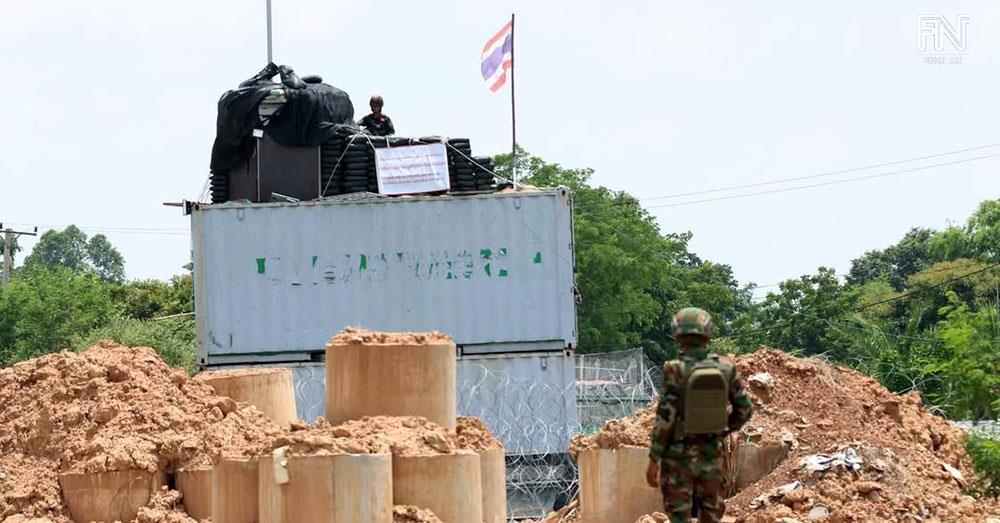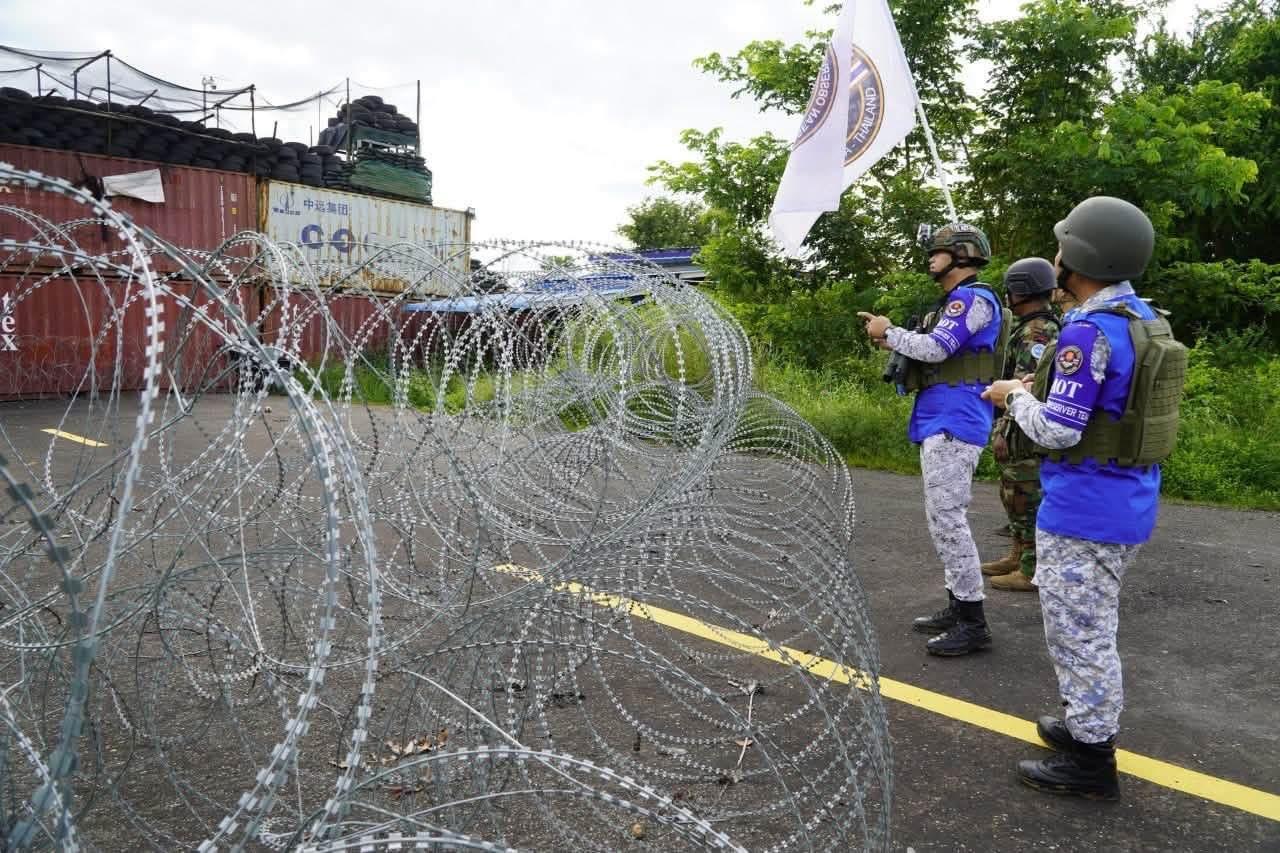

(Phnom Penh): Following the armed conflict along the Cambodia–Thailand border, the two countries signed a Joint Statement on December 27, 2025, agreeing to an immediate ceasefire and to maintain their forces at their existing positions.
But that arrangement raises an important legal question: If troops from either side were stationed at, or exercised control over, a particular location when the ceasefire took effect, does an agreement to keep them there amount to recognition that the territory falls under that side’s sovereignty?
Based on the text of the December 27 Joint Statement, the answer is no.
The agreement established a temporary military arrangement designed to halt the fighting. It did not transfer territorial title or recognize either side’s sovereignty over territory merely because its forces happened to be positioned there when the ceasefire took effect.
The key legal safeguard appears in Paragraph 3, which states that all arrangements under the Joint Statement are “without prejudice to the border demarcation and international boundary between the two countries.”
That provision draws an important distinction between military positions on the ground and legal sovereignty over territory.
A Ceasefire Stops Fighting; It Does Not Draw a Border
Paragraph 1 of the Joint Statement provides for an immediate ceasefire involving all types of weapons and prohibits unprovoked firing, advances and troop movements toward the other side’s positions.
Paragraph 2 requires both sides to maintain their current troop deployments without further movement.
Read in isolation, that provision might raise a question: If one side’s troops are already present at a location and the other side agrees that they should remain there, does that constitute recognition of sovereignty?
But legal instruments should not be interpreted by taking one provision out of the context of the document as a whole.
When Paragraph 2 is read together with Paragraph 3, the distinction becomes clearer: the parties agreed to freeze military movement, not to freeze or determine the legal boundary.
Put simply: “Stay where you are for now. Do not advance and do not shoot. But the fact that you are there does not mean the land has been recognized as yours.”
That is the difference between a military situation on the ground and legal sovereignty over territory.
Therefore, if on December 27, 2025, troops from either side were positioned in an area claimed by the other side, or in an area where demarcation remained unresolved, an agreement to maintain the “current troop deployments” for the purpose of preserving the ceasefire would not, by itself, transform that military presence into recognition of sovereignty.
The principle applies equally to both sides.
The Joint Statement also assigns the Joint Boundary Commission (JBC) the task of resuming survey and demarcation work in accordance with existing agreements between the two countries.
The continued role of the JBC itself reinforces the distinction: troop positions on the day the ceasefire took effect are not, by that fact alone, the legal international boundary.
Paragraph 6 Does Not Confer Sovereignty Either
Paragraph 6 prohibits both sides from engaging in provocative actions, including military activities that enter the other side’s airspace, territory or positions. It also prohibits the construction or expansion of military infrastructure or fortifications beyond each side’s own positions.
But the expression “own positions” should not automatically be interpreted as meaning “own sovereign territory.”
Such an interpretation would be difficult to reconcile with Paragraph 3, which expressly provides that the arrangements under the Joint Statement are without prejudice to border demarcation and the international boundary.
In the context of the ceasefire, “own positions” is therefore better understood as referring to the military positions that each side is required to maintain in order to prevent further advances and renewed fighting.
It does not, by itself, determine that those positions lie within the sovereign territory of the side occupying them.
In other words, the ceasefire acknowledges the existence of military positions for operational purposes; it does not recognize territorial sovereignty merely on the basis of those positions.
Are Military Presence and Sovereignty the Same Thing?
This is where an important distinction in international law becomes relevant: effective control over territory and legal title to territory are not necessarily the same thing.
In the 1986 Burkina Faso v. Mali Frontier Dispute, the International Court of Justice (ICJ) examined the relationship between legal title and effectivités — acts demonstrating the actual exercise of state authority on the ground.
Where effectivités correspond with legal title, they may reinforce that title. But where the actual exercise of authority by one state conflicts with the legal title of another, the Court explained that preference should generally be given to the holder of the legal title.
The essential point is that effective control does not automatically override legal title.
The Cameroon v. Nigeria case illustrates a similar principle. Despite the existence of administrative and military presence on the ground, the ICJ determined sovereignty on the basis of the applicable legal grounds and required the withdrawal of military, police and administrative authorities from territories it found to belong to the other state.
The legal lesson is therefore important: A state may exercise actual control over territory, but control alone does not automatically make it the sovereign owner of that territory. Effective control and legal title are distinct concepts.
Military Force Cannot Create Territorial Title by Itself
A fundamental principle of international law is that territory may not lawfully be acquired through the threat or use of force.
This principle was expressly reflected in the United Nations’ 1970 Declaration on Principles of International Law concerning Friendly Relations and Co-operation among States and is firmly embedded in modern international law.
Therefore, the presence of troops or the exercise of military control over territory does not, by itself, create lawful sovereignty over that territory.
Why, Then, Do “Facts on the Ground” Still Matter?
Saying that military presence does not automatically create sovereignty does not mean that facts on the ground have no legal significance whatsoever.
In territorial disputes, international courts and tribunals may examine effectivités — acts demonstrating the actual exercise of state authority — including administration, law enforcement and the exercise of governmental functions over a population.
Such evidence may become particularly relevant where legal title is absent, uncertain or does not clearly establish the territorial extent of a claim.
For that reason, the construction of roads, military facilities, trenches or fences, as well as the extension of administrative control in a disputed area, should not simply be ignored, even though such actions do not automatically create sovereignty.
A state’s prolonged failure to object may also become legally relevant in certain circumstances under the concept of acquiescence, in which a state’s conduct may be considered when assessing whether it accepted another state’s claim.
This helps explain why states claiming rights over disputed territory often maintain formal and continuing protests against actions they consider prejudicial to their rights.
In the case of the December 27 Joint Statement, however, there is an important legal safeguard: the document expressly states that the ceasefire arrangements are “without prejudice” to border demarcation and the international boundary.
In this context, that wording means that the arrangements should not prejudice either side’s legal rights or positions concerning the boundary.
Accordingly, an agreement allowing forces temporarily to remain in their existing positions should not, by itself, be interpreted as recognition of the other side’s sovereign title over those locations.
A Ceasefire Is Not a Treaty Dividing Territory
The issue becomes easier to understand if three concepts are kept separate:
First — Ceasefire position: Where each side’s troops happened to be when the ceasefire took effect. Keeping them there is intended to prevent further advances and renewed fighting.
Second — Effective control: Which side actually exercises control over a particular location at a given time. Such control does not automatically establish lawful sovereignty.
Third — International boundary: The legal boundary separating the territories of two states. Its determination depends on the applicable legal framework, not simply on where troops happen to be stationed.
These three things do not necessarily coincide.
Troops may occupy a location and a state may exercise effective control there, but that does not mean the legal international boundary automatically follows the military front line.
The December 27 Joint Statement contains a series of interconnected provisions that must be read together. No single provision should be isolated from the document as a whole and interpreted as if it stood alone.
In that sense, the ceasefire says where troops must stop for the time being; it does not say that the place where they stop becomes the international boundary.
Conclusion: Freezing Troop Movements Is Not Freezing the Border
The answer to the central question is therefore clear: Nothing in the December 27, 2025 Cambodia–Thailand Joint Statement states that the presence or control of a location by either side’s armed forces constitutes recognition of sovereignty over that territory.
On the contrary, Paragraph 3 expressly preserves the boundary question through the phrase “without prejudice”, meaning that the ceasefire arrangements do not prejudice either side’s legal rights or positions concerning the border.
Survey and demarcation work remains assigned to the JBC under the existing agreements between the two countries.
Therefore, the proposition that “wherever your troops stand, the land is yours” is not what the December 27 Joint Statement says.
The ceasefire may record the factual reality that one side’s troops were present at a particular location when it took effect. But maintaining that position does not amount to recognition that the state concerned holds sovereignty over that territory.
The December 27 Joint Statement froze troop movements; it did not freeze the international boundary.
Its broader meaning can be put simply:
“A ceasefire can tell soldiers: Stop where you are for now. But stopping there does not mean the land is yours.”