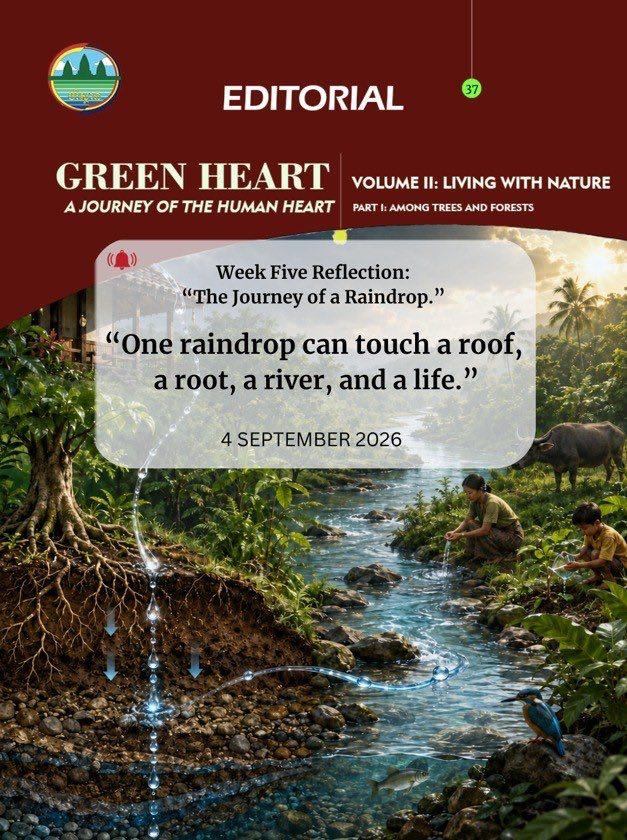

(Phnom Penh): Imagine one raindrop falling from a dark cloud. Where will it land? On a leaf, it may pause and evaporate. On soft soil, it may soak downward. On a roof, it may enter a tank or gutter. On pavement, it may rush toward a drain.
“One raindrop can touch a roof, a root, a river, and a life.”
The path depends on the surface. Vegetation and healthy soil can slow water, allowing more time for infiltration in many landscapes. Hard surfaces often send water away quickly. During heavy rain, rapid runoff can gather litter, sediment, and pollutants and may contribute to local flooding.
A raindrop that enters soil may support roots or move deeper toward groundwater. One that reaches a stream joins a larger flow. In cities, drainage systems guide water, but blocked or inadequate drains can create danger. Keeping rubbish out of waterways and drains is therefore both environmental care and community safety.
Rain can be welcomed and feared. It nourishes crops, fills water sources, cools the air, and renews landscapes. Too much rain in a short time can flood homes and fields. Too little can lead to drought. Communities need forecasting, planning, healthy watersheds, and safe infrastructure.
We should never enter floodwater or attempt to clear dangerous drains. Students can help through prevention, observation, and reporting conditions to adults. Safety comes first.
The raindrop also crosses human boundaries without noticing them. It does not know which roof belongs to which family or which field lies in which district. Water management therefore requires cooperation.
Collecting rainwater can be useful where systems are suitable and maintained, but stored water must be protected from contamination and mosquito breeding. Local health guidance should be followed, especially if water might be used for drinking.
Follow the imagined raindrop until it leaves your sight. Its journey continues. Perhaps it joins a plant, an animal, the atmosphere, or an underground store. Every landing place offers a different future.
Our task is not to control every drop. It is to create landscapes and habits that allow rain to nourish life while reducing avoidable harm. The path of a raindrop may be small, but millions of such paths shape the health of a community.
After a storm, compare places where water soaked in, pooled, or rushed away. Such observation can reveal where shade, soil care, drainage maintenance, or better design may help. Always observe from safety and leave technical solutions to trained people.
Buddhist Reflection
Conditions shape outcomes. The same raindrop produces different effects depending on where it lands. Wise action improves conditions, soil, vegetation, drains, habits, so that natural events are more likely to support well-being.
Today’s Reflection
What happens to rain when it falls on the hardest surface near my home or school?
Today’s Action
From a safe place, observe or map the route rainwater takes. Report blocked drainage to an adult; do not enter or touch unsafe water.
Today’s Pledge
Today I will respect rain’s power and help prepare a clean, safe path for its journey.
When we protect nature, we protect all beings, including ourselves.
=FRESH NEWS